
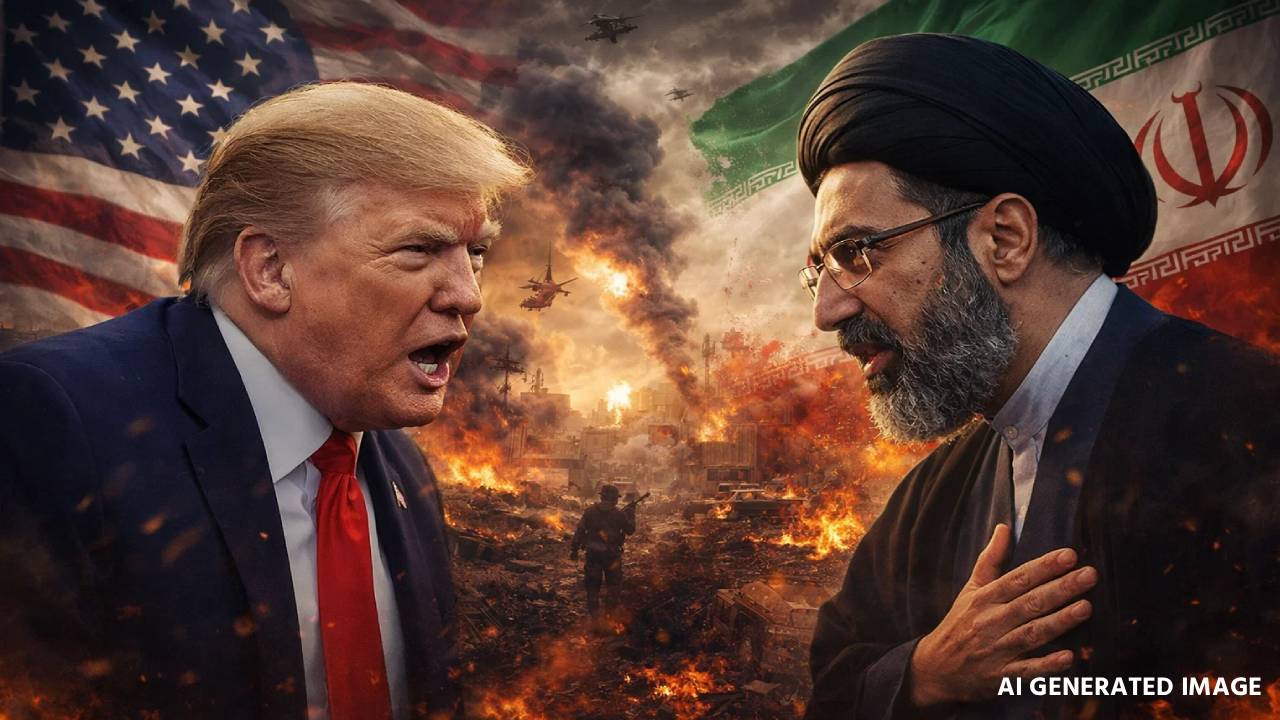
Why did America get angry in Iran War? 5 reasons that explain how the ‘superpower’ became weak

The ongoing war with Iran has once again shown that military power alone does not make a country a superpower. America certainly took the lead in the initial attacks, but as the war progressed, many such challenges emerged which seemed to weaken its strategy. Angered by the lack of cooperation from NATO countries, Trump has made it clear to his allies that if this attitude continues, they will have to make their own security and energy arrangements. I have nothing to do with Hormuz. The question is why the world’s greatest power started looking irritated. Know the 5 big reasons for this.
1. Is the Strait of Hormuz Iran’s biggest weapon?
The Strait of Hormuz has become a real gamechanger in the Middle East war. About 20% of the world’s oil supply passes through this route. By blocking this route, Iran directly put pressure on the global economy. America Militarily strong, but unable to completely secure this waterway. This is the reason why oil prices increased and global markets became unstable. Despite being a superpower, America could not completely control this “choke point”.
2. US has suffered a loss of 35 billion dollars?
The impact of the war was not limited to just the battlefield. As soon as the oil supply was disrupted, there was a huge surge in prices, which affected the entire world including America. Even within America, petrol prices and inflation have become a political issue. According to , rising prices and market decline have increased the pressure on Washington. In America, the inflation rate has reached 3.5 to 4 percent in the last one month. That means America, despite being ahead militarily, got stuck on the economic front and this became its biggest weakness.
According to BBC and Wall Street Journal, about 13 to 15 American military personnel are reported to have died after Donald Trump started the attacks from February 28, 2026. At least eight MQ-9 drones have been shot down by Iranian missiles. Many others were destroyed or damaged on the ground. The AN/TPY-2 radar of the THAAD missile defense system has been damaged in Jordan.
USS Gerald R. The Ford aircraft carrier was damaged in a fire on March 12, which is now under repair. Economic losses are expected due to the impact of the Strait of Hormuz, pressure on global energy supplies and uncertainty of war. One billion dollars is being spent every day. Till now America’s expenditure has crossed 35 billion dollars. Of this, approximately $11.3 billion was spent in the first six days alone.
3. Why is NATO not getting full support?
During the Iran-Israel war, the US did not receive the support from NATO allies that was usually expected. Especially regarding base access, airspace and operational cooperation, many countries showed hesitation or outright refusal. Spain and Italy refused to allow US military aircraft to use their airspace. Britain had initially refused to allow the use of its Royal Air Force (RAF) bases. However, he later changed his stance and provided limited cooperation.
Germany did not directly deny, but it maintained distance from active military participation in this war and insisted only on diplomatic solution. France also avoided direct involvement in military action and refrained from providing open operational support to America. This means that among the strong countries in NATO, there is someone to support America in the war.
It has become clear that there was no uniformity within NATO. Many countries have directly or indirectly distanced themselves from America’s military operations. This is the reason why leaders like Marco Rubio raised the question that if the allies do not support in times of need, then what is the real meaning of the alliance. Not only this, Trump himself has become so angry with NATO countries that he has asked them to take oil from the Strait of Hormuz themselves.
4. Iran’s ‘asymmetric war’ strategy How effective?
America is strong in conventional warfare, but Iran adopted “asymmetric warfare” instead of direct war. Iran prolonged the war with methods like drones, missiles, proxy groups and maritime pressure. The result was that the Middle East war has now spread to many areas. The Trump administration’s strategy to end this war in a few days was not successful. From the Gulf countries to Lebanon, America’s “quick victory” strategy has weakened and the war seems to be dragging on.
5. Protest against Trump across the world along with US and EU?
Even within America, support for this war seems to be weakening. According to reports, a large part of the public wants the war to end soon. Strong protests are continuing in almost all the states of America against the decision to start the war. Protests against Trump’s decision are continuing in other countries of the world as well. At the same time, Donald Trump is the burden of domestic politics, electoral pressure and economic impact. This is the reason why now instead of “quick victory” the strategy of “quick exit” is visible. When a superpower starts taking decisions not on its own terms but under pressure, then questions start being raised on its strength.
The Iran war has made it clear that modern wars are not won with weapons alone. Economic pressure, global supply chain, alliance politics and strategic location, all these together determine power. America is still the world’s largest military power, but this war has exposed its limitations. This is why the question is being raised today, is having a superpower now as easy as before?

Comments are closed.