
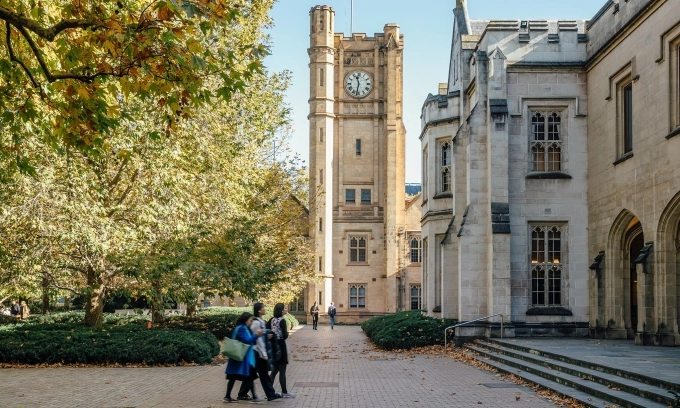

The British higher education analysis firm Quacquarelli Symonds last week released its 2026 World University Rankings by Subject, covering five broad fields and 55 specific disciplines.
Overall, Australian universities accounted for 926 ranked positions across 37 subjects. Of these, 351 improved compared to the previous year, placing Australia third globally by this metric, behind the United States and the United Kingdom.
In terms of representation in the global top 100 in all subjects, Australian universities lead with 46%, ahead of the U.S. (40%), the U.K. (42%), and Canada (34%), according to data compiled by The Koala News.
Strong progress was seen in STEM (science, technology, engineering, and mathematics). This year, 13 Australian universities ranked in the global top 100 for Data Science and AI, nearly doubling last year’s figure of seven.
Four Australian institutions also placed in the global top 10 in Engineering and Technology.
Kylie Walker, the Chief Executive Officer of the Australian Academy of Technological Sciences and Engineering, said the results are “terrific” and “encouraging,” as reported by The Sydney Morning Herald.
She urged the Australian government and businesses to increase investment in STEM research and infrastructure. She argued that such investment is no longer just about education but is a critical requirement to “shore up national security and diversify the economy” for long-term economic stability.
The University of Melbourne, ranked No. 1 in Australia by both QS and Times Higher Education (THE) this year, placed in the global top 20 in three broad fields: Life Sciences and Medicine (14th), Social Sciences and Management (19th), and Arts and Humanities.
It also ranked in the top 50 in Engineering and Technology, and Natural Sciences.
The University of Sydney, ranked third in Australia by QS and second by THE, improved across all five broad fields, particularly in Engineering and Technology, rising 14 places to 46th globally. It tops the list with 53 narrowly defined subject entries, with the University of Melbourne and the University of Queensland close behind.
Other standouts include Monash University, ranked second globally in Pharmacy; the Australian National University, placed in the top 10 across several humanities fields; Curtin University, fourth in Mineral and Mining Engineering; and the University of Wollongong, which surged into the top 10 for Philosophy.
Jessica Turner, Chief Executive Officer at QS Quacquarelli Symonds, wrote on her LinkedIn that “the QS rankings show that Australian institutions are already producing world-class research and preparing graduates with skills aligned to global demand, yet sustaining this performance requires long-term investment in research capacity, international engagement and workforce readiness.”
She recommended that Australia maintain clear and stable long-term policies to preserve its global standing and appeal, as international students increasingly shift destinations and regional competitors grow rapidly.
Australia remains one of the world’s major study-abroad destinations, alongside the U.S., the U.K., and Canada. As of December 2025, nearly 850,000 international students were studying in the country, including about 36,000 from Vietnam, the fourth-largest group, according to Australia’s Department of Education.
Over the past two years, Australia has repeatedly adjusted visa regulations and policies for international students to control immigration levels.
Measures have included shortening post-study work rights from 4-6 years to 2–3 years, raising English proficiency and financial requirements, and increasing student visa fees.
As a result, new international student enrollments fell 15% year on year to 202,882 by the end of 2025.
Comments are closed.