
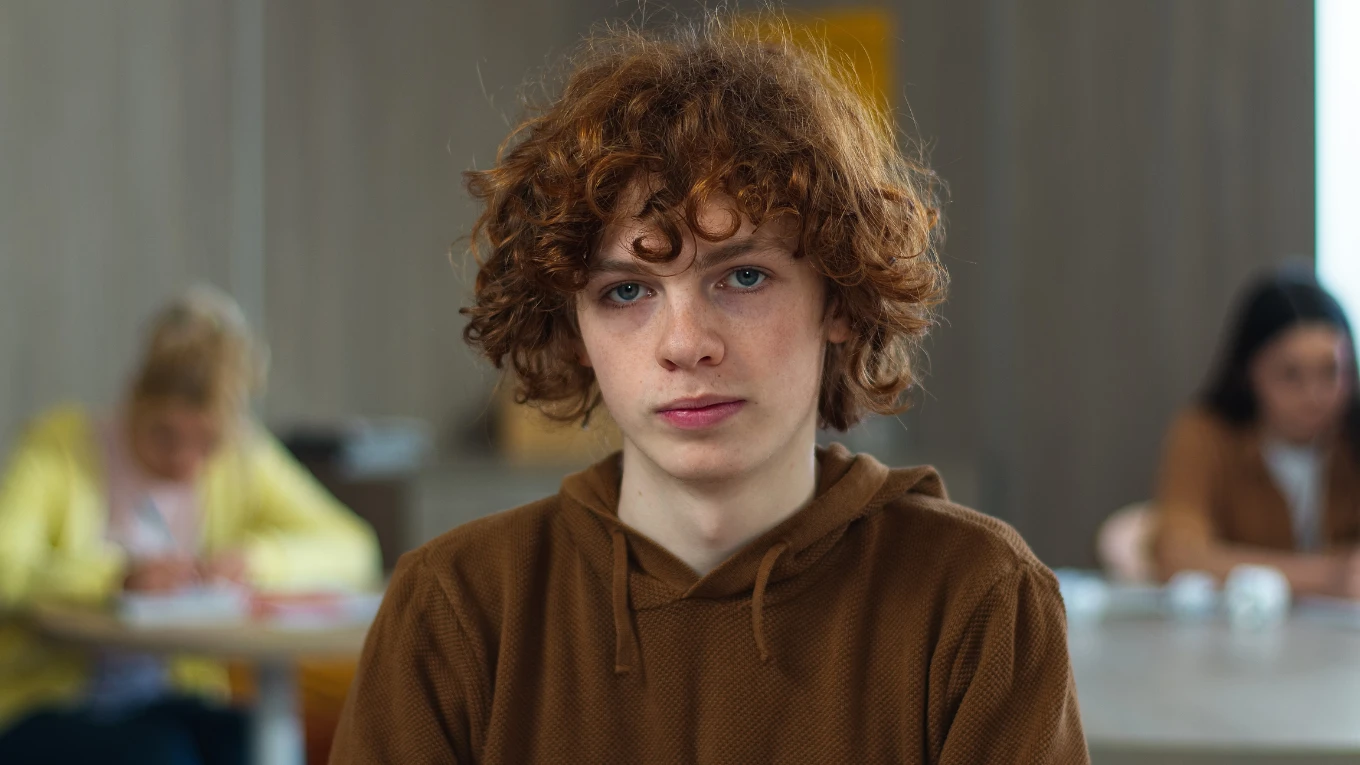

One teacher on Reddit admitted that she’s noticed a growing divide between high-achieving students and the rest of her class, and it’s left her worried. Her main concern is simply that the average students who should make up the bulk of her classes are simply disappearing.
From disrespectful students (and parents) to declining reading skills, teachers truly see it all. They’re the first to spot these classroom trends and often the first to sound the alarm online.
A teacher worries that ‘average students’ have disappeared, leaving only ‘high achievers’ and kids with extremely low grades.
“Gone are the days of kids who pull high Cs or low Bs. It’s almost all now either A’s & high B’s or low C’s, D’s, & F’s,” the teacher of five years wrote. “The middle is gone, and it really worries me for some of the kids.”
There seems to be a lack of motivation for those who aren’t naturally good at academics. Many teachers have relayed this sentiment on social media, arguing that their students have “stopped caring” altogether following remote learning and the pandemic.
“I have a lot of kids who just stare at screens all day and don’t even have the pretense to try to pay attention,” the teacher continued. “They even bring hotspots & VPNs to school so they can stream and get on unfiltered internet.”
She’s concerned for the future of her “checked out” students. “It really worries me for most of the kids … They have few discernible skills or motivation.”
It’s a ‘lose-lose’ situation because ‘high achievers’ are bored in class, and others aren’t paying attention at all.
Many experts theorize that students’ detachment from school in recent years comes from two main struggles: anxiety and isolation. After transitioning back to the classroom from remote learning, they’ve struggled with intense anxiety and mental health struggles. In tandem with an ever-present fear of failure, these students struggle to engage in the classroom.
But even the high achievers are losing out. “On the other hand, I have kids who do all their work, participate at least with their body language, and get high scores on tests and quizzes pretty regularly,” she wrote. “In general classes, these kids are often bored.”
“They want more engaging material and enhanced learning experiences, but the necessity to pass everyone makes the class so watered down it’s just catering to the lowest common denominator,” the teacher continued. “I really worry for these kids in 5-10 years.”
Other teachers argue that there’s no such thing as an ‘average student’ because everything is a measure of kids’ personal lives, struggles, and support.
While the effects of the pandemic are impossible to ignore, many education experts suggest it has only exacerbated issues that were already present in many school districts. From food insecurity to unsupportive or toxic parents, many students just don’t have the physical, mental, emotional, or intellectual support they need to thrive in the classroom.
Hananeko_Studio | Shutterstock
There are no “average” students in an intellectual sense; rather, there are students who aren’t fully supported to thrive in the classroom. Experts like C. Clair Law on TikTok argue the same, admitting that many students thrive once they leave high school, college, or even graduate school.
The world isn’t led strictly by high school high-achievers and students with straight-A’s. Rather, there are a variety of intelligence levels and types that succeed in the “real world.” Emotional intelligence, empathy, “street smarts,” and “book smarts” are also important outside of the classroom.
So, yes. It might be alarming that many of these students aren’t applying themselves to schoolwork or engaging in the classroom, but that doesn’t automatically mean they’re going to be “basement dwellers,” as this poster suggested. Give students some grace while also holding them accountable. Sometimes, they just need support and the right resources to succeed.
Zayda Slabbekoorn is a senior editorial strategist with a bachelor’s degree in social relations & policy and gender studies who focuses on psychology, relationships, self-help, and human interest stories.

Comments are closed.