
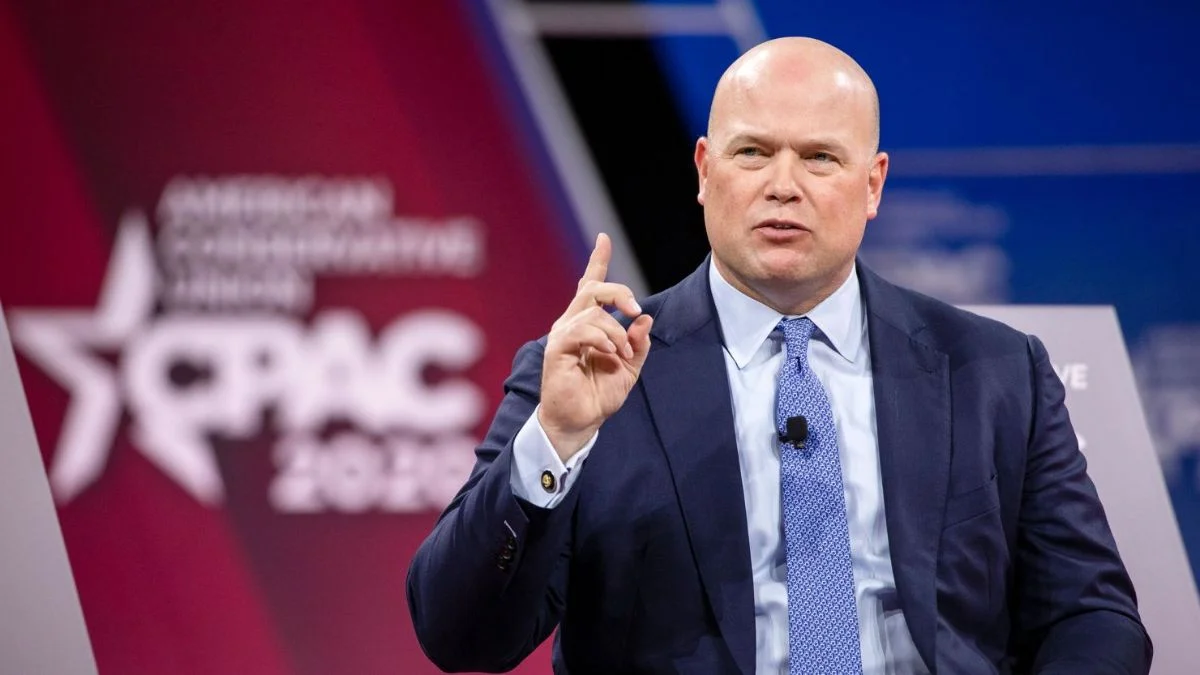

The United States may reconsider its role in the NATOwith Ambassador Matt Whitaker stating that Donald Trump will personally decide the country’s future in the alliance amid escalating tensions over burden-sharing and Middle East strategy.
Whitaker said President Trump is “evaluating and reevaluating everything,” signaling a potential shift in U.S. commitments after several European allies declined to participate in naval patrols in the Strait of Hormuz. The refusal has intensified Washington’s frustration, especially as European nations prioritize the Russia-Ukraine conflict over Gulf security operations.
Why the reassessment now
The review follows disagreements within NATO over military engagement in the Middle East. The U.S. had pushed for allied participation in securing Hormuz amid tensions with Iran, but many members termed it “not our war.”
In response, Trump has threatened to scale back support mechanisms, including arms procurement linked to Ukraine, reinforcing his long-standing “America First” stance that questions NATO’s value unless allies increase defense contributions.
Senior officials, including Secretary of State Marco Rubio and Defense Secretary Pete Hegsethhave echoed the need to reassess both NATO obligations and U.S. involvement in Ukraine, particularly around defense spending targets of up to 5% of GDP.
Military and diplomatic context
The developments come alongside U.S. military operations under Operation Epic Fury, which Trump claims has damaged Iran’s naval capabilities and nuclear infrastructure. However, continued Iranian missile strikes on Israel, including attacks on Haifa’s refinery, have cast doubt on claims that Tehran’s capabilities are significantly weakened.
Whitaker confirmed that backchannel diplomacy with Iran is ongoing, suggesting that Washington is exploring an “off-ramp” to reduce tensions even as military pressure continues.
Allied divide widens
European leaders have responded cautiously. Emmanuel Macron has dismissed military intervention in Hormuz as “unrealistic,” emphasizing diplomacy and alliance trust over coercion. Meanwhile, UK Prime Minister Keir Starmer is working to build a coalition focused on ensuring maritime security without escalating conflict. The divergence highlights a growing strategic divide within NATO, with Europe focused on Russia while the U.S. expands its attention to the Middle East.
Global security and economic implications
The uncertainty surrounding NATO’s future and Hormuz stability is raising global concerns. The strait remains a critical chokepoint for oil supplies, and any disruption could trigger volatility in global energy markets. Financial institutions have warned of rising risks, particularly for energy-dependent economies like India, which relies heavily on Gulf imports. Analysts also point to potential inflationary pressures and currency fluctuations if instability persists. At the same time, Gulf countries are exploring alternative energy routes, including multi-billion-dollar pipeline projects to bypass Hormuz, reflecting long-term strategic shifts in global energy logistics.
Whitaker’s remarks underscore a pivotal moment for NATO as Trump weighs continued U.S. participation. With disagreements over burden-sharing, regional priorities, and military engagement widening, the alliance faces increasing uncertainty.
As Washington reassesses its commitments, allies may be forced to prepare for a future with reduced U.S. leadership, even as geopolitical tensions from Iran to Ukraine continue to intensify.

Comments are closed.