
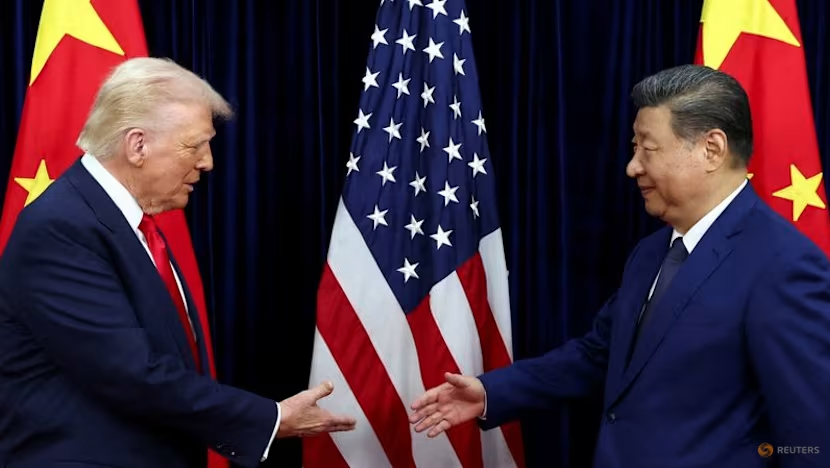

On May 14, President Donald Trump will meet with Chinese President Xi Jinping in Beijing, as confirmed by the White House, according to an analysis by Geopolitical Futures published Tuesday. This summit, which was initially delayed because of the continued war in Iran, was rescheduled as both nations sought to quickly address the increased U.S.-China tensions.
Analyst Victoria Herczegh noted that even though expectations are low, both governments already label the meeting as “historical” and “monumental.” Furthermore, her expectation is for a gradual and continuous effort towards improvement (stabilising) of the two countries’ relations rather than any major advances.
Washington’s quick rescheduling of this meeting indicates that it is very committed to preserving the dialogue by having high-level talks, even in the midst of multiple crises. U.S. officials believe the talks provide the opportunity to ensure that they are addressing long-standing areas of friction between the two countries, such as trade deficits and competition for military supremacy in the Indo-Pacific area, while the Iran crisis continues to change global priorities. China appears to be equally as committed to projecting stability and preventing further disruption to its economy.
According to Geopolitical Futures, the timing of the summit reflects a mutual understanding from both parties that neither will gain from further escalation. The return of Donald Trump to the presidency has reinvigorated his transactional style that created the Phase One trade agreement in his first term. However, this time, the agenda is broader in scope as both leaders work toward managing technology constraints, building resilient supply chains, and finding peaceful solutions to regional conflicts while at the same time keeping communication lines open between them.
While this meeting can provide President Trump with an opportunity to show that American leadership maintains a level of constructive and pragmatic engagement between the parties, analysts caution that expectations should remain realistic. According to Michael Herczegh, “Incrementally, there is likely to be adequate improvement,” and he states that the true test of the success of this meeting will be whether the two leaders will be able to transform their public optimism for the resolution of the most important global conflict.

Comments are closed.