
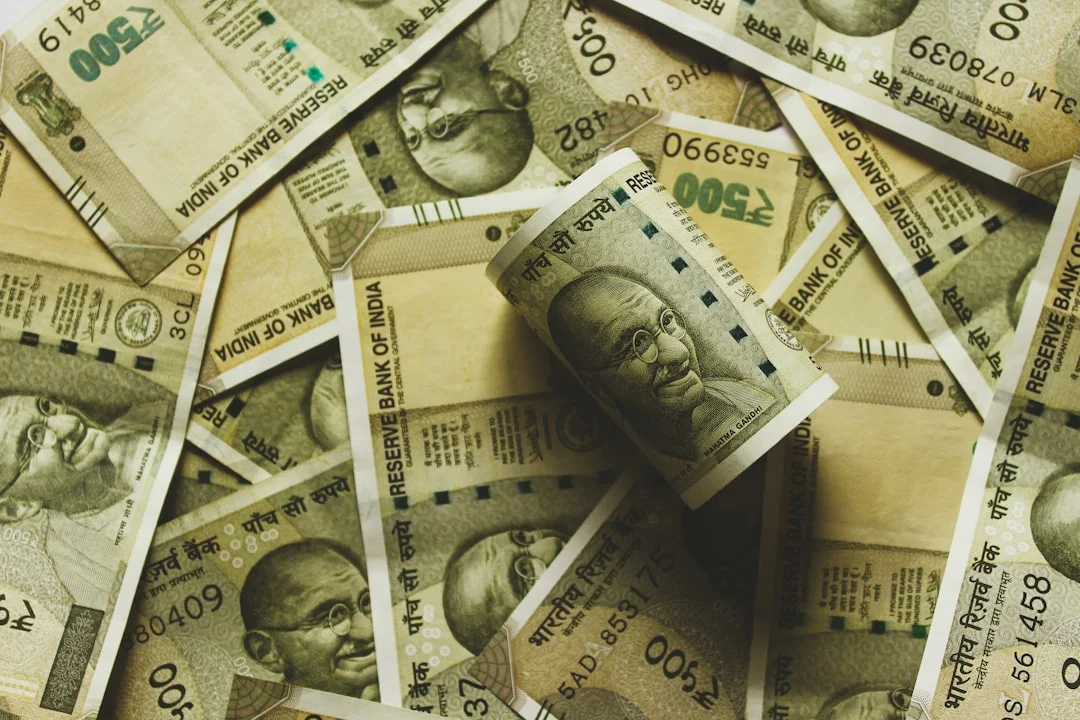

When the Reserve Bank of India releases an indicative borrowing calendar for state governments, most people skip past it as a technical document for bond market participants. They should not. The ₹2,54,509 crore that India’s states and union territories plan to borrow from markets between April and June 2026 is not an abstract financial statistic. It is a direct measure of how much India’s states are spending beyond their tax revenues, and the distribution of that borrowing across states tells a specific story about which parts of India are under the greatest fiscal pressure at a moment when the Iran war is adding new economic stress to an already strained public finance environment.
The borrowing calendar released by the RBI on April 2, 2026 identifies the states clearly. Here is what the numbers reveal.
Uttar Pradesh — The Largest Borrower Among BIS Pilot States
Uttar Pradesh is the single largest borrower among the nine Benchmark Issuance Strategy pilot states in the April to June 2026 quarter. Across the fortnightly auction cycle, UP raises ₹2,000 crore on April 7, ₹5,500 crore on April 13, ₹2,500 crore on April 28, ₹1,700 crore on May 12, ₹1,700 crore on May 26, ₹1,700 crore on June 9, and ₹1,700 crore on June 23.
The scale of UP’s market borrowings reflects the fiscal reality of governing India’s most populous state with approximately 240 million people. UP’s revenue base, despite improvements in recent years, remains structurally challenged relative to the scale of public services, infrastructure, and welfare programmes it needs to fund. The state’s ambitious development agenda, including multiple expressway projects, urban development schemes, and social welfare programmes, requires capital that tax revenues alone cannot supply.
The concentration of UP’s borrowings in the 6-10, 11-15, and 16-20 year tenor buckets reflects the long-dated nature of the infrastructure investments being financed. These are not borrowings to meet salary bills. They are borrowings to build roads, power infrastructure, and urban facilities whose returns accrue over decades.
Maharashtra — High Volume Driven by Economic Scale
Maharashtra is the second largest borrower among BIS pilot states, raising substantial amounts across every fortnightly auction. The state borrows ₹3,600 crore on April 7, ₹4,000 crore on April 21, ₹4,000 crore on May 5, ₹4,000 crore on May 19, ₹4,000 crore on June 2, ₹4,000 crore on June 16, totalling among the highest individual state contributions in the calendar.
Maharashtra’s high borrowing quantum is less a signal of fiscal distress than of economic scale. As India’s largest state economy, Maharashtra funds the largest absolute volume of public expenditure. Mumbai’s infrastructure requirements alone, from metro expansion to coastal road projects to the new Navi Mumbai International Airport, generate capital requirements that dwarf most other states. The 2-5, 6-10, 11-15, 16-20, 21-25, and above-25 year tenor spread in Maharashtra’s issuances reflects the broadest possible financing agenda.
The concern with Maharashtra is not its volume but its trajectory. The state has been running elevated deficits following a series of populist schemes introduced ahead of recent state elections, including free electricity, farm loan waivers, and direct benefit transfers that have created recurring expenditure commitments without corresponding revenue enhancements.
Tamil Nadu — The Dominant Non-BIS Borrower
Among the states outside the BIS pilot, Tamil Nadu is in a category of its own. Tamil Nadu appears in virtually every Annex 2 auction across the quarter with a remarkably consistent ₹3,000 crore per auction. This regularity, the same amount appearing in auction after auction regardless of market conditions, is itself a signal of the state’s financing pressure. Tamil Nadu is not optimising its borrowing timing around market conditions. It is raising capital at a consistent pace because its expenditure commitments require it.
Tamil Nadu’s fiscal situation has been under sustained attention from rating agencies and economists for several years. The state has among the highest debt to GSDP ratios of any major Indian state, driven by a combination of freebies and welfare schemes that successive governments have competed to offer voters. Free electricity up to a certain consumption level, free bus passes for women, subsidised ration supplies, and a range of other welfare commitments have created a structural gap between Tamil Nadu’s revenues and its expenditure that market borrowings partially bridge each quarter.
The ₹3,000 crore appearing in every Tamil Nadu auction in Annex 2 is the market expression of that structural gap.
Andhra Pradesh — Rebuilding and Borrowing
Andhra Pradesh appears prominently in the BIS pilot calendar with borrowings concentrated in longer tenors, particularly 11-15, 21-25, and above-25 year buckets. The state’s presence in the longest tenor buckets reflects its ongoing requirement to finance the Amaravati capital city construction project alongside its regular development expenditure, following the resumption of the project under Chief Minister Chandrababu Naidu’s government from 2024.
Andhra Pradesh’s fiscal situation has been complicated by years of inadequate central transfers following bifurcation and the disputed special category status that the state has consistently argued it was promised but never received. The state’s relatively high borrowing requirement reflects both genuine development financing needs and the legacy of fiscal stress accumulated through the YSRCP government period.
The Iran War Dimension
All of these state borrowing programmes face a materially more challenging market environment in April to June 2026 than they would have faced six months ago, specifically because of the Iran war’s macroeconomic impact on India.
State government bonds are priced at a spread above central government securities of equivalent maturity. When central government bond yields rise because of inflation expectations, FPI outflows, or currency weakness, state bond yields rise proportionally. The Iran war has driven all three of these factors simultaneously. The rupee at 95 per dollar, Brent crude above $100, and FPI outflows of ₹1.27 lakh crore in 2026 have all pushed Indian bond yields higher than they would otherwise be.
For states borrowing ₹2,54,509 crore in a single quarter, every basis point increase in yield translates into meaningfully higher interest costs over the life of the securities. The BIS pilot’s emphasis on benchmark tenor buckets and pre-announced issuance is partly designed to give investors the certainty they need to price these securities efficiently, but it cannot eliminate the macro yield pressure that the conflict has created.
The states borrowing the most this quarter, UP, Maharashtra, Tamil Nadu, Andhra Pradesh, and West Bengal, will all pay more to borrow in April to June 2026 than they would have paid in the same quarter last year. How much more depends on how the Iran war, the rupee, and the broader rate environment evolve over the coming weeks.
The RBI’s Stabilising Role
The RBI’s role in managing this calendar is not simply administrative. As cash and debt manager for state governments, the RBI times auctions to minimise market disruption, spaces issuances to avoid crowding out central government bond auctions, and maintains communication with states about market absorption capacity. The language in the press release noting that the RBI would endeavour to conduct auctions in a non-disruptive manner and may modify dates and amounts in consultation with states reflects the active management the central bank exercises over this enormous quarterly borrowing programme.
₹2,54,509 crore in three months. Twelve states and multiple union territories. A brand new benchmark issuance framework making its debut. And a macro environment shaped by the fifth week of a Gulf conflict that is pushing up yields, weakening the rupee, and testing the fiscal resilience of every state government in India simultaneously.
The borrowing calendar is technical. The story behind it is not.
This article is based on RBI Press Release 2026-2027/17 dated April 2, 2026. All borrowing figures are indicative and subject to modification. This article is for informational purposes only and does not constitute financial or investment advice.

Comments are closed.