

New Delhi: On the occasion of World Autism Awareness Day, medical experts across India are highlighting how evolving therapies—from behavioural methods to cutting-edge biomedical approaches—are transforming care for individuals with Autism Spectrum Disorder (ASD).
Autism is not a disease to be cured but a spectrum of neurodevelopmental differences that affect communication, behaviour and social interaction. Increasing awareness and scientific advances are now shifting the focus towards personalised, holistic care tailored to each individual’s needs.
Understanding autism and early signs
In India, autism is no longer considered rare. Studies suggest a prevalence of roughly 1 in 65–68 children, translating to nearly 2 million affected children. However, experts believe the real numbers may be higher due to underdiagnosis.
Early signs often include delayed speech, difficulty with social interaction and repetitive behaviours. Yet, limited awareness and uneven access to specialists—especially beyond urban centres—continue to delay diagnosis and intervention.
Doctors stress that early support plays a crucial role in improving communication, independence and overall quality of life.
Behavioural therapies remain the foundation
For decades, behavioural interventions have been central to autism care. One of the most widely used methods is Applied Behaviour Analysis (ABA), which focuses on reinforcing positive behaviours and improving communication and social skills.
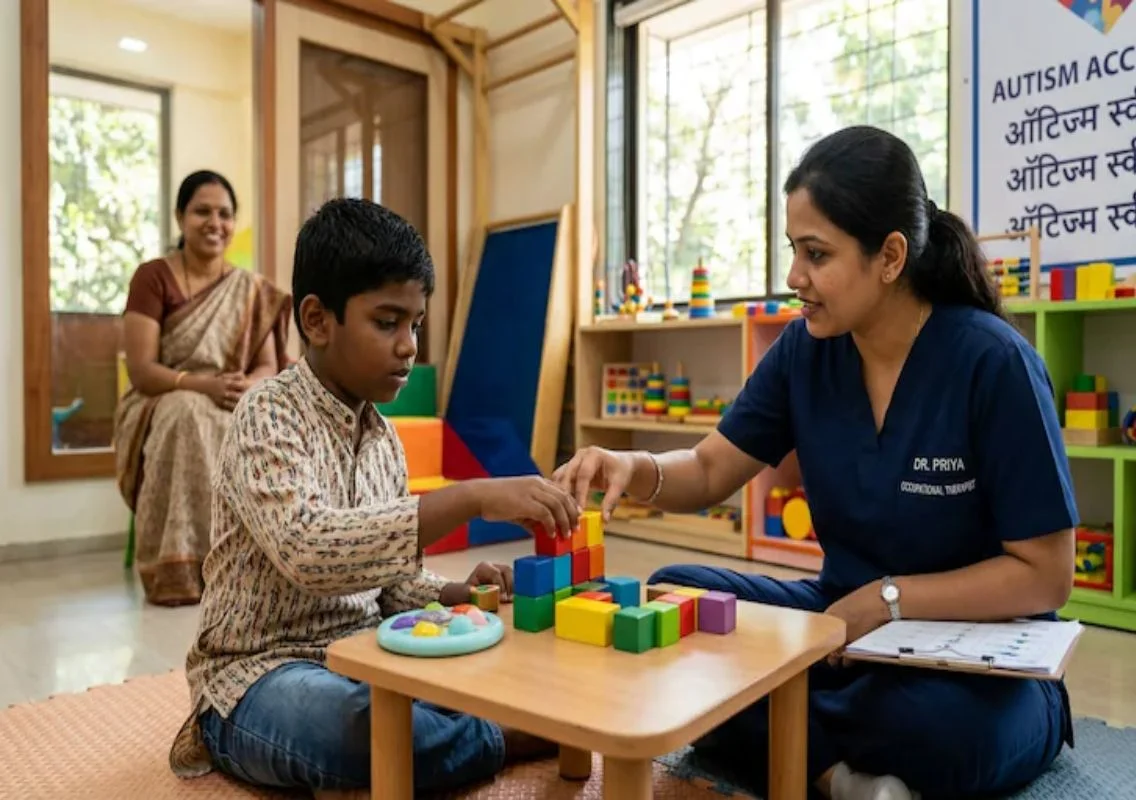
Speech therapy and occupational therapy also remain key pillars, helping children develop language abilities and manage daily activities.
Modern adaptations of behavioural therapy are now becoming more flexible and child-centric. Naturalistic approaches integrate learning into everyday routines such as play, making therapy more engaging and aligned with the neurodiversity movement, which promotes acceptance rather than conformity.
Technology is reshaping autism care
Technology is playing an increasingly important role in therapy delivery. From mobile applications to virtual reality tools, digital platforms are helping children practise social interactions in safe, controlled environments.
Robot-assisted therapy is another emerging innovation, particularly effective for younger children. These tools can make therapy less intimidating, encouraging engagement and improving learning outcomes.
Experts emphasise that technology complements—not replaces—human therapists, enhancing accessibility and effectiveness.
Rise of biomedical and precision approaches
Recent advances in neuroscience and genetics are deepening understanding of autism’s biological underpinnings. Researchers are exploring factors such as brain connectivity, immune responses and genetic variations.
Biomedical approaches include studies on gut health, nutrition and microbiome balance, alongside targeted supplementation. While still emerging, these approaches highlight the importance of personalised medicine.
Pharmacological research is also progressing. Although no medication currently treats core autism traits, some drugs help manage associated conditions like anxiety, hyperactivity and sleep disturbances.
More advanced innovations—such as stem cell therapy, gene-based treatments and neuromodulation techniques like transcranial magnetic stimulation—are under investigation, though experts caution that these are not yet fully proven.
Why a holistic approach matters
Doctors increasingly agree that no single therapy works for every individual. The future of autism care lies in combining behavioural strategies, medical support and technology into a unified, personalised plan.
In India, improving early screening, expanding access to trained professionals and increasing public awareness remain critical priorities.
Autism represents a different way of experiencing the world—not a limitation. With the right support systems, individuals on the spectrum can lead independent, meaningful lives and contribute significantly to society.

Comments are closed.