

Among the fastest-growing players is hot pot chain Tanghuo Kungfu Malatang. After its first franchised outlet opened in Suwon in 2012, the brand has grown to more than 560 locations in South Korea as of end-March, including both franchised and company-operated stores, according to The Korea Times.
Tanghuo Kungfu Korea recorded KRW22.2 billion (US$14.7 million) in 2024, a 21% increase from 2023, according to latest available data. Its operating profit jumped 11 times to KRW10.5 billion in the same period.
Its outlets are now concentrated in major tourist areas of Seoul, including Gangnam Station, Myeong-dong, Hongdae, Seongsu and Daehangno.
The chain is waiving franchise, training and royalty fees for new partners and providing complimentary serving bowls.
“As Korea’s malatang market continues to expand, we want to attract prospective entrepreneurs and share with them our brand’s operational knowhow and practical support benefits,” a Tanghuo Kungfu Korea official said. Malatang refers to a Chinese street food dish with meat, vegetables and noodles simmered in spicy broth.
“We hope to see active participation by local restaurateurs here so that we can together lead the malatang’s market growth here.”
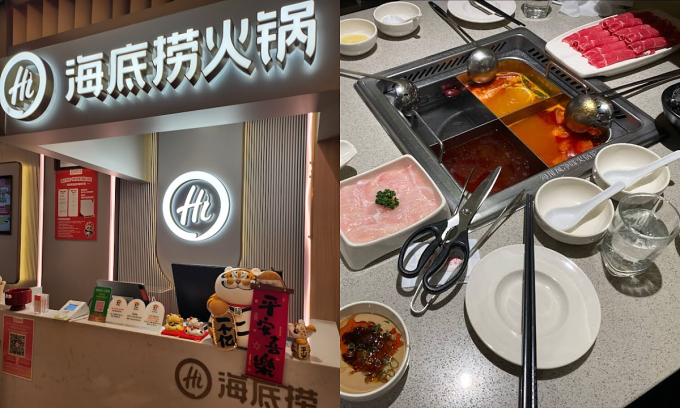
Hot pot chain Haidilao’s last year’s sales were estimated at over KRW100 billion, compared to KRW78.1 billion in 2024.
A Haidilao restaurant in Seoul, South Korea. Photos via Google Maps/libo wang, Bashair alabdulwahab |
The brand, which is known for offering customers free nail art services and entertainment shows, has expanded to 10 locations since entering South Korea in 2024.
Other Chinese brands are also scaling up. Bantianyao Grilled Fish has grown to six outlets since its entrance in 2020, while Haihai Kaochuan – a skewer barbecue brand operated by Haidilao – opened its first Seoul outlet in Myeong-dong in January.
These restaurant chains are adopting a similar expansion strategy to major Chinese tea brands, which already proved their sucess in China with thousands of stores. The push into South Korea comes as China’s domestic market approaches saturation.
Milk tea brand Chagee said it plans to open three outlets in Seoul by end-June, marking its first expansion into East Asia outside China, according to China Daily. Chabaido, HeyTea and Mixue are also increasing their footprint in the country.
Market observers say South Korea offers an attractive entry point for global expansion, citing its strong cultural influence through trends such as K-pop, K-food and K-beauty. This has positioned the country as a testing ground for new brands before broader international rollout.
Comments are closed.