
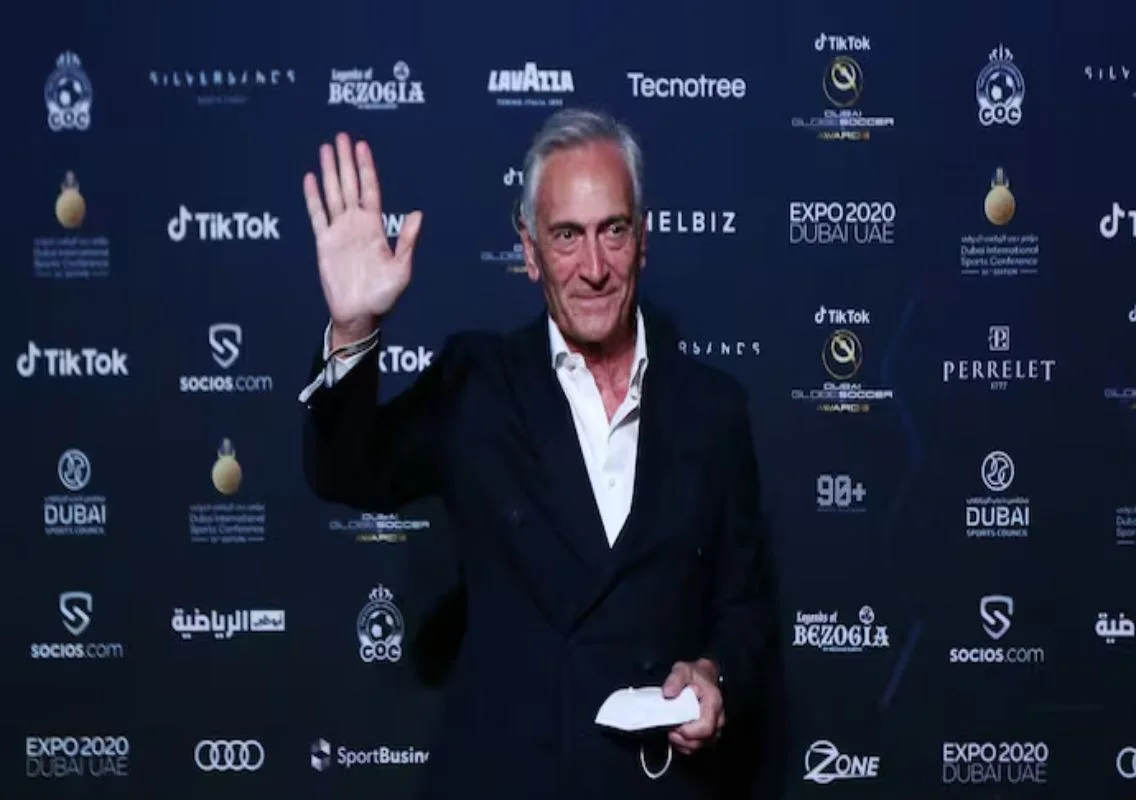

Rome: Gabriele Gravina has resigned as president of the Italian Football Federation following Italy’s failure to qualify for the FIFA World Cup for a third consecutive time, triggering a major shake-up in the country’s football leadership.
The decision came after Italy’s dramatic penalty shootout defeat to Bosnia and Herzegovina in the World Cup play-off final earlier this week, which ended the Azzurri’s hopes of reaching the 2026 tournament in North America.
Third consecutive failure prompts exit
Italy’s latest setback marks an unprecedented low for one of football’s most decorated nations. The four-time world champions have now failed to qualify for the 2018, 2022, and 2026 World Cups.
The recent loss added to a series of disappointing exits in qualification play-offs, including defeats to Sweden and North Macedonia in previous campaigns.
Gravina, who took charge in 2018 after the resignation of Carlo Tavecchio, faced mounting pressure to step down as criticism intensified from both fans and officials.
Government calls for reset
Italy’s Sports Minister Andrea Abodi publicly urged a complete overhaul of the football system, stressing that change must begin at the top.
He emphasised that Italian football requires a structural reset to recover from repeated failures and restore its competitiveness on the global stage.
The minister’s remarks reflected growing frustration across the country, where expectations remain high given Italy’s historic success in international football.
Mixed legacy under Gravina
During his tenure, Gravina oversaw Italy’s triumph at the delayed UEFA Euro 2020, a high point that briefly revived national pride.
However, that success was overshadowed by continued struggles in World Cup qualification. Italy’s decline in global tournaments has been evident since their last World Cup victory in 2006, with early exits in 2010 and 2014 followed by consecutive qualification failures.
Despite stepping down as FIGC president, Gravina’s role as a vice president of UEFA may continue temporarily until a successor is appointed, as per organisational rules.
UEFA president Aleksander Ceferin expressed support for Gravina, acknowledging his contributions despite the recent disappointment.
Coaching future uncertain
The fallout is expected to extend beyond the federation, with Italy head coach Gennaro Gattuso likely to step down.
Gattuso, who replaced Luciano Spalletti earlier this year, had overseen a brief resurgence with a six-match winning streak but ultimately failed to secure qualification.
Several high-profile names are already being discussed as potential replacements, including:
- Roberto Mancini
- Simone Inzaghi
- Antonio Conte
- Massimiliano Allegri
What lies ahead for Italian football
An election to appoint a new FIGC president has been scheduled for June 22, marking the beginning of a crucial rebuilding phase.
Gravina is also expected to appear before a parliamentary hearing next week to address the broader issues facing Italian football, including governance, youth development, and domestic league competitiveness.
Conclusion
Gravina’s resignation signals a turning point for Italian football as it confronts one of the most challenging periods in its history. With three consecutive World Cup absences, the pressure is now on new leadership to rebuild the national team and restore Italy’s standing in global football.
The coming months will be decisive in shaping the future of the Azzurri, as structural reforms and leadership changes aim to reverse years of decline.
Comments are closed.