
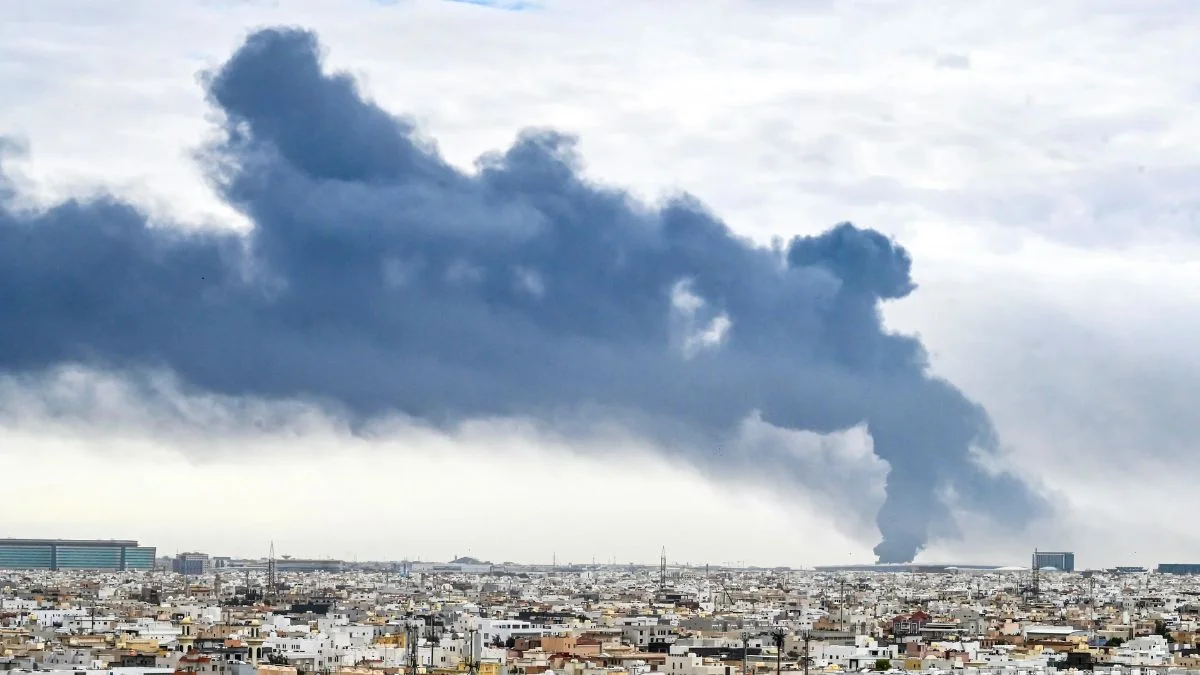

Kuwait says an Iranian attack has struck a major power and water desalination plant on Friday, April 3, 2026, damaging parts of the facility and forcing emergency teams to activate backup plans to keep electricity and water services running. Open‑source government‑linked statements and public‑safety briefs show that Kuwait’s Ministry of Electricity, Water and Renewable Energy has confirmed the incident, describing the strike as a targeted assault on a critical civilian‑infrastructure node at dawn that left a service building and several technical components damaged. Open‑source summaries tied to the Ministry note that the damage is significant but not catastrophic, and that operations are being sustained under contingency protocols.
Nature of the attack and reported damage
The Ministry’s open‑channel explanation, as distilled in public‑safety‑style briefs and translated‑summary digests, specifies that the incident occurred when an Iranian‑launched projectile or drone hit a service building associated with one of Kuwait’s integrated power‑generation and desalination units. The strike caused structural harm to the building and some technical equipment, disrupting part of the facility’s normal workflow rather than completely shutting it down. These same summaries indicate that the attack is consistent with a broader pattern of Iranian strikes on Gulf energy and utility infrastructure since the start of the US–Israel–Iran war, in which power plants, desalination stations and transmission lines have been repeatedly targeted or damaged by debris from intercepted missiles.
In prior open‑source servicing reports, analysts working with regional‑energy‑monitoring platforms noted that similar attacks on Kuwait’s power and desalination infrastructure in late March had already triggered partial outages and forced the Ministry to lean on alternative lines and reserve capacity. The Friday, April 3, incident is described as another escalation in that trend, though open‑source operational‑response briefs stress that the plant remains partially operational and that emergency crews are working to isolate damaged zones to prevent cascading failures.
Emergency response and continuity of services
Kuwaiti officials have said that technical and emergency teams were deployed immediately after the attack, following pre‑approved contingency plans to contain the damage and maintain electricity and water output. Open‑source Ministry‑linked summaries note that the response is being coordinated with security authorities to secure the perimeter, guard against follow‑up strikes and verify the integrity of fuel‑supply and cooling‑water circuits that feed the plant. Analysts reviewing these briefs argue that the fact that power and desalination output has not collapsed outright reflects both the robustness of Kuwait’s emergency‑response planning and the redundancy built into its power‑grid architecture.
Still, open‑source energy‑security‑policy notes caution that repeated attacks on such facilities wear down both physical infrastructure and institutional resilience over time, increasing the risk of longer‑term supply disruptions if the warfare pattern continues. Some regional‑monitoring summaries warn that the targeting of desalination plants is especially concerning because Kuwait relies heavily on desalinated water to meet domestic demand, and any sustained outage in desalination capacity can strain water‑storage reserves and distribution networks.
The Friday strike on the Kuwaiti power and desalination plant is being read by several open‑source conflict‑tracking and energy‑security portals as a sign that Iran’s military‑campaign strategy now explicitly includes Gulf‑state civilian‑infrastructure targets, not only American‑linked military bases. These same briefs point out that the broader US–Israel–Iran war has already led to similar incidents in neighbouring Gulf states, including power‑grid damage and refinery‑facility fires, that have forced regional governments to heighten air‑defence, civil‑defence and industrial‑security protocols.
From a humanitarian‑and‑governance‑stability perspective, open‑source emergency‑management‑style digests stress that the protection of power and desalination assets is critical to public‑order and health‑system continuity, particularly in hot‑season periods when cooling‑demand spikes. As of April 3, 2026, Kuwaiti authorities are presenting the Friday attack as a serious incident but one that the system is managing through existing contingency frameworks, while also signalling that the country will treat further assaults on its civilian‑energy infrastructure as potential triggers for escalated regional‑security responses.

Comments are closed.