

Ghulam Jamun, who graced every occasion, had foreign connections, know how he reached India from the Persian Gulf.

Gulab Jamun Origin: Be it a wedding or a festival, every celebration is incomplete without Gulab Jamun. But what we respect as our national sweet, its real home is across the seven seas in Iran. After all, how a foreign dish became India’s most popular sweet. Let us know its 500 years old history.
Called the pride of the Indian thali, Gulab Jamun has been a part of our taste buds for centuries. But according to food historians, this sweet is originally a gift from the Middle East. In Persia it was known as Luqmat-al-Qadi. However, after coming to India, the changes that took place in its form and taste gave it a new identity across the world.
Shahjahan’s cook’s mistake
According to a popular folklore, Gulab Jamun was invented in India during the reign of Mughal emperor Shahjahan. It is said that his royal chef inadvertently tried to create the Persian sweet Luqmat-al-Qadi but the fusion of Indian ingredients and local flavors resulted in a new dish. When the king tasted it, he became crazy about it and gradually it came out of the royal palaces and reached the plates of the common people.
How did it get this name?
This question often comes in people’s mind that when this sweet has neither rose nor blackberry, then why this name. There is an interesting mathematics behind this in Persian language.
The word rose is made up of two Persian words Gul meaning flower and Aab meaning water. Since rose water was used extensively in the syrup of this sweet and it smelled like flowers, hence it was called Gul Aab.
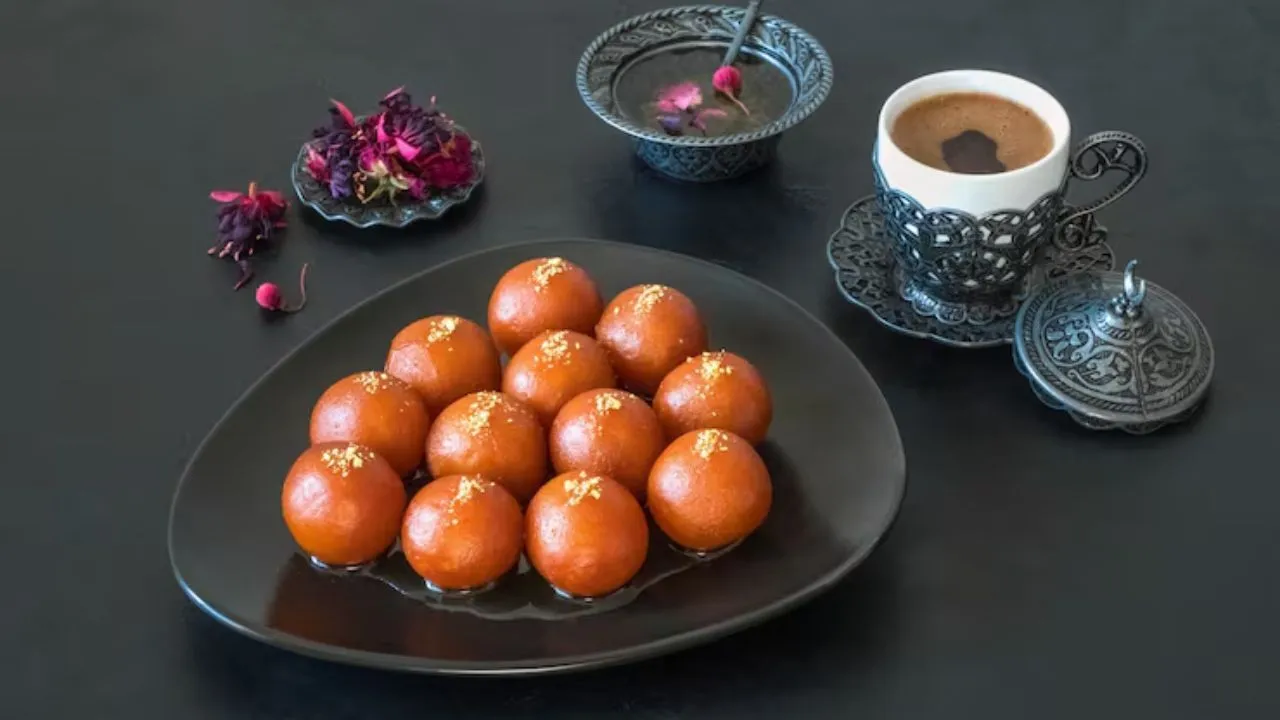
Gulab Jamun dipped in syrup (Sau. AI)
Also read:- Good Friday: Why no celebration is celebrated on this day across the world, know the shocking secret behind it
The reason behind jamun is its size and color. Due to its dark brown-violet color and round shape, it has been compared to the Indian fruit jamun. This is how Gul-Aab and Jamun were formed together. sweet dish.
Difference between Iranian Lukmat and Indian Gulab Jamun
Luqmat-al-kadi, the original dessert made in Iran, was made primarily by frying flour batter and then dipping it in honey syrup. But in India, khoya started being used in it due to which its texture became more velvety and taste richer.
Gulab Jamun in today’s times
Today there are countless varieties of it in India. Be it Pantua of Bengal, Kala Jamun of Madhya Pradesh or Paneer Gulab Jamun of Rajasthan, every state has given it its own flavor.
Even though we are seeing new sweets in the digital age, the charm of Gulab Jamun still remains. The next time you enjoy a hot gulab jamun, remember that you are tasting not just a dessert but a 500-year-old global history.

Comments are closed.