
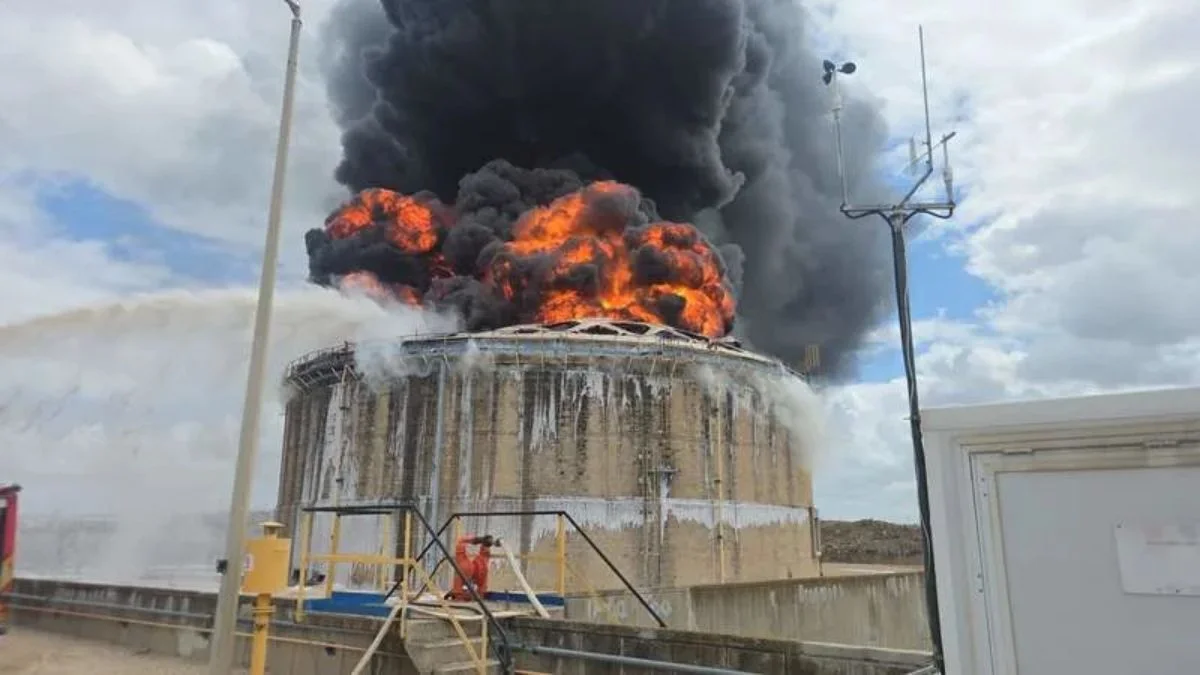

A fresh wave of missile and drone attacks launched by Iran targeted multiple regions in Israel on Friday, marking another escalation in the ongoing conflict between the two countries. According to verified open-source defence monitoring inputs and civil-defence updates, several intercepted projectiles resulted in debris falling across multiple sites in and around Haifacausing localized damage.
Early assessments from regional security-tracking systems indicate that the barrage involved a combination of ballistic missiles and unmanned aerial systems directed toward central and northern Israeli regions. A significant number of these threats were intercepted by Israel’s multi-layered air defence network, which includes advanced systems such as Arrow, David’s Sling, and Iron Dome.
Despite the high interception rate, defence-monitoring analyses highlight that some interceptions occurred at relatively low altitudes. This resulted in fragments of missiles and possible munition components descending into populated and industrial areas rather than falling into open or maritime zones. As a result, even successfully neutralized threats contributed to infrastructure disruptions.
Reports based on open-source situation mapping and emergency alerts indicate that debris from at least one intercepted missile scattered across multiple locations in Haifa and its surrounding suburbs. Authorities responded swiftly, deploying emergency services to secure affected areas and assess structural damage. Residents were advised to avoid contact with debris, which may contain hazardous materials, and to strictly follow official safety guidelines.
Preliminary information suggests that while structural and infrastructure damage has been reported, the number of serious casualties remains limited. This has largely been attributed to the effectiveness of early-warning sirens and widespread adherence to shelter protocols by residents. Civil-defence advisories in the Haifa Bay region reinforced standard emergency measures, including staying indoors during alerts and avoiding impacted zones until cleared by authorities.
Analytical inputs from open-source conflict-monitoring platforms emphasize that secondary damage from falling debris remains a significant risk factor in modern missile defence scenarios. Even when interception systems perform effectively, remnants of destroyed projectiles can disrupt power grids, communication systems, and transportation infrastructure particularly in densely populated coastal cities like Haifa.
The latest attacks form part of a broader pattern of escalation in the Iran-Israel conflict, which has seen repeated exchanges of missile and drone strikes in recent days. Monitoring inputs indicate that Iran and its allied regional actors have intensified their offensive posture, while Israel and its partners have continued retaliatory operations targeting strategic assets.
For residents in northern Israel, including Haifa and nearby towns, the incident underscores an evolving security reality where cities not directly targeted can still face consequences from aerial interceptions. The expansion of conflict zones through long-range missile and drone warfare has effectively turned secondary urban centres into frontline exposure areas.
Security assessments suggest that the frequency of such barrages may remain elevated in the near term, keeping air-defence systems, emergency responders, and civilian populations under sustained high alert. The situation continues to be closely monitored as regional tensions show no immediate signs of de-escalation.

Comments are closed.