
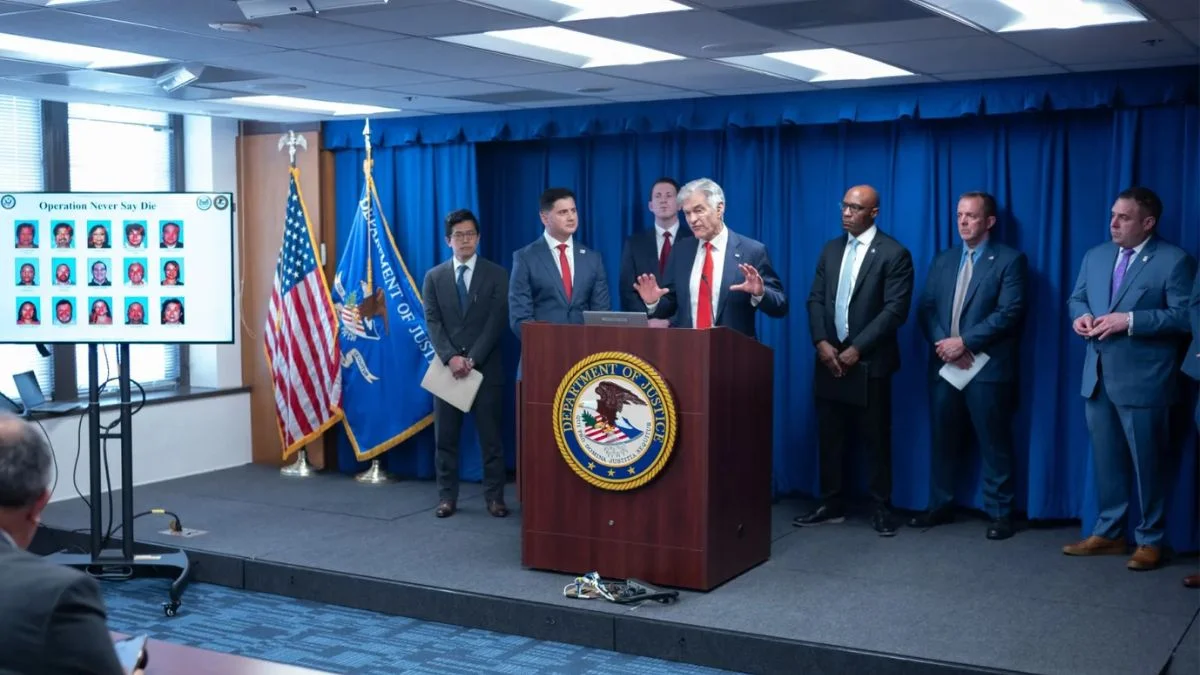

Federal authorities have announced the arrest of multiple individuals in Southern California in connection with what they describe as a large‑scale healthcare‑fraud takedown centered on sham hospice facilities, open‑source U.S.‑government‑linked briefings and consolidated federal‑agency statements show. The operation, which officials have described publicly via federal‑press‑release‑style summaries and federal‑court‑document‑linked accounts, targets more than a dozen defendants accused of orchestrating a scheme that defrauded Medicare and other public‑health‑care programs of at least $50 million between roughly 2022 and 2024.
Scope of the alleged hospice‑fraud scheme
According to federal‑court‑document‑derived narratives circulated through open‑source legal‑brief platforms and government‑adjacent news‑style summaries, the defendants allegedly operated a network of hospice‑care facilities across Southern California that billed Medicare for end‑of‑life services for patients who were not actually terminally ill. The facilities reportedly operated under names tied to cities such as Covina, Anaheim, Glendale and Lakewood, with ownership and management roles held by physicians, nurses, a chiropractor and a psychologist, according to federally disclosed charging‑document excerpts.
Officials have said the scheme worked by enrolling non‑terminally‑ill individuals as hospice beneficiaries, then submitting claims for hospice‑related care that was either unnecessary, minimal or never rendered. Federal‑agency‑linked summaries note that investigators became suspicious partly because of anomalously high survival rates at some of these facilities rates reportedly several times the national average suggesting that patients classified as “dying” were not medically consistent with standard hospice‑eligibility criteria.
Arrests, charges, and key defendants
Federal‑agency‑published arrest and indictment‑summary documents indicate that eight individuals were taken into custody on April 1–2, 2026, with a total of 15 defendants formally charged in connection with the alleged fraud ring. Among those named in open‑source charge‑summaries is a married couple, Gladwin and Amelou Gill, described in court‑linked narratives as co‑owners of a hospice‑care entity that allegedly submitted more than about $5 million in fraudulent Medicare claims, with roughly $4 million reportedly paid out by the program.
Another prominently named defendant is Lolita Beronilla Minerd, a licensed vocational nurse from Anaheim, who is alleged to have owned and operated a separate hospice firm that billed Medicare for more than about $9 million, again for services that authorities say were not medically necessary or not properly delivered. Federal‑court‑document summaries also reference a third party, Ivan Verne Lauritzen, described as a former chief executive and chief financial officer of a revocable hospice provider, and another individual, Nita Almuete Paddit Palma, a repeat‑fraud‑offender reportedly acting from federal‑prison‑linked communications to help operate at least three suspected fraudulent hospice entities.
How the fraud is said to have unfolded?
Federal‑brief‑style narratives, based on criminal‑complaint material and summarized in open‑source government‑release channels, say the scheme relied on a mix of false documentation and kickback‑driven referrals. Prosecutors claim that some defendants allegedly paid illegal kickbacks to physicians, recruiters and patients in exchange for placing non‑terminal individuals into hospice billing rolls, then forged or overstated medical records to support the reimbursement claims.
Authorities state that the funds obtained fraudulently were not reinvested in patient care but instead used for personal expenses, including international travel, mortgage payments, car loans and transfers of money overseas. These spending patterns, as laid out in federal‑agency‑released material, are presented as evidence that the hospice firms prioritized financial gain over genuine medical care, turning the end‑of‑life‑care system into a vehicle for large‑scale billing abuse.
Broader hospice‑fraud concerns in California
The current takedown, iterated in federal‑justice‑department‑style summaries and California‑state‑level‑legal‑brief‑style pages, is framed as part of a wider, years‑long effort to crack down on hospice‑related fraud in California. Open‑source California‑state‑government‑linked briefs show that regulators in Sacramento have already revoked more than 280 hospice‑care licenses and placed hundreds of additional providers under heightened scrutiny, citing repeated patterns of improper billing and eligibility violations.
Federal‑agency‑linked commentaries argue that hospice‑care fraud, while a small share of the total U.S. healthcare‑fraud bill, can be especially egregious because it preys on vulnerable patients and their families at the end of life. As of April 3, 2026, authorities say the SoCal‑hospice takedown remains active, with investigators continuing to sift through billing records and potentially targeting additional entities as part of the broader “Operation Never Say Die”‑style enforcement wave

Comments are closed.