
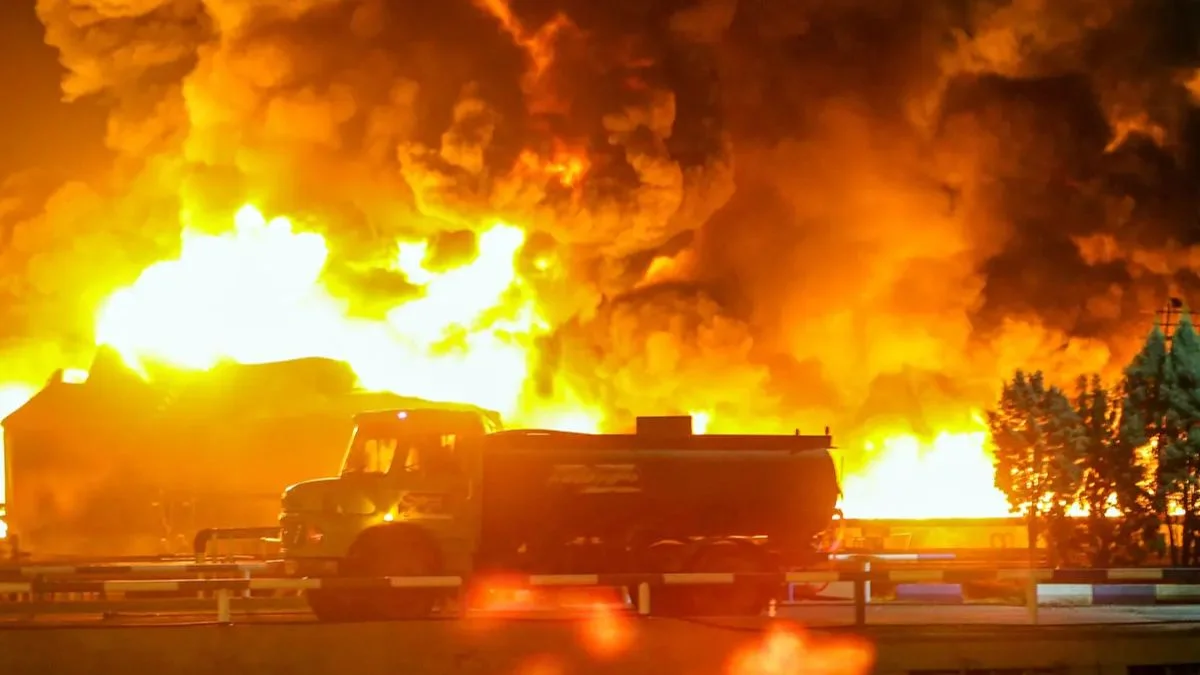

Residents in southern Iran have reported hearing powerful explosions in the oil‑and‑gas hubs of Abadan and Asaluyeh, as well as in the central‑southern city of Shiraz, raising fresh security and safety concerns amid the wider regional conflict involving Iran. Open‑source local‑monitoring channels and official‑adjacent Iranian media outlets describe multiple loud blasts and, in some areas, plumes of smoke, though precise locations and causes remain under investigation. As of April 3, 2026, authorities have not yet issued a unified, detailed public statement explaining all incidents, leaving analysts and residents to piece together information from fragmentary reports circulating on open Internet platforms.
Abadan and Asaluyeh are major nodes in Iran’s energy infrastructure, hosting large refineries, petrochemical complexes and connections to the South Pars gas field, the world’s largest natural gas reservoir. In recent weeks, open‑analysis summaries linked to regional‑conflict monitoring groups have documented repeated strikes and incidents affecting oil and gas facilities in the wider Khuzestan and Bushehr‑coast region, often tied to the broader Iran war and related military operations in the Persian Gulf. The latest reports of explosions in and around Abadan and Asaluyeh fit into that pattern, with some online‑sourced technical briefs suggesting that the bangs could be linked either to targeted strikes on energy installations or to secondary industrial accidents triggered by wartime stress on aging infrastructure.
Open‑source industrial‑risk and conflict‑monitoring platforms note that petrochemical and refinery sites in the south have already absorbed significant damage in earlier phases of the Iran‑related campaign, including at Asaluyeh‑linked gas and oil‑processing units struck in March 2026. These sources caution that repeated blasts in the same geographic cluster can raise the risk of cascading fires, gas leaks and worker‑safety emergencies, even if immediate casualties are not yet confirmed. Local‑language safety alerts and civil‑defence‑style posts circulating in the region urge residents to stay indoors, move away from industrial zones and follow only official channels for updates, which is consistent with crisis‑management protocols used during past industrial‑explosion events.
In the city of Shiraz, social‑media‑linked situation reports and city‑wide messaging describe residents hearing strong, rumbling explosions, with some accounts pointing to mountainous or industrial fringes of the city. Earlier incident‑tracking briefs related to Iran have recorded similar patterns in Shiraz and surrounding areas, including unexplained blasts attributed sometimes to industrial accidents, military‑related activity or sabotage‑style incidents, depending on the political context. In the current climate, open‑source conflict‑monitoring outlets stress that it is difficult to distinguish between military‑targeted strikes, collateral effects from regional warfare, and accidental industrial‑site detonations based solely on public‑domain acoustic and visual reports.
Iranian authorities have occasionally downplayed or reluctantly attributed past blasts in and around Shiraz to technical faults rather than direct attacks, citing internal investigations and safety‑board‑style statements. However, in the current conflict environment, analysts tied to open‑source‑monitoring networks warn that residents in cities such as Shiraz, Abadan and Asaluyeh may increasingly be exposed to the cross‑border spillover of strikes and counter‑strikes, even if their immediate vicinity is not a declared military target.
Taken together, the reports of explosions in Abadan, Asaluyeh and Shiraz on April 3 underscore how southern Iran has become a flashpoint where energy‑infrastructure vulnerability, military‑installation density and population‑center proximity combine to heighten risk. Open‑source humanitarian‑monitoring and regional‑security summaries note that repeated blasts in or near industrial and residential zones can strain emergency‑response systems, disrupt supply chains and inject new fear into already‑tense populations. As the broader Iran‑related conflict continues, these recurring incidents in the south may push local and national authorities to tighten air‑defence, early‑warning and evacuation protocols, while residents in cities such as Abadan, Asaluyeh and Shiraz brace for further rumbles overhead.

Comments are closed.