
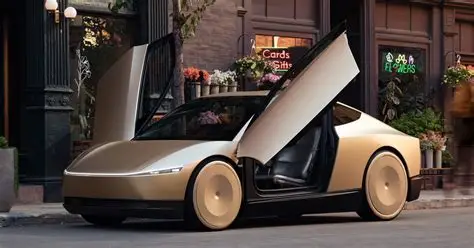

The latest revealing news about Tesla’s robotaxis has made a lot of people rethink their faith in Advanced Technology. According to Tesla, they aren’t always driving themselves. Under pressure from Senator Ed Markey, Tesla admitted that remote operators in Austin and Palo Alto can step in and take direct control of the vehicles in rare situations. But they have put a clause on it and mentioned that it happens under special circumstances alone. Being upfront and honest, although not thorough, they revealed that Tesla’s staff can actually drive them remotely, making it a controversy and a matter of concern.
How do Robotaxis by Tesla operate?
Tesla’s robotaxis completely use “Full Self-Driving” (FSD) software, which uses a vision-based system of cameras and AI to navigate on the roads. It functions just like a human and moves like one. Unlike many competitors that use expensive LiDAR sensors, Tesla relies largely on cameras to mimic human sight and movement. While the entire idea behind it was to automate the process, we now know there’s a slight intervention of humans for safety. Remote operators who are stationed in command centers can intervene if a vehicle gets stuck or has some trouble moving, though currently, they only take direct control at low speeds. So, basically, the car handles most of the driving there through neural networks, while some people from the team provide a backup for some exceptional cases.
Questions it Poses: Is Technology Reliable?
The question of reliability is of great importance here and impacts how most people perceive technology and its impact on their lives. On one hand, Tesla’s FSD has logged over 8 billion miles, providing a huge assurance. FSD Version 14 also recently won “Driver Assistance System of the Year,” showing that tech is more capable than ever, and there is no red flag in the matter. On the other hand, the feedback is not always green. Recent reports also suggest that these robotaxis crash at roughly four times the rate of human drivers, even when there is no identified object in the way, or even a moving vehicle. Also, the fact that remote human operators are still necessary for “emergency extractions” proves that the AI has a huge room for improvement. For now, the tech is impressive, but not yet totally reliable enough that one just blindly goes behind it.
So, whether you want to trust it all with your heart or not is still a question we leave in your hands to decide. However, Tesla’s models are among the best in the world and have bagged awards for their solid trust factor and almost negligible crashes and accidents. The raging controversy may show otherwise, and also is concerning, but things may improve in the future.

Comments are closed.