
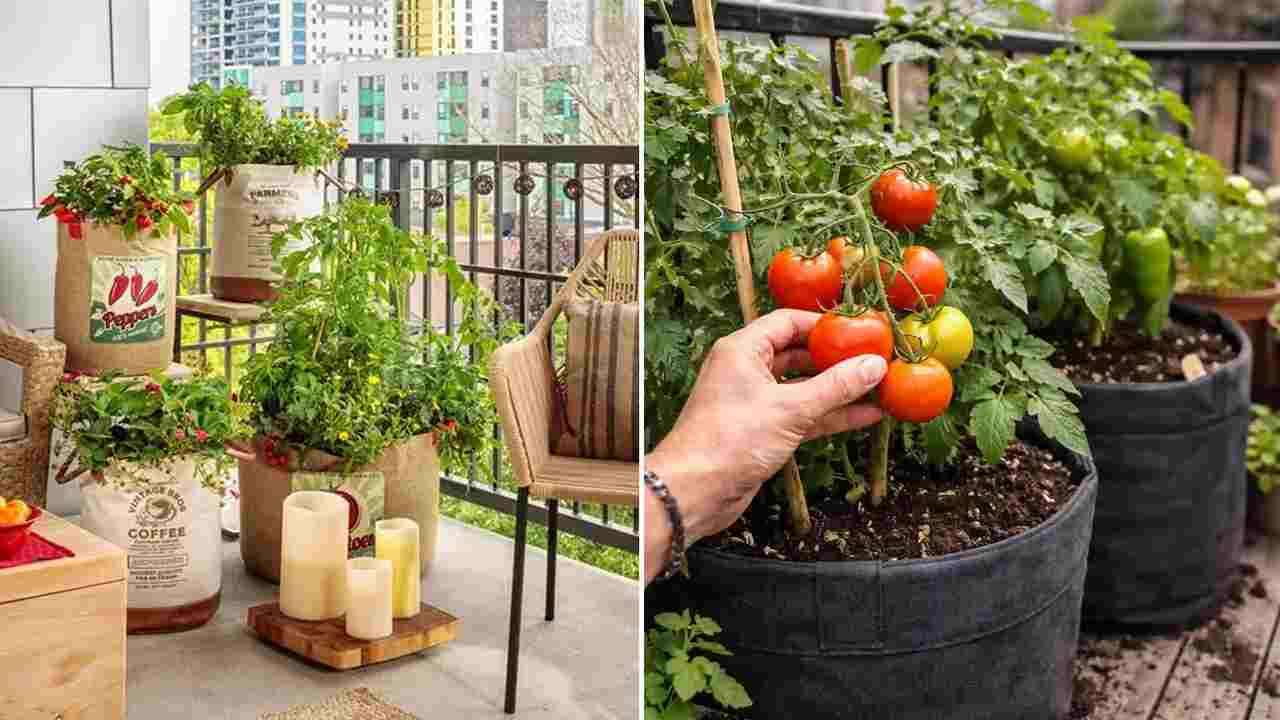
Say ‘bye-bye’ to poisonous vegetables in the market! How to grow organic vegetables in a small balcony of your house, here are 6 secret steps: – ..

Nowadays, the vegetables available in the market are full of chemicals and pesticides, which are slowly poisoning our health. This is the reason why people are now increasingly returning to ‘Kitchen Gardening’ i.e. growing organic vegetables at home. If you think this requires a big farm or garden, you are wrong! Even if you have a small 4×4 feet balcony, a corner of the terrace or just a space to keep a few pots, you can easily grow your everyday fresh vegetables.
The best thing is that for this you do not need to be an expert in gardening. Just follow these 6 easy steps and enjoy fresh, nutritious and chemical-free vegetables at home.
1. First choose the right place: Sunlight is the ‘life’ of vegetables.
70% of the growth of any plant depends on the sunlight it receives. Identify a spot in your house, balcony, terrace or window grill that gets at least 6 to 7 hours of direct sunlight a day. Vegetables like tomato, ladyfinger, bottle gourd and pumpkin need plenty of sunlight. On the other hand, if there is less sunlight in your place, then you can easily grow leafy vegetables like coriander, mint, spinach and fenugreek.
2. Selection of pot or grow bag: Which size is best for which vegetable?
The depth of the pot should be decided according to how much the roots of the vegetable will spread. You can use plastic pots, grow bags, clay pots or old buckets. Choose the right size like this:
Tomato, Chilli, Brinjal: 12 to 14 inch deep pots.
ladyfinger: 12 inch pot.
Bottle gourd, pumpkin, ridge gourd: Large grow bags or tubs, 15 to 18 inches across (these will need mesh to spread out).
Spinach, fenugreek, coriander: Wide pots with 6 to 8 inches depth.
3. Magical soil formula: Prepare ‘Super Potting Mix’ like this
The health of your plants depends entirely on the soil. The soil should be loose, light and rich in nutrients. To make a great potting mix, mix 50% normal garden soil, 30% old cowdung manure or vermi-compost and 20% cocopeat or sand. To protect from fungus, add a handful of neem cake in it. Before using, dry this soil in strong sunlight for 2-3 days so that harmful bacteria and fungus are destroyed.
4. Sow seeds according to the season: only then you will get bumper yield.
90% of people fail in gardening because they sow wrong seeds in the wrong season. Always choose vegetables according to the season:
Summer Vegetables (March to July): Bottle gourd, pumpkin, ladyfinger, tomato, chilli, brinjal and bitter gourd.
Winter Vegetables (October to February): Carrot, radish, cabbage, broccoli, peas, spinach and fenugreek.
Vegetables that grow throughout the year: Green chilli, coriander, mint and lettuce.
Pro-Tip: Before putting the seeds in the soil, soak them in lukewarm water for about 30 minutes. Due to this, germination happens very fast. Do not press the seeds too deep into the soil, just 1 cm deep is enough.
5. Timetable of water and fertilizer: This is the real secret of 100% growth
Water vegetable plants only in the morning or evening. Maintain moisture in the soil but do not make it swampy (avoid overwatering). In summer, plants need water daily, whereas in winter, watering once in 2 to 3 days is enough.
To provide adequate nutrition to the plants, add a handful of vermicompost to the pot every 15 days. For good growth of fruits and flowers, add banana peel water (excellent source of potash) every 20 days.
6. Plant Care: Pruning, Support and Natural Pest Control
As plants grow, they need proper care:
Provide support: Support vine vegetables like gourd and pumpkin with rope or bamboo net. Provide wooden support to tomato and brinjal stems to prevent them from breaking.
Trimming: Keep cutting the dry and yellow leaves of the plants from time to time, this helps in the new growth of the plant faster.
Protection from insects: Spray neem oil (5 ml in 1 liter of water) on the plants once a week. Apart from this, spraying sour buttermilk and water (ratio 1:3) or garlic-ginger water also keeps insects like white fly and aphids away.
Just follow these simple steps and transform your balcony into a lush, healthy kitchen garden!

Comments are closed.