

180
With the Centre’s proposal to amend the Naari Shakti Vandan Adhiniyam for hastening the rollout of women’s reservation while simultaneously increasing the number of Lok Sabha seats of all states by 50 per cent has put the Opposition in a bind, and the opposition parties term it as a ploy by the ruling BJP for a longterm electoral gain.
The government has called the special session of Parliament from April 16 to 18 for three days for the Women’s Reservation Bill, and the opposition parties especially the Congress has dubbed it as the clear-cut violation of model code of conduct with main motto to influence the outcome of assembly polls in West Bengal and Tamil Nadu, where the polling is due on April 23 and 29.
The government has called a special session of Parliament from April 16 to 18 to discuss the Women’s Reservation Bill. Opposition parties, especially the Indian National Congress, have termed the move a clear violation of the Model Code of Conduct, alleging that its primary objective is to influence the outcome of Assembly elections in West Bengal and Tamil Nadu, where polling is scheduled for April 23 and 29, respectively.
Sources in the Opposition camp said they cannot be seen opposing any move that accelerates the implementation of the one-third reservation for women in the Lok Sabha and State Assemblies. However, they added that supporting the Act could also pave the way for a delimitation exercise that may benefit the BJP-led NDA.
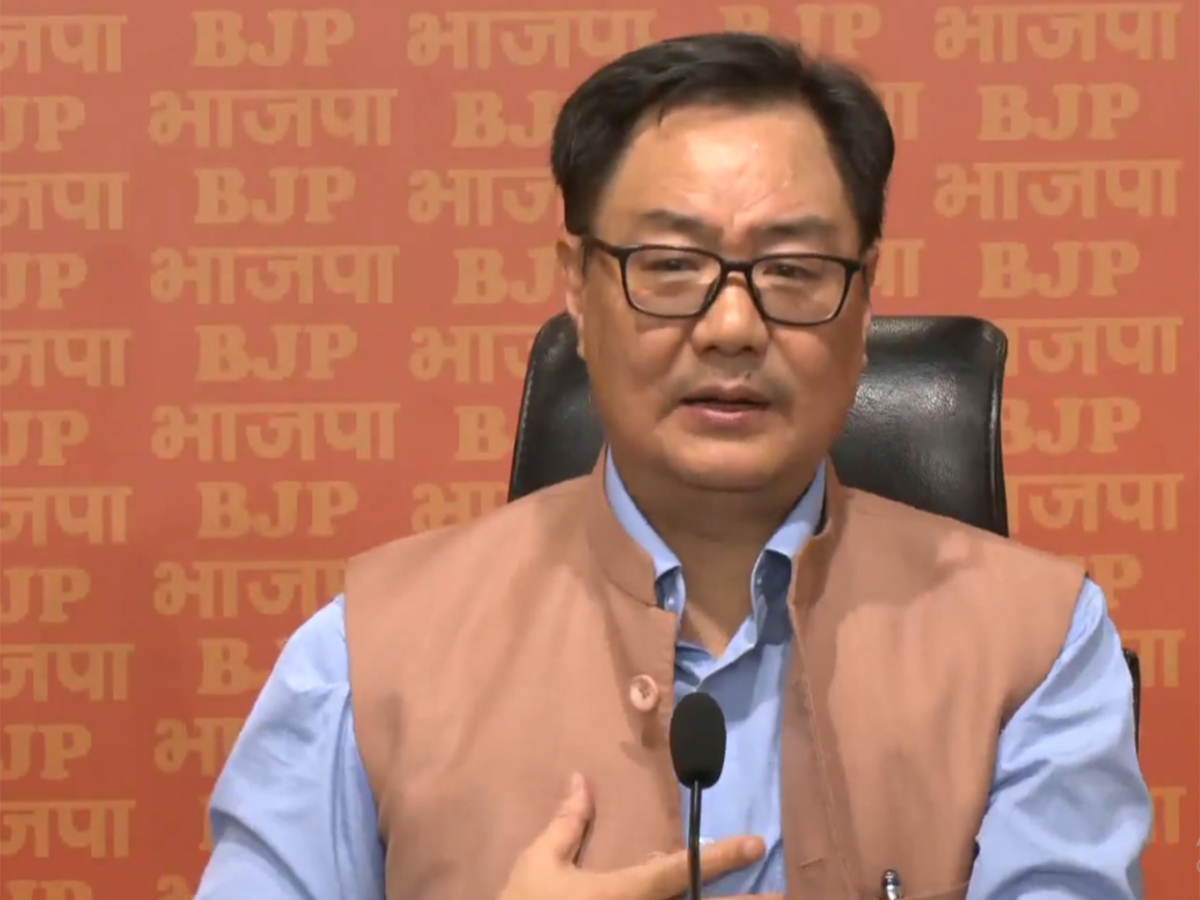
Addressing a press conference at the party headquarters, Congress general secretary (communications) Jairam Ramesh referred to the exchange of letters between Congress president Mallikarjun Kharge and Union Parliamentary Affairs Minister Kiren Rijiju. He noted that letters dated March 16 and March 26 discussed only the Women’s Reservation Act, with no mention of delimitation.
When asked by Read, Ramesh said that Rijiju had written three letters to Kharge. Quoting from the March 16 letter, he said Rijiju had sought discussions on the implementation framework of the Act and the need for broad national consensus.
Ramesh pointed out that none of the letters mentioned delimitation. “While there is talk of amending the Act, the issue of delimitation is being introduced separately. The government’s intentions are not clear. If delimitation was part of the plan, it should have been stated from the beginning,” he said.
He added that the Opposition had received unofficial information about delimitation being taken up during the session and criticised the process as “undemocratic” and “arbitrary”.
Ramesh also said that the Congress would convene a meeting of Opposition parties ahead of the special session to discuss both issues.
Other Opposition parties echoed similar concerns, stating that while they support women’s reservation, the simultaneous discussion on delimitation has complicated matters.
Sources said the government plans to remove the 2023 law’s provision that makes delimitation—based on the first Census conducted after 2026—a prerequisite for implementing one-third reservation for women in Parliament and State Assemblies.
It is also learnt that the government has informally conveyed to Opposition leaders its willingness to increase the Lok Sabha’s strength from 543 to 816 members and carry out delimitation based on the 2011 Census, enabling the rollout of women’s reservation by the 2029 general elections.
NEW DELHI: The proposal to uniformly increase the number of seats in each state by 50 per cent is seen as an attempt to address concerns that population-based delimitation would disadvantage southern states, which have successfully controlled population growth, while benefiting Hindi heartland states such as Uttar Pradesh and Bihar.
However, the proposal has not gone down well with several leaders from southern states. Telangana Chief Minister Revanth Reddy and Tamil Nadu Chief Minister M. K. Stalin have expressed strong reservations.
An INDIA bloc source said that while the “uniform increase” formula would raise the combined strength of southern states—Telangana, Andhra Pradesh, Karnataka, Kerala, and Tamil Nadu—from 129 to 195 seats (an increase of 66), Uttar Pradesh and Bihar alone would see their combined strength rise from 120 to 180 seats—an increase of 60.
If similar increases occur across other northern and western states—including Delhi, Chhattisgarh, Madhya Pradesh, Rajasthan, Maharashtra, Haryana, Uttarakhand, Himachal Pradesh, Gujarat, Punjab, and Jharkhand—many of which are currently considered BJP strongholds, the NDA’s tally could reach 471 seats, well above the majority mark of 408 in an 816-member Lok Sabha. In contrast, the five southern states together would account for 195 seats.
Sources said the timing of the delimitation proposal alongside the Naari Shakti Vandan Adhiniyam has put the Opposition in a difficult position, prompting the Congress to convene a meeting of INDIA bloc floor leaders to formulate a common strategy.

Comments are closed.