
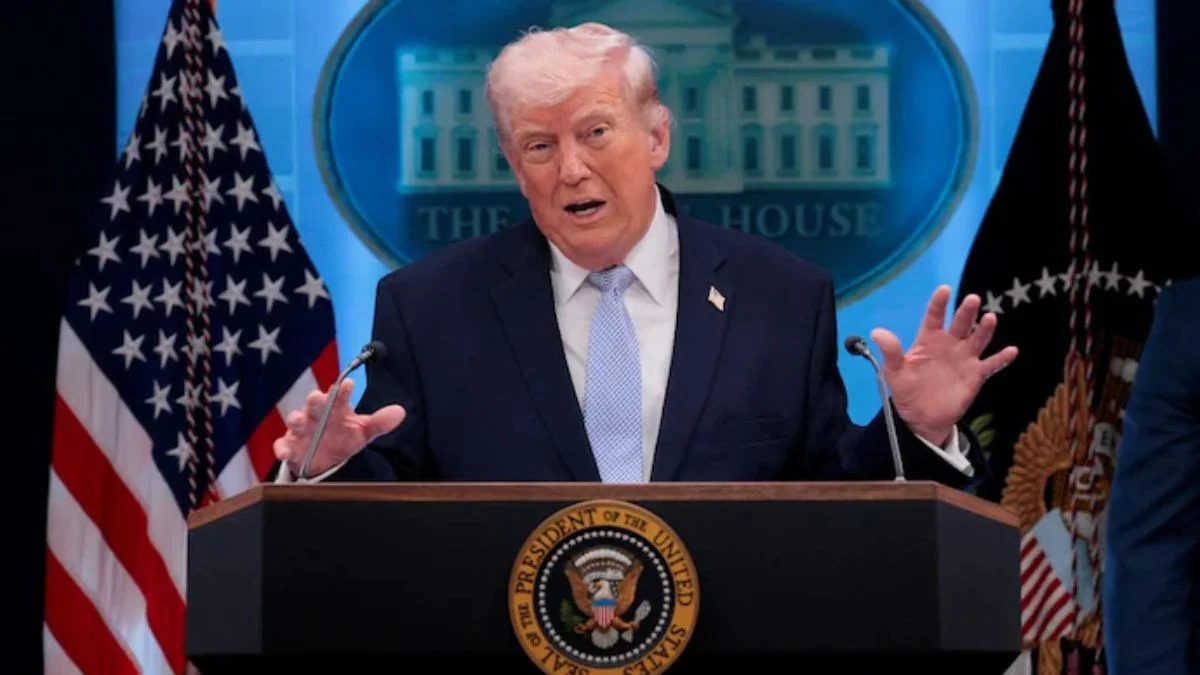

President Donald Trump issued a stern warning to Iran, saying that if a deal is not reached by 8 p.m. Eastern Time tomorrow, the U.S. will target bridges and power plants in the country. He added that whether the war winds down depends entirely on Iran’s actions and that the administration will monitor the situation closely.
Trump said he hopes not to take such destructive action, but emphasized that the reopening of the Strait of Hormuz remains a major priority for U.S. strategic and energy interests.
Strait of Hormuz Remains at the Centre of Tensions
The Strait of Hormuz, through which about 20% of the world’s oil passes, has been effectively blocked during the conflict, causing a spike in global energy prices. Trump reiterated that reopening the strait is essential, signaling that the U.S. may escalate strikes if Tehran continues to obstruct shipping lanes.
Analysts say any further disruption in Hormuz could send oil prices toward $5 per gallon in the U.S., while LNG shipments to Europe and Asia could also be delayed, intensifying global energy market volatility.
Trump Hints at Conditional De-escalation
When asked about winding down the war, Trump said he cannot provide a timeline. He stated that the duration and intensity of U.S. action depends on Iran’s response to diplomatic efforts and warnings.
The president also said he believes Iran is negotiating in good faith, signaling that while military pressure is mounting, there remains an active push for a potential diplomatic resolution.
What This Means for Global Energy and Markets
Markets are reacting to Trump’s statements, as investors weigh the potential for immediate escalation against the chance for an imminent deal. Any strikes on infrastructure could disrupt oil and gas supply chains, further raising prices for consumers and increasing uncertainty in international markets.
With the 8 p.m. deadline looming, both diplomatic and military developments over the next 24 hours are likely to dominate headlines and affect global energy stability.

Comments are closed.