
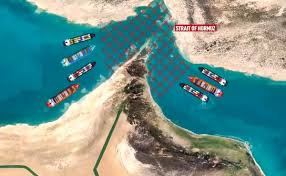
Will Iran collect toll tax from ships in the Strait of Hormuz? New crisis in Gulf countries, know what is international maritime law

News India Live, Digital Desk: Amidst the increasing tension in the Middle East, Iran has indicated to take a step which has created a stir in the global business world. According to reports, a new bill has been introduced in the Iranian Parliament, under which a plan is being made to collect ‘toll’ or security fee from foreign ships passing through the Strait of Hormuz, the world’s busiest sea route. If this law is implemented, there could be a huge increase in the cost of international sea transportation, which will have a direct impact on the prices of crude oil and gas. Iran’s argument: ‘If we are providing security, then the world should also bear the cost’. Iranian lawmakers say that Iran invests heavily in the security of the region and provides stability to the Gulf countries. According to Iranian Parliament member Mohammad Hossein Avazeh, Iran has to bear the cost of protecting its maritime borders amid sanctions imposed by the US and its allies. In such a situation, countries that use Iran’s waters or routes under its influence should pay fees in return. Iran’s aim is to collect taxes from ships that belong to countries that have supported sanctions against Iran. What does the International Maritime Law (UNCLOS) say? Legal experts have started raising questions on this plan of Iran. According to the 1982 United Nations Convention on the Law of the Sea (UNCLOS), any strait can be used for international shipping under the right of ‘transit passage’. Right of free passage: Under international law, ships passing through vital waterways such as the Strait of Hormuz cannot be stopped or taxed by any country unless they pose a threat to that country’s security. Iran’s stand: However, Iran has signed the UNCLOS treaty but has not ratified it. Iran claims that a large part of the Strait of Hormuz falls in its territorial waters, hence it has the right to decide the rules there. Fear of worldwide oil crisis: India will have a big impact. How important the Strait of Hormuz is can be gauged from the fact that about 20 to 25 percent of the world’s total crude oil passes through here. Oil exports from countries like Saudi Arabia, Iraq, UAE and Kuwait depend on this narrow route. If Iran starts collecting toll here or controlling the movement of ships, then there will be a crisis of energy security for big importing countries like India. This will not only increase the prices of petrol and diesel, but the global supply chain can also completely collapse.

Comments are closed.