
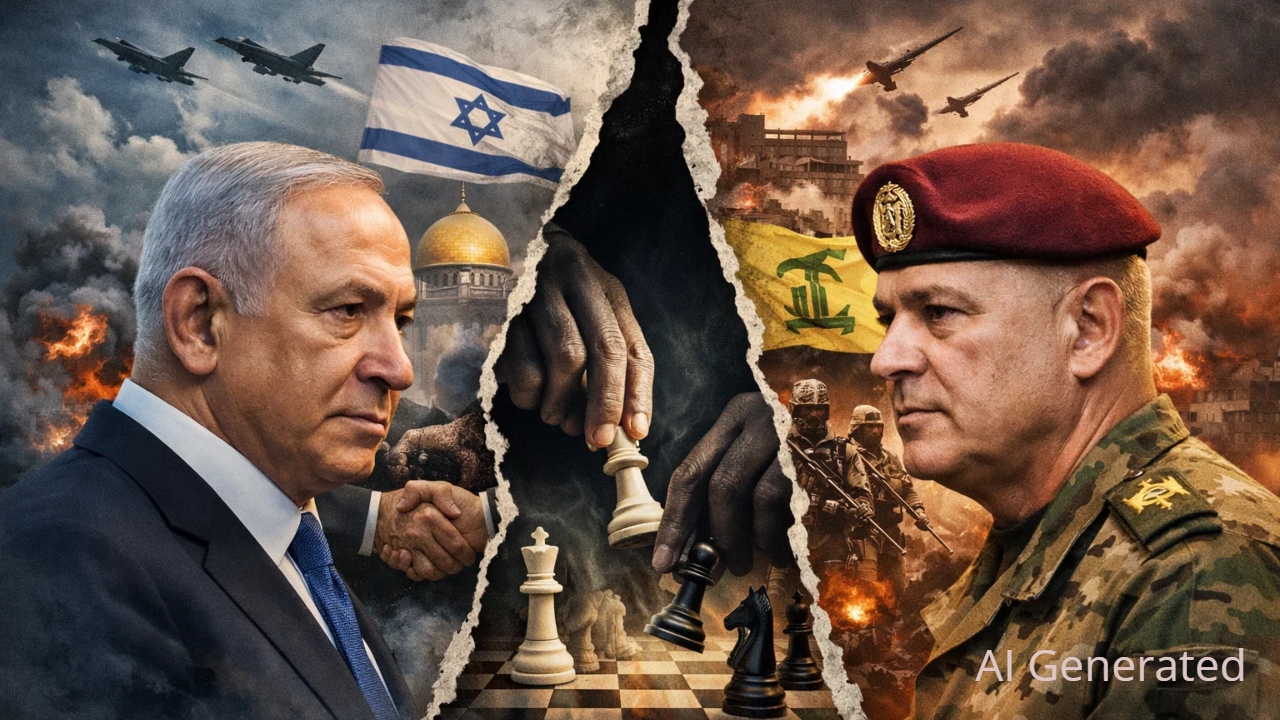
Ceasefire or deception: What is the hidden ‘double war strategy’ behind Israel’s Lebanon attack?

Even after the ceasefire in the Iran War, the biggest question is whether the ceasefire will actually be implemented or is it just a strategic pause? IsraelThe situation between Lebanon, Iran and America indicates that there is not peace on the ground, but a controlled conflict. Ceasefire may have been announced, but the attacks have not stopped completely, hence the ceasefire is being considered as ‘tactical ceasefire’ or ‘deceit’ in the media world.
What, when and why did the ceasefire happen?
Ceasefire means temporary stoppage of war, but in the current situation it does not seem like a complete ceasefire but a strategic decision taken under pressure. During the conflict in Gaza, concern about the humanitarian crisis increased at the international level, due to which America and other countries intervened. A major reason behind this is also believed to be that Israel needed time to strengthen its military position and decide the next steps.
After all, why is Israel targeting Lebanon?
Lebanon is not just a neighbor to Israel, but an active military threat zone, where organizations like Hezbollah are present, which are supported by Iran. Hezbollah has a large number of rockets and missiles, which can pose a serious threat to the northern part of Israel. In such a situation, Israel is adopting a ‘preemptive strike’ strategy, that is, trying to weaken the potential threat in advance.
What is Israel’s ‘double war strategy’?
This strategy means applying pressure on two fronts simultaneously, but avoiding all-out war. On one hand, Israel is carrying out a massive military campaign against Hamas in Gaza, while on the other hand, it is carrying out limited but continuous attacks against Hezbollah in Lebanon. Its purpose is to prevent enemy forces from uniting and attacking on a large scale and to weaken them separately on every front.
What is the thinking behind this strategy?
Israel’s security policy has always been made keeping in mind the multi-front threat. If he had focused only on Gaza, the threat on the northern border could have increased. Therefore, it wants to maintain a balanced pressure, so that the opposing forces remain scattered and Israel’s ability to create ‘deterrence’ i.e. fear remains intact.
What is Iran’s role in this?
Iran is not directly involved in the war, but it is an important player in this entire conflict. It supports organizations like Hezbollah and Hamas and puts pressure on Israel through ‘proxy war’. Iran’s strategy is to avoid direct confrontation and maintain influence in the region through its allies and keep Israel engaged on many fronts.
What is America’s role?
America is trying to strike a balance in this entire incident. On one hand it supports Israel, while on the other hand it wants to prevent the spread of regional war. America has increased military deployment and has also warned Iran not to jump directly into this conflict. His objective is clear – to prevent the Middle East from turning into a major war.
Will this ceasefire last or just an illusion?
Looking at the current situation it is clear that this is not a permanent peace. Small attacks continue and tension remains. In such a situation, it would not be wrong to say that this ceasefire is actually a strategic pause, behind which major military and diplomatic calculations are going on. If the situation worsens, this conflict could easily escalate into a major regional war, but if diplomacy works, tensions may remain at a limited level.
To what extent is Israel given US freedom?
Israel’s current military actions are believed to be indirectly supported by the US, but this is not a full-blown “open green signal”. The US provides military, intelligence and diplomatic assistance to Israel, especially against Hamas and Hezbollah. However, he does not want the war to spread to Lebanon or Iran and become a major regional conflict. Therefore America’s stance is “support with control”. Support as well as trying to set limits.
According to an article published in the Long War Journal, a “dual war strategy” is behind Israel’s attacks on Lebanon, especially those related to ceasefire negotiations in 2024–2026. Its strategy is to create a buffer zone with Israeli covert deception and to weaken Hezbollah’s capabilities.
Is the aim to break Lebanon’s link with Gaza?
The objective of this strategy is to break ties between the Lebanon and Gaza fronts, thereby forcing Hezbollah to surrender, while leaving the option of further military action open despite nominal ceasefire agreements. Israel knows that Hezbollah cannot be weakened on the basis of air strikes alone. Israel’s continuous air strikes in the last 15 months weakened Hezbollah but could not stop it completely.
So this is the whole matter?
The Long War Journal also mentions that the IDF plans to submit a proposal to the Israeli government to create a “security zone” in southern Lebanon about 2 to 3 kilometers from the Blue Line, Israel’s actual border line with Lebanon. According to this plan, no Israeli outpost will be built in this area. Lebanese civilians will be evacuated from the area to prevent confrontation between local people and IDF soldiers.
What is visible in the Middle East is not the whole story. Ceasefire can only be a ‘break’. The real game is one of strategy. Israel’s ‘double war strategy’ shows that it is trying to handle multiple fronts simultaneously. Whereas Iran is putting pressure through its proxy network. In such a situation, it would not be wrong to say that this may not be peace, but may also be “silence before the storm”.

Comments are closed.