
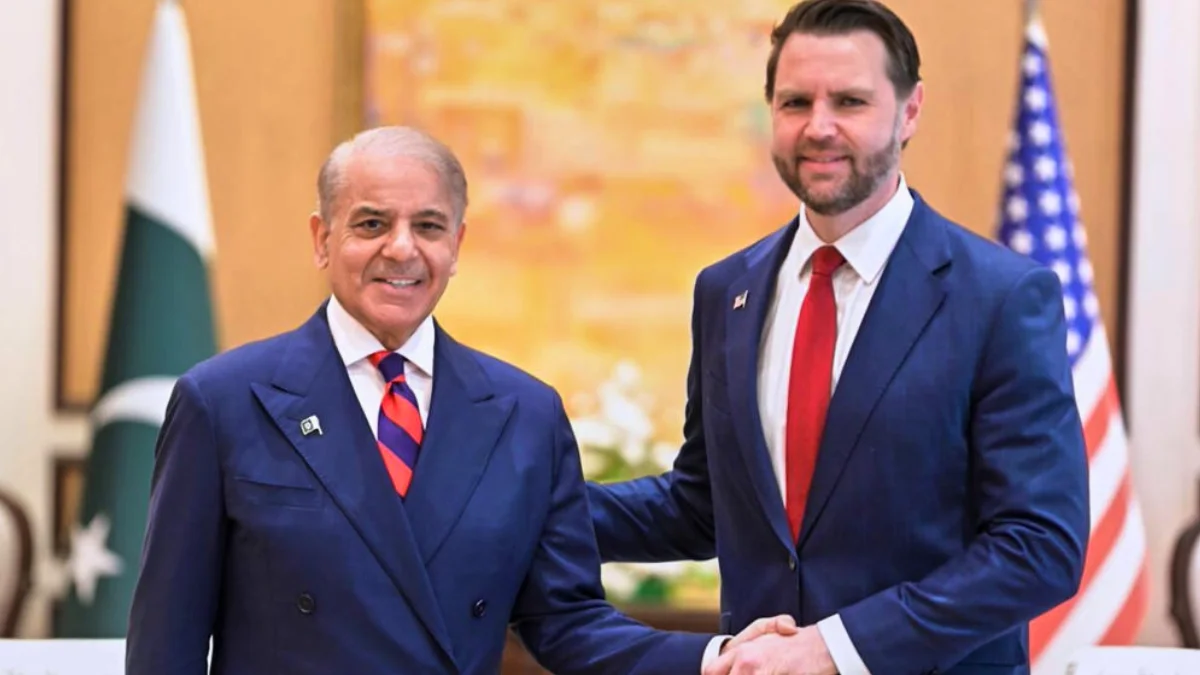
US vice president JD Vance meets Pakistan PM ahead of historic ceasefire talks with Iran

On Saturday, US Vice President JD Vance met with Pakistani Prime Minister Shehbaz Sharif in Islamabad. This meeting was held just hours before Vance’s high-level ceasefire negotiations with an Iranian delegation. This meeting between Vance and Sharif represents the highest-level direct engagement between the US and Iran since the 1979 Iranian revolution.
As the leader of the US delegation, Vance met with Sharif to assist his participation in Pakistan’s mediation of a two-week ceasefire between the US and Iran into a permanent agreement. Iranian Parliament Speaker Mohammad Bagher Ghalibaf and Iranian Foreign Minister Abbas Araghchi led the Iranian delegation’s meetings with Pakistani officials.
The negotiations are centered around reopening the Strait of Hormuz (unconditionally), lifting sanctions against Iran, and finding a resolution to the regional conflict around Israel and Hezbollah. Before they can enter into full negotiations, Iran has indicated that it will only do so if certain preconditions are met, while the US has stated that free navigation through this vital waterway must be guaranteed without “toll booth” restrictions.
Before leaving for Islamabad, Vance expressed cautious optimism about the outcome of this meeting, stating he believes that the outcome will be “positive” and while the process could be “messy”, it is necessary. Pakistani officials indicated these negotiations were “make or break” in terms of the stability of the region.
With ongoing incidents occurring in the region, the two-week ceasefire negotiated by Pakistan earlier this month continues to be under strain. A successful set of talks in Islamabad would help alleviate concern about global oil supplies and could thereby open the door for a much larger reduction of tensions between nations.
Analysts say that deep-rooted mistrust between Washington and Tehran is still a primary obstacle to resolving these issues; nonetheless, Pakistan’s involvement as a mediator creates a unique diplomatic opportunity for opening up channels. Additional negotiations may be scheduled after the weekend.

Comments are closed.