

In the fast-moving world of artificial intelligence, leadership changes often hint at deeper strategic shifts—and that’s exactly what seems to be unfolding at OpenAI. The company is currently navigating a wave of high-profile exits from its AI infrastructure team, a unit that quietly powers everything from large language models to enterprise deployments.
Among those stepping away are Peter Hoeschele, Shamez Hemaniand Anuj Saharan. These aren’t just employees—they were key architects behind OpenAI’s compute strategy, partnerships, and scaling capabilities.
Their exits signal more than just internal churn. They suggest a moment of recalibration at a company that sits at the very center of the global AI race.
Credits: The Information
Stargate Stumbles: When Vision Meets Reality
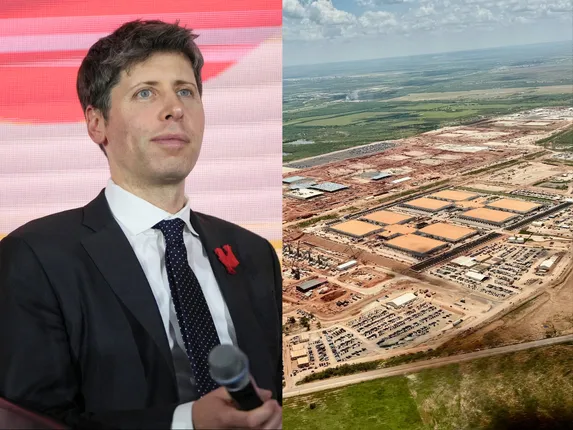
At the heart of this transition lies the ambitious Stargate data center project—a bold plan to build a network of global data centers to support the ever-growing demand for AI compute.
While Stargate projects are already underway in regions like the US, Norway, and the UAE, the UK chapter of this vision has hit an unexpected pause. Initially announced in collaboration with NVIDIA and Scalethe UK expansion was meant to be a flagship move.
Instead, it has become a case study in the challenges of scaling AI infrastructure. Sky-high energy costs and complex regulatory requirements have forced OpenAI to hit the brakes. It’s a reminder that even the most cutting-edge tech ambitions are grounded in physical realities—electricity, land, policy, and cost.
The IPO Factor: Growth Meets Discipline
Zooming out, OpenAI’s recent decisions appear to align with a broader financial narrative. With increasing speculation around a future public listing, the company is likely under pressure to demonstrate not just growth—but disciplined growth.
Massive infrastructure projects like Stargate require billions in upfront investment. While they promise long-term returns, they also strain short-term financials. Pausing the UK expansion could be a strategic move to conserve capital, optimize spending, and present a more balanced financial story to potential investors.
In other words, OpenAI may be shifting from a “build at all costs” mindset to a more measured, efficiency-driven approach—one that balances ambition with accountability.
A Mysterious New Venture Emerges
What makes this story even more intriguing is where the departing leaders are headed. Peter Hoeschele, Shamez Hemaniand Anuj Saharan are all reportedly joining the same new, yet-to-be-named company.
That detail alone is enough to spark curiosity. When multiple senior leaders leave together—especially from such a critical function—it often points to the birth of something new. Could this be the beginning of a next-generation AI infrastructure startup? Or perhaps a stealth-mode player aiming to challenge existing giants?
While answers remain scarce, one thing is clear: the talent shaping AI’s backbone is on the move.
Rebuilding the Engine: OpenAI’s Next Moves
Even as these departures unfold, OpenAI is actively reshaping its leadership structure. The appointment of Sachin Katti to lead the compute division signals a renewed focus on strengthening internal capabilities.
This leadership shift could bring a fresh perspective on how OpenAI approaches infrastructure—potentially prioritizing efficiency, strategic partnerships, and scalable architectures over aggressive expansion.
In a field where compute power directly translates to competitive advantage, getting this strategy right is crucial.
Credits: Fox Business
The Bigger Battle: Infrastructure Is the New Frontier
What’s happening at OpenAI reflects a much larger trend across the tech industry. The AI race is no longer just about building smarter models—it’s about building the systems that power them.
Data centers, energy access, chip partnerships, and global deployment strategies are now at the forefront. Companies that can efficiently scale infrastructure will have a decisive edge.
OpenAI’s recent moves—executive exits, project pauses, and internal reshuffles—highlight the complexity of operating at this frontier. It’s not just about innovation anymore; it’s about execution in the real world.
And as this story unfolds, one thing becomes increasingly clear: the future of AI won’t just be written in code—it will be built in data centers across the globe.

Comments are closed.