
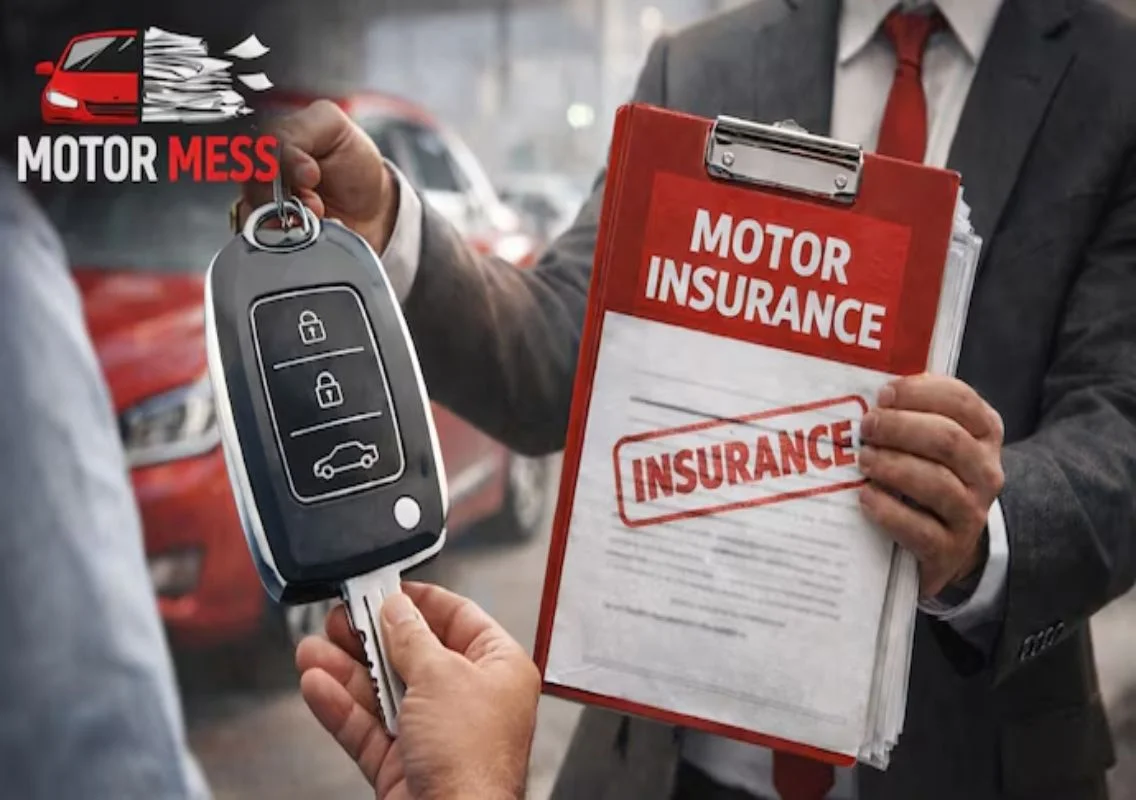

Mangaluru: Buying a car or bike is a major milestone for most Indian households, often involving an investment of several lakh rupees. While buyers carefully evaluate the model, price and features, one crucial aspect is often overlooked — motor insurance bundled into the “on-road price”.
For many, this insurance is accepted without question. However, industry experts say that purchasing insurance from the dealership is not mandatory and can sometimes lead to higher costs or inadequate coverage.
Insurance at dealerships: Not as simple as it seems
At the time of vehicle delivery, insurance is usually presented as a standard part of the purchase. In some cases, buyers are led to believe that buying it from the dealer is necessary for smooth claims or servicing.
Experts clarify that this is not true.
Saurabh Vijayvergia, CEO of CoverSure, noted that insurance is often sold as an add-on product rather than a well-informed decision.
“Most buyers rely on the dealer’s guidance during a high-value purchase, while insurance quietly becomes a commission-led add-on,” he said.
Why dealers push their own policies
The primary reason is commercial benefit. Dealers earn commissions on insurance policies sold through their network, making it a profitable add-on.
For example, a buyer may be quoted an on-road price of Rs 10 lakh, including an insurance premium of around Rs 45,000. However, a similar policy in the open market could cost between Rs 30,000 and Rs 35,000, or offer better coverage.
This price difference is often masked by bundling add-ons or presenting the insurance as part of a fixed package.
Data from the Insurance Regulatory and Development Authority of India highlights the scale of the issue, noting a 14.3% rise in complaints related to unfair business practices, including mis-selling.
How policies are made to look cheaper
Dealers often use tactics to make policies appear affordable while reducing actual benefits.
One common method is lowering the Insured Declared Value (IDV), which directly impacts the claim amount in case of total loss or theft. A lower IDV reduces the premium slightly but can cut claim payouts by Rs 50,000 to Rs 1 lakh or more.
Another tactic is adding high voluntary deductibles, which reduce upfront premiums but increase out-of-pocket expenses during claims.
In some cases, important add-ons such as engine protection or consumables cover are removed to keep the price attractive.
Why claims often lead to disappointment
Problems usually arise during claims. Many buyers assume they have comprehensive coverage because they purchased insurance with the vehicle.
However, gaps in coverage can result in unexpected expenses.
Experts say that key protections, especially engine protection during monsoons, are often missing or not clearly explained. This mismatch between expectations and actual policy terms leads to dissatisfaction.
Motor insurance forms nearly 30–32% of the general insurance market in India, making it a significant segment where such issues have widespread impact.
Is dealer insurance mandatory?
The simple answer is no.
Motor insurance itself is mandatory under Indian law, but buying it from the dealer is not. Customers are free to choose any insurer or purchase policies online.
Shilpa Arora, COO of Insurance Samadhan, emphasised that buyers should not feel pressured.
“You do not have to buy from the dealer or stick to your old insurer,” she said.
The hidden benefit: No Claim Bonus
One commonly overlooked aspect is the No Claim Bonus (NCB).
NCB belongs to the policyholder, not the vehicle. If no claims were made in the previous policy, buyers can carry forward this benefit to a new vehicle, resulting in a discount of 20% to 50% on the own-damage premium.
However, dealerships often do not highlight this, leading to higher premiums for buyers.
The biggest mistake buyers make
The most common mistake is rushing through the insurance decision during delivery.
At that moment, buyers are focused on taking their vehicle home, treating insurance as a formality rather than a financial decision. Many also assume dealer insurance ensures better claims or warranty support, which is not necessarily true.
In reality, insurance is portable, and claims depend on policy terms and insurer networks.
What buyers should do
Experts suggest a few simple steps to avoid costly mistakes:
- Compare policies online before finalising
- Check the IDV carefully instead of focusing only on premium
- Ask for clarity on add-ons and exclusions
- Transfer No Claim Bonus if applicable
- Avoid pressure to buy immediately at the dealership
Taking a few extra minutes can help save thousands of rupees and ensure better protection.
Conclusion
While buying a car or bike involves significant financial planning, insurance decisions are often rushed. Understanding that dealer-provided insurance is optional can empower buyers to make better choices.
A small effort in comparing policies today can prevent major financial setbacks in the future.

Comments are closed.