
Innovation and Technological Empowerment towards Developed Agriculture Developed India @2047

Lucknow, Uttar Pradesh
Lucknow, 6th U.P. organized by Uttar Pradesh Agricultural Research Council. On the third day of Agricultural Science Congress, various technical and discussion sessions were successfully organized under the theme “Transformation in Agriculture for Developed India @2047”. This important program was held at the Council Complex, Alambagh, Lucknow, in which agricultural scientists, researchers and experts from across the state took active participation.
During the third day, two technical sessions as well as two oral presentation sessions were organised. These sessions included in-depth discussions on contemporary and highly relevant topics like “Livelihood Security through Dairy, Livestock, Poultry and Fish Farming: Future Farming @2047” and “Digital Agriculture”. The main objective of these discussions was to analyze the current challenges in the agriculture sector and present sustainable and technological solutions for the future.
In the first technical session, experts related to agriculture and animal husbandry shared their views and highlighted the major problems of the livestock sector. He said that the productivity of livestock in the state is relatively low, one of the main reasons for which is excessive dependence on indigenous breeds. Apart from this, shortage of fodder, lack of veterinary facilities and role of middlemen in the market system also have a negative impact on the income of farmers. Experts stressed on development of improved breeds, feed management and strengthened animal health services to overcome these challenges.
Concern was also expressed over the increasing use of antibiotics in the poultry and livestock sector. Experts identified it as an emerging threat and said that antibiotic resistance could become a serious problem for both human and animal health in the future. In this direction, special emphasis was laid on scientific management, balanced drug use and the need to increase awareness among farmers.
The session focused on goat rearing, which is an important part of the rural economy, and the challenges associated with the production and future prospects were discussed in detail. Experts said that there is immense potential for increasing income in this sector through proper management, selection of better breeds and expansion of health services.
Natural farming was also given special importance in the programme. Experts said that excessive use of chemical fertilizers and pesticides is adversely affecting the quality of the soil. As a solution to this, there was a need to promote the use of cow dung, cow urine and other biological resources. Natural farming not only increases soil fertility but also helps in preserving biodiversity.
In the discussion on soil health, the fact came to light that the level of soil organic carbon in the state is continuously falling, which is a serious threat to agriculture. Experts advised farmers to adopt organic fertilizers, green manure and crop rotation. These measures will not only increase the fertility of the soil but will also improve the water holding capacity, thereby reducing the problem of water crisis.
The session focused on “Digital Agriculture” discussed modern technologies such as Artificial Intelligence, drone technology, precision farming and data based decision systems. Experts said that through digital technologies, farmers can get accurate information about weather, crop health and market price, which can increase their income. This technological intervention is an important step towards making agriculture more profitable and sustainable.
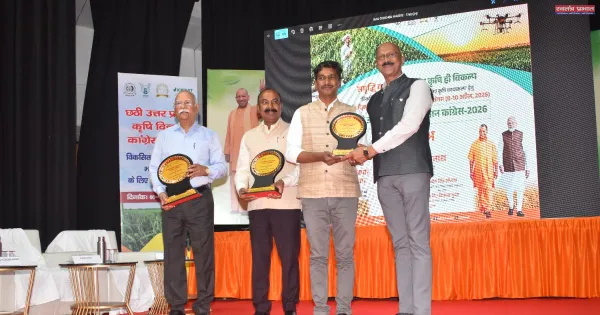
Dinesh Pratap Singh (Minister of State, Horticulture, Agricultural Marketing, Agricultural Export) was present as the chief guest in the concluding session. He honored scientists and institutions who have made outstanding contributions in the field of agricultural education, research and extension. On this occasion, 14 Academy Awards, 9 Fellow Awards and 7 Honorary Fellowships were awarded, which are an inspiration for those doing excellent work in the agriculture sector.
There was active participation of various agricultural universities, research institutes and scientists of the state in the program. All the experts unanimously said that to achieve the goal of a developed India by the year 2047, it is essential to adopt innovation, digital technology and sustainable practices in the agriculture sector.
Thus, this event of Agricultural Science Congress not only became a platform to consider the current challenges but also proved to be an important step towards making future agriculture more prosperous, sustainable and technologically advanced.
Comments are closed.