
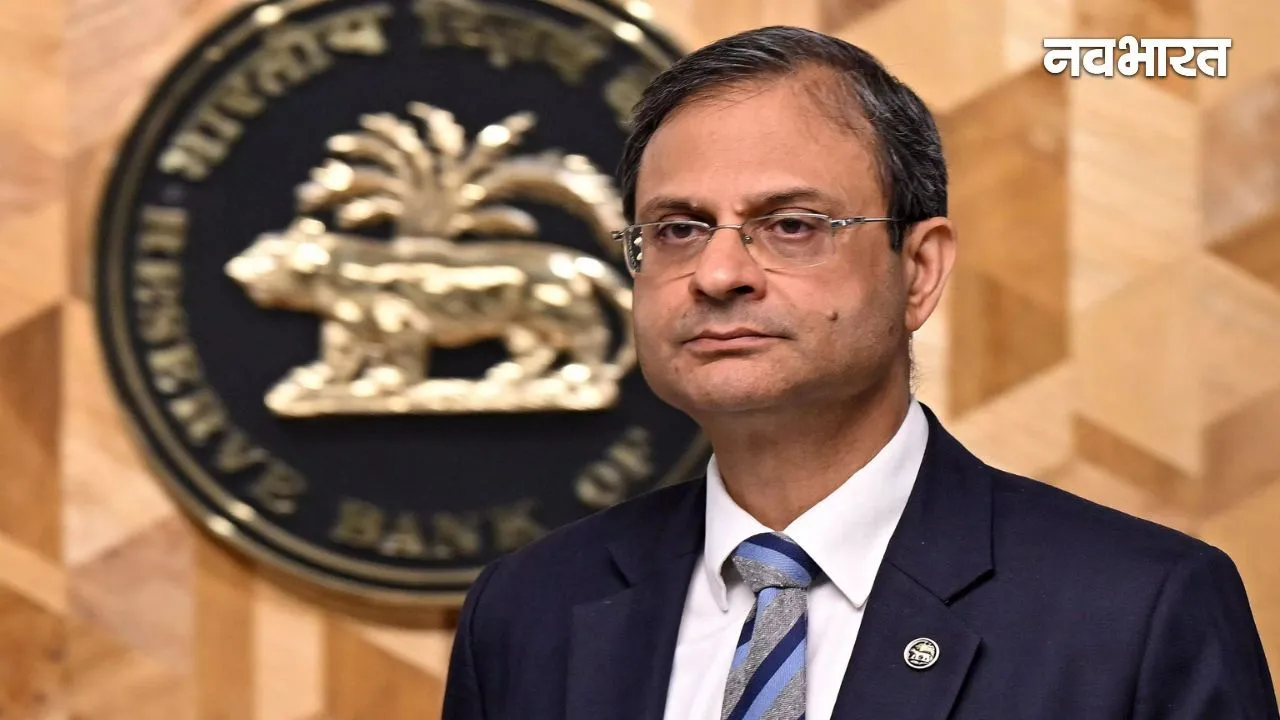
If the Iran war continues for a long time, then these 5 big threats will face India; RBI Governor Sanjay Malhotra warned

RBI Governor On Middle East Crisis: The Monetary Policy Committee (MPC), headed by Reserve Bank of India (RBI) Governor Sanjay Malhotra, has kept the repo rate steady without making any changes. Along with this, concerns were also expressed on the risks of GDP growth and inflation. The US–Iran war and its impact on the global economy has also been cited as a risk to India’s growth prospects.
The RBI governor said that before the conflict began, India’s macroeconomic conditions were strong, with strong growth and low inflation. As the conflict intensified in March, the situation turned adverse.
RBI Governor’s statement on Middle East war
Sanjay Malhotra said that the fundamentals of the Indian economy are currently much stronger than in previous crises and compared to many other economies. The central bank governor believes that this will provide greater resilience to the Indian economy in the face of shocks. However, downside risks to growth projections remain. Especially if there is no improvement in the long-running conflict situation in West Asia, the problem may worsen further.
What impact did the war have on the Indian economy?
RBI Governor Sanjay Malhotra pointed to five ways in which the Indian economy will be affected by the current conflict. He explained in detail the means through which this shock can be felt.
- Higher crude oil prices could push up imported inflation and widen the current account deficit.
- Disruptions in energy markets, fertilizers and other commodities could have adverse effects on industry, agriculture and services, leading to a decline in domestic output.
- Increasing uncertainty, increased risk aversion and demand for safe investments may affect domestic liquidity conditions, economic activity, consumption and investment.
- Weak global growth prospects could dampen external demand and reduce remittance inflows.
- Adverse effects from global financial markets could further tighten domestic financial conditions and increase borrowing costs.
RBI Governor Sanjay Malhotra’s warning
The RBI Governor has warned that the supply disruption, which initially appears to be a supply crisis, could turn into a demand crisis in the medium term if restoration of supply chains is delayed. The GDP growth rate for FY 2025-26 is estimated at 7.6%, while the economy is likely to grow at 6.9% in FY 2026-27 as per the preliminary assessment made in the RBI’s first monetary policy review for FY 2027.
Also read: RBI again did not make any change in the repo rate, inflation remains at 4.6%, know how it will affect your pocket.
RBI’s forecast regarding the economy
RBI has predicted that current financial year India’s GDP will grow at the rate of 6.8% in the first quarter, 6.7% in the second quarter, 7% in the third quarter and 7.2% in the fourth quarter. Going forward, higher prices of energy and other commodities as well as constraints in input availability due to the blockage in the Strait of Hormuz are likely to impact growth in 2026-27, Sanjay Malhotra said in his statement.

Comments are closed.