
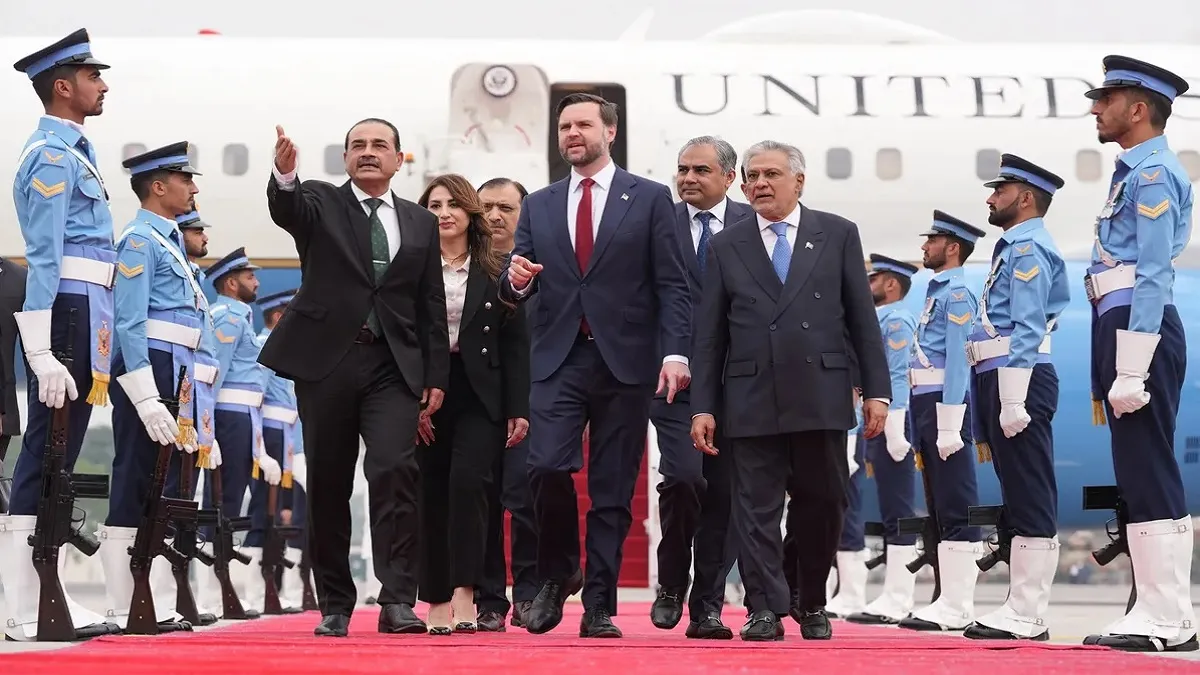

The breakdown of the ongoing ceasefire talks between the US and Iran in Pakistan’s capital Islamabad will not only lead to renewed missile and bomb attacks in West Asia but has also pushed Pakistan into a serious diplomatic and security crisis. Pakistan was trying to strengthen its role on the global stage by becoming the mediator in these talks. Now he finds himself caught between two powerful neighbors and allies.
The entire team of Prime Minister Shehbaz Sharif and Army Chief General Asim Munir was engaged in making this dialogue successful at any cost, because its failure would not only mean a diplomatic failure for Pakistan, but would become a fight for existence. But, now the talks have broken down. US Vice President JD Vance has left for Washington.
How did Pakistan’s problems increase?
Pakistan’s troubles have increased immediately after the talks broke down. On one side is America, from which Pakistan expects economic assistance, support in international financial institutions like IMF and security cooperation. On the other side is Iran, which is Pakistan’s direct neighbor. There is about a 900 kilometer long border between the two countries, which has historically been sensitive. Any conflict with Iran could set Pakistan’s economy back decades, as instability already exists in the border region.
Pakistan took an important step during the talks. On Saturday itself, it sent its fighter jets and military forces to Saudi Arabia. This step has been taken under the security agreement signed with Saudi Arabia in 2025. According to this agreement, if any threat looms on Saudi Arabia, then Pakistan will have to provide military assistance for its security. Currently, Saudi Arabia is a close ally of America and has tense relations with Iran.
Why is there a fear of Iranian attack on Islamabad?
If the war situation continues, Pakistan will not only have to protect its borders, but may also have to play an active role in the defense of Saudi Arabia. This will directly involve Pakistan in a major regional war, where its troops and resources will be divided on both the fronts. After the breakdown of talks, America can reactivate its military options.
In such a situation, America can demand airbases and airstrips from Pakistan, especially the airports near Balochistan. These bases are strategically important for effective attacks on eastern parts of Iran and its nuclear sites. If Pakistan accepts this demand then it will directly come under the target of Iran. Iran has already given a clear warning that it will target any country that allows America to use its soil. This would mean Pakistan facing Iranian missiles and drones, which could severely impact both its military capabilities and civilian infrastructure.
How is the internal situation of Pakistan?
The internal situation of Pakistan is also very delicate. The country has the second largest Shia population in the world. Any kind of military cooperation against Iran could inflame communal tensions within Pakistan. Anger could rise among the Shia community, leading to sectarian riots or, worse, civil war. Separatist and terrorist activities are already active in Balochistan and other border areas. In such a situation, external pressure can further increase internal instability. There is a possibility of formation of a hot border due to tension on the border.
Sunni Baloch militant groups like Jaish al-Adl are already active on the Pakistan-Iran border. These groups have been attacking the security forces of both the countries. If talks fail and regional chaos increases, these groups can take advantage of this instability to intensify attacks. This will increase military deployment in the border area, put additional burden on resources and deepen the trust deficit between the two neighbours.
Can Pakistan anger America?
This situation is extremely difficult for Pakistan because it can neither completely anger America nor seek a direct conflict with Iran. Both Prime Minister Sharif and Army Chief Munir are in a tense situation at this time. On one hand they are trying to handle American pressure, while on the other hand they are insisting on keeping diplomatic channels open to maintain relations with Iran. Increasing military cooperation with Saudi Arabia could also prove to be a double-edged sword—it strengthens security, but could also provoke Iran.
Overall, the breakdown of US-Iran talks has brought Pakistan to a juncture where its every move will affect both regional balance and domestic stability. If Pakistan does not proceed cautiously, it will not only weaken its economy and security but could also jeopardize the peace of entire South Asia and the Middle East. Islamabad is now a potential target of Tehran’s missiles, while the pressure coming from Washington will not reduce. This is the toughest phase of testing Pakistan’s diplomacy, where one wrong step can plunge the entire country into costly military and economic consequences.

Comments are closed.