
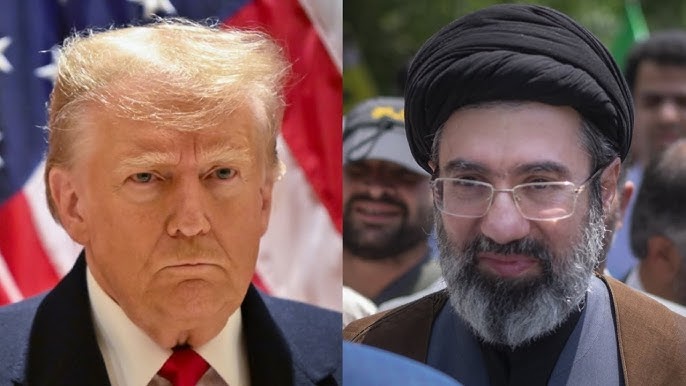

News Desk. The much-awaited peace talks between Iran and America in Islamabad finally ended without any concrete outcome. In the marathon talks that lasted for about 15 to 21 hours, both the parties remained adamant on their respective conditions, due to which no ground for agreement could be prepared. This failure has once again deepened the fear of increasing tension in the Middle East.
Why did the talks break off?
On behalf of the American side, Vice President JD Vance clearly said that despite long negotiations, Iran did not accept the proposed terms. Iranian media also confirmed that the first phase of talks remained inconclusive and further talks also came to a standstill.
1. Strait of Hormuz became the biggest controversy
The most important issue was control of the Strait of Hormuz. America wants this strait to remain completely open and there should not be any kind of duty or barrier. On the other hand, Iran wants to maintain its control or at least partial control over it. This is the same route through which a large part of the world’s oil supply passes, so its importance is extremely sensitive.
2. Clash over ceasefire in Lebanon
Iran made a ceasefire in Lebanon a pre-condition for talks. He said that ceasefire between Hezbollah and Israel is necessary. America and Israel rejected it, which deepened the deadlock in the talks.
3. Sanctions and nuclear programs
Iran’s key demands included the removal of economic sanctions, return of assets stranded abroad and permission to continue its nuclear program. The US specifically refused any agreement related to nuclear weapons capability. These differences became one of the biggest obstacles to the agreement.
4. Compensation and comprehensive ceasefire
Iran also demanded compensation for losses suffered in the recent conflict and a comprehensive ceasefire across the region. America rejected these conditions, calling them impractical.
Trump’s tough stance
Even before the talks, Donald Trump had warned that if an agreement was not reached, military action could resume. Even after the talks failed, his stance did not soften. He clearly said that America is in a strong position and strict steps can be taken if needed.

Comments are closed.