

By Captain By Captain Sarabjeet S Parmar (Retd)
The US-Israel-Iran conflict has sent shockwaves through global supply chains and driven energy prices to multi-year highs. Beyond its immediate energy and associated economic toll, the conflict serves as a stark reminder of how such a conflict could influence global and regional stability and security. For the Indo-Pacific, this warning could not be timelier.
The Indo-Pacific is facing an enhanced level of Chinese military and economic pressure, one that increasingly threatens freedom of navigation and the rules-based order that has long underpinned its stability. An Indo-Pacific shaped by Chinese naval dominance would carry serious consequences, not only for the region’s two largest democracies and economies, India and Japan, but also for the broader international order.
Japan on the Frontline
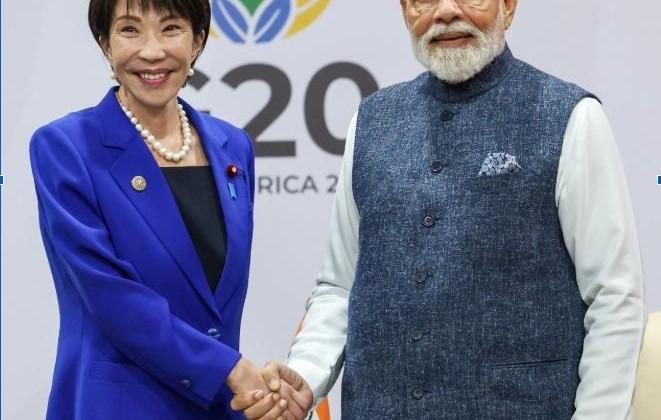
Japan has repeatedly found itself absorbing the sharpest edges of Beijing’s brinkmanship. Prime Minister Sanae Takaichi, following her landslide election victory, reaffirmed Tokyo’s openness to dialogue, yet Beijing’s provocations have only intensified. Chinese vessel incursions around the Japan’s Senkaku Islands reached record levels in 2025, and in December 2025 Chinese aircraft locked their radars on Japanese patrol planes in a calculated display of aggression. In response to Tokyo’s firmer commitment to the regional status quo and Taiwan, Beijing imposed sweeping export restrictions on critical minerals and dual-use technologies, targeting several major Japanese firms.
India’s Strategic Stakes
While China’s growing assertiveness is most visible in the waters of the South and East China Seas, its implications extend westward beyond the Strait of Malacca and the first and second island chains. For India, a maritime trade and energy dependent economy, there is a great national interest in securing Sea Lines of Communication (SLOCS). The ongoing escorting of Indian merchant shipping by the Indian Navy from the Strait of Hormuz is an example. Despite the differences between the US and India, the recent visits to India of Elbridge ColbyUS Under Secretary of War for Policy, and Admiral Samuel J. PaparoCommander of US Indo-Pacific Command, underscored how important US-India defence relations are. It is evident that like-minded nations require to work together to ensure a stable and secure Indo-Pacific, which is central to the common vision of a Free and Open Indo-Pacific.
The Case for Strategic Convergence
If the Indo-Pacific is to remain free and open, resilience to address sustained Chinese pressure as a part of the strategic partnership between India and Japan is no longer an option, it is essential. The alignment of these two large economic and maritime middle powers, anchored on the opposite ends of the Indo-Pacific, flanking the economic arteries that sustain regional and global commerce, can forge a structure not merely a supplement to US engagement, but as an independent stabilising entity.
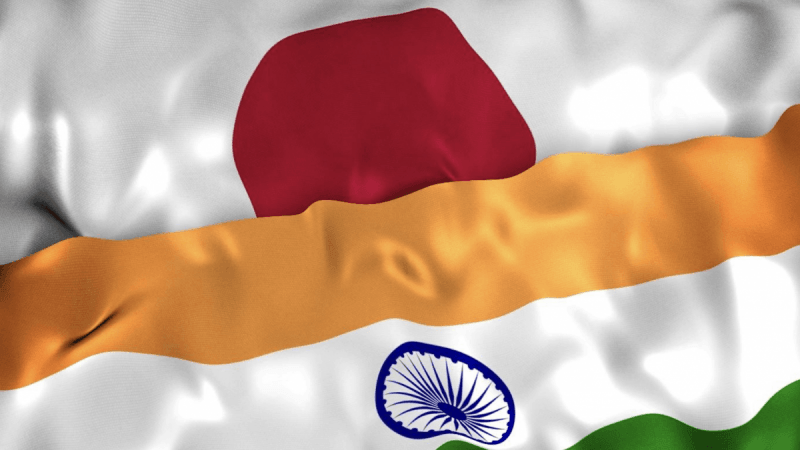
The logic is rooted in geography. India’s primary and secondary areas of maritime interest encompass SLOCs that carry Gulf energy to Southeast and East Asian markets. India’s military and economic investments in the Andaman and Nicobar Islands that overlook China’s most critical maritime chokepoint, the Strait of Malacca, place New Delhi in a position to raise the costs of future coercive Chinese behaviour.
Converging Naval Ambitions
Apart from geography, greater India-Japan defence cooperation in the maritime domain would combine two very capable navies in the Indo-Pacific at a time when both are undergoing significant transformation. Under the Takaichi administration, Tokyo has approved a record defence budget plan exceeding 9 trillion yen, which is in response to what Japan regards as the most severe security environment since the Second World War. India is in the process of building a multidimensional naval force of 200 warships and submarines by 2035. India-Japan defence relations are at a robust level and there is convergence on their indispensable roles for a free, open, peaceful, prosperous, and coercion-free Indo-Pacific region. Coordinating the growing military capabilities would carry significant strategic weight towards strengthening the convergence factors over other areas. Enhanced intelligence sharing and joint patrols across vulnerable sea lanes would complicate Beijing’s strategy of presence and pressure campaign. Interoperability between the armed forces is on the rise with naval exercise Malabar and JAIMEX, army exercise Dharma Guardianand Air Force exercise Veer Guardian. The amphibious exercise conducted in February 2026 between the two armies enhances the interoperability factor.
A Framework for the Future
The common vision of a Free and Open Indo-Pacific provides Tokyo and New Delhi with a powerful strategic instrument. By treating the Indo-Pacific as an integrated strategic space, this convergence can provide space for a coordinated deterrence to address China’s expansionism. The existing framework provides the two nations the flexibility to deepen security cooperation without the constraints of a formal alliance, grounded in the shared principles of security and openness. The future of the Indo-Pacific will not be determined by naval expansion in isolation. It will be shaped by regional democracies choosing to align their strengths with shared strategic purpose. If India and Japan continue along the path of convergence, their partnership will become a major stabilising force in the Indo-Pacific.
Disclaimer: Captain Sarabjeet S Parmar (Retd) is a retired Indian Naval Officer and presently a Distinguished Fellow with the Council for Strategic and Defence Research, New Delhi, and the Australia India Institute, Melbourne. Opinions expressed are Author’s own and do not necessarily reflect those of IB Times India.

Comments are closed.