
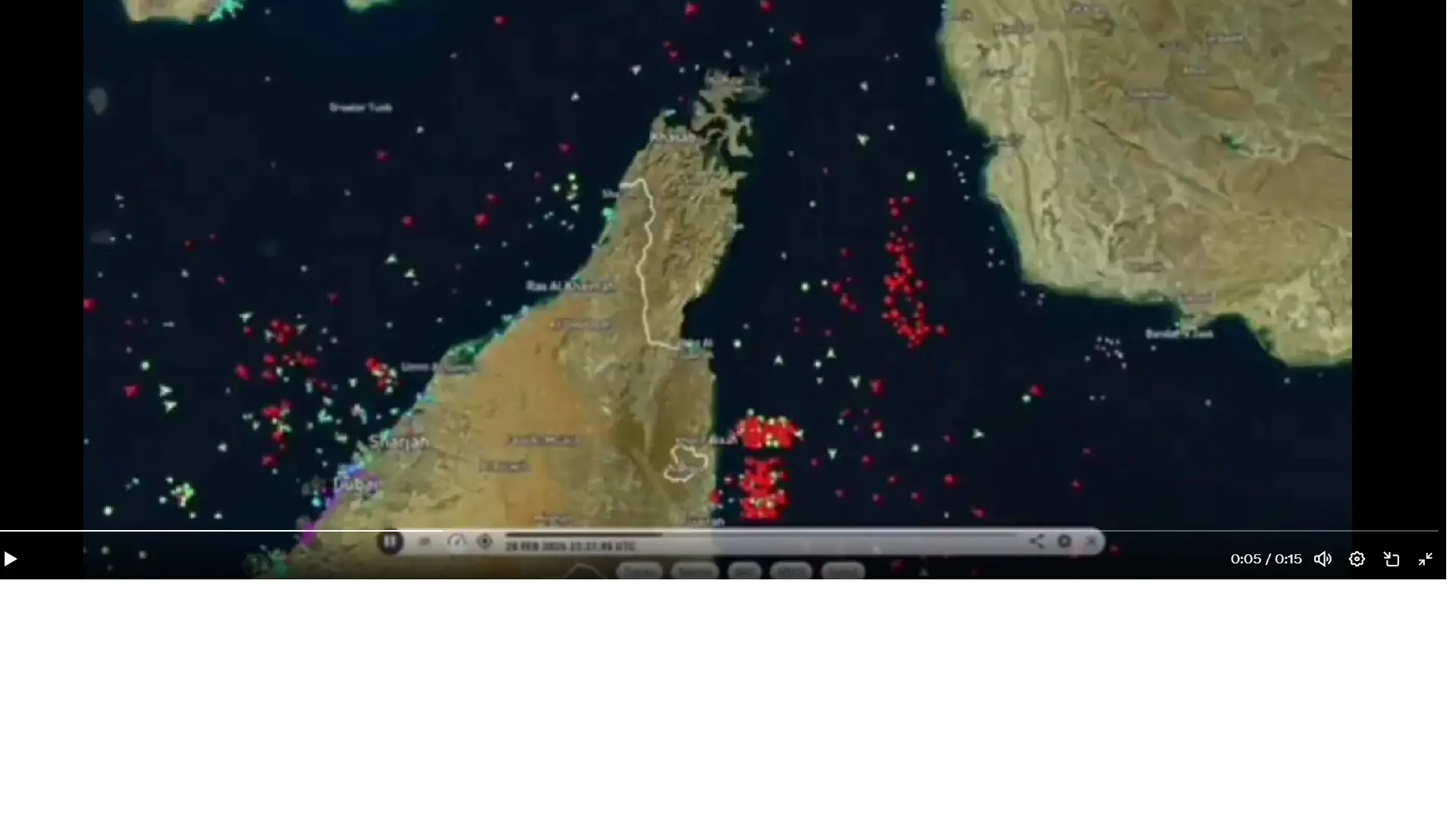

New Delhi: The United States may be shifting its strategic focus towards the Strait of Malacca, one of the world’s busiest maritime corridors, following heightened tensions and disruptions around the Strait of Hormuz amid the ongoing Iran conflict, according to a report.
The development comes after Washington signed a defence agreement with Indonesia, expanding US military access to Indonesian airspace. The move is expected to enhance American surveillance capabilities over the Strait of Malacca, a critical global shipping route linking the Indian and Pacific Oceans.
Unlike the Strait of Hormuz, which is central to global oil shipments, the Malacca Strait functions as a broader commercial lifeline. It facilitates not only energy flows but also the movement of manufactured goods, electronics and industrial components, making it vital to global trade networks.
The Strait of Malacca handles a massive share of international shipping, carrying a significant portion of global trade and energy supplies. Its strategic importance has increasingly drawn the attention of major powers, especially amid rising geopolitical competition in the Indo-Pacific region.
For India, the evolving dynamics around the strait hold particular significance. The country’s Andaman and Nicobar Islands lie close to the western approaches of the Malacca Strait, offering New Delhi a natural vantage point to monitor maritime traffic passing through the corridor.
India has also been strengthening its military infrastructure in the region, including facilities such as its southernmost air station at Campbell Bay. Ongoing infrastructure development is expected to further bolster India’s maritime capabilities and presence near the strategic waterway.
The shifting US focus could potentially open avenues for closer cooperation between India and the United States, particularly in countering China’s growing influence in the region. Analysts note that the Malacca Strait has long been considered a strategic chokepoint, with its control or disruption capable of impacting global trade flows.

Comments are closed.