


If you thought moving to E20 fuel was the final shift at the fuel pump, think again. The government has now signalled that ethanol blending in petrol could be nudged up from 20 percent to 21 percent, using the flexibility already built into the fuel standard.
Heavy Industries Additional Secretary Hanif Qureshi recently pointed out that the Bureau of Indian Standards allows a tolerance band of plus or minus 1 percent around the 20 percent mark, effectively paving the way for E21 without a formal change in the headline number.
E20 itself is still new. From April 2026, all petrol sold is required to meet the E20 norm, replacing the earlier E10 blend. For many owners of older cars and bikes, the shift has already meant a visible change in how often they refuel. Ethanol simply carries less energy per litre than petrol.
Industry data and government clarification note that compared to E10, E20 can trim fuel efficiency by around 2 to 4 percent in typical conditions, even if it brings a higher-octane rating and cleaner combustion.

That 2 to 4 percent figure sounds modest until you put real usage against it. A car returning 15 kmpl on E10 would effectively drop to roughly 14.4 to 14.7 kmpl on E20. Over a 1,500 km monthly running cycle, that means consuming roughly 102 to 104 litres instead of 100 litres.
On a 35-litre tank, even a small efficiency loss cuts usable range by enough to bring your next fuel stop forward. For a commuter covering 50 km a day, that can mean one extra fill-up over a month. For cab operators, delivery riders, and intercity users, the effect is more visible because the lower range gets multiplied across more kilometres.
Newer vehicles are built for this. Cars and two-wheelers manufactured after April 2023 are designed as E20-compliant, with upgraded fuel-system components and engine maps. But the parc on the road tells a different story. A huge share of daily runners are BS4 and early BS6 vehicles that were engineered for E10 at best. For them, Qureshi has already admitted that a slight rise in blending can be a problem, even if it technically sits inside the BIS tolerance band.

This is where the issue stops being only about mileage and starts becoming about durability. Ethanol can absorb water more readily than pure petrol, and that matters in vehicles that sit parked for long periods or are used irregularly. Older fuel hoses, seals, O-rings, injectors, and pumps were not always designed with higher ethanol content in mind. That does not mean an older vehicle will suddenly fail on E20 or E21, but it does raise the importance of maintenance discipline. Delayed filter changes, weak fuel pumps, cracked hoses, or poor-quality replacement parts are likely to show up sooner in a higher-ethanol environment than they would have on older fuel blends.
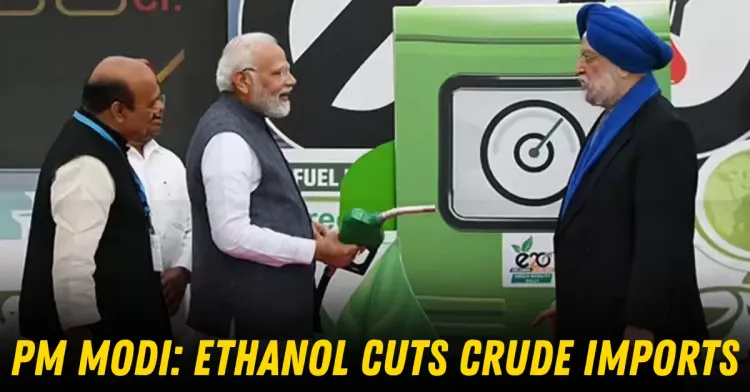
The government, for its part, is looking at the bigger numbers. The ethanol blending programme has sharply cut crude oil imports over the past decade. Official data show that increasing blending has saved tens of thousands of crore rupees in foreign exchange and helped absorb over a thousand crore litres of domestically produced ethanol in 2024-25 alone. There is now an inter-ministerial panel examining how far blending can be pushed in the next ethanol supply year starting November, with a long-term policy conversation already moving toward 30 percent blends.
That larger policy push is important because it tells owners this is not a one-off experiment. Ethanol blending has moved from pilot-stage policy to mainstream fuel strategy. Once E10 became normalised, E20 followed. If E21 starts getting treated as an acceptable operational variation inside the standard, owners should assume the blend level will only move one way over time. In other words, the question is no longer whether ethanol content will keep inching up, but whether the existing vehicle fleet can keep pace without higher running costs.
First is mileage. If your car or bike was designed for E10 and is now drinking E20, the real-world effect is that your tank range has likely dropped. A further move toward E21 will not slash range dramatically by itself, but it adds to the cumulative effect. Various industry and government briefings peg the loss versus pure petrol at low single digits, which sounds small until you commute long distances every day.
Second is compatibility. Ethanol attracts moisture and can be more aggressive on certain metals, rubbers, and plastics. That is why manufacturers upgraded fuel lines, seals, injectors, and even tank coatings on E20-ready models. While the government has publicly clarified that E20 is safe for older vehicles when used within limits, it has also accepted that components may wear faster and need timely replacement in such vehicles.
Third is the ownership horizon. If you plan to keep your current car or bike well into the next decade, a creeping rise in ethanol percentage changes how you should think about maintenance. More frequent checks of fuel filters, hoses, and injectors, and sticking to manufacturer-approved parts and fluids will matter more than before. It is also worth checking your owner’s manual or manufacturer website for explicit statements on the highest ethanol blend your engine is rated for. Buyers in the used market should pay attention too. A 2021 or 2022 petrol car may look like a bargain today, but its long-term upkeep under higher-ethanol fuel could differ from a similar-looking model launched after the E20 transition was engineered in.
The trade-off is clear. The government wants more ethanol in your tank to cut the oil import bill and support domestic biofuel producers. You want predictable running costs and no hidden damage to a vehicle you may have bought before any of this was on the horizon. But E21 petrol may be pushed through as there’s that BIS loophole available to both policy makers and the ethanol lobby.
Via TOI
Comments are closed.