
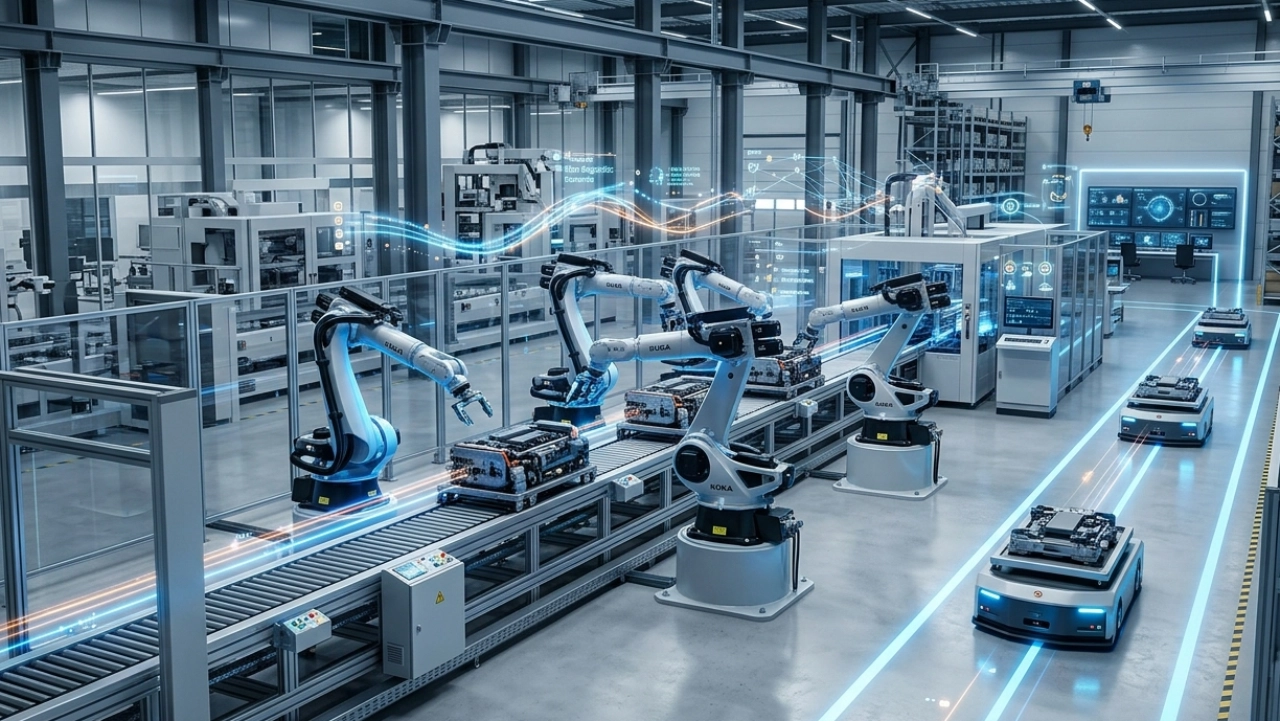

AI in manufacturing has become a mature technology that is changing current factory operations. The global automotive industry and the Taiwanese semiconductor industry are adopting autonomous systems to enhance their industrial processes. Advanced research from the past now delivers tangible benefits, including reduced costs, shorter production times, and stronger safety regulations.
Factories now implement AI-based automation solutions after testing them through initial pilot programs. Autonomous systems reduce downtime across all industries, along with operational waste and worker costs. The implementation of AI technology by manufacturers enables them to achieve faster production processes, improved operational efficiency, and a stronger market position.
Manufacturing systems use AI to process data in real time, making automatic operational adjustments and detecting potential issues. The change involves multiple factors, including technology, economic factors, strategic elements, and intense business competition.
The Shift from Traditional Automation to Intelligent Autonomy
Industrial automation systems use fixed rules to operate their processes. The systems achieve high efficiency during repetitive operations. The production process stops when older systems detect even minor changes in parts on the conveyor belt. The system requires human input whenever supply chain components experience changes.
Manufacturing operations used industrial automation to control robotic arms, which performed repetitive tasks for multiple decades. Through artificial intelligence, machines acquire environmental awareness, enabling them to forecast future events and plan their subsequent movements. Manufacturing systems employ AI technology to handle real-time data, automate operational changes, and identify potential issues. The transformation process requires a comprehensive approach that encompasses technological advancements, economic developments, strategic business elements, and strong market rivalry.
The primary goal of this shift is to develop better decision-making processes. Industrial AI systems can process thousands of data points per second, which exceeds human processing capabilities. The ability to conduct analysis in manufacturing settings requires advanced data analysis skills.
Predictive Maintenance: Preventing Downtime Before It Happens
The manufacturing industry uses AI to predict equipment failures, which represents its most useful application. Equipment failures lead to production losses, which cost factories millions of dollars. Maintenance operations used to be conducted in two ways: fixing machines after breakdowns and servicing them according to prearranged time intervals.
The system uses artificial intelligence to establish a predictive maintenance system. Machines use their sensors to gather data about their equipment through vibration, temperature, and acoustic measurement systems. The system uses machine learning algorithms to recognize patterns that indicate that equipment will soon fail or experience operational problems.
AI-based autonomous systems alter the mathematical model. The operational system implements machine learning models that process sensor data to detect anomalies and immediately modify production operations. Siemens and General Electric have embedded AI capabilities into their industrial control systems to improve energy management, maintenance forecasting, and quality assessment. Predictive maintenance technologies provide numerous benefits that create a safer work environment for employees. Equipment that functions improperly creates dangerous conditions.
Computer Vision and Quality Control
Human inspectors will miss defects during inspection because production speeds exceed their inspection capacity. Machine vision systems need fixed parameters to operate correctly, but they become ineffective when faced with unpredictable situations.
AI-powered computer vision in manufacturing is more flexible. AI-powered computer vision systems, however, learn from large image datasets. They can detect tiny defects that are not visible to human observers. Semiconductor manufacturers, for instance, use AI vision systems to detect tiny flaws present on silicon wafers.
NVIDIA and other companies offer GPU-based systems that help industrial facilities speed up AI image processing. Foxconn uses AI inspection systems to conduct quality assessments on its electronics production lines, helping the company reduce defect rates.
The impact can be measured. The company experiences reduced waste due to lower defect rates, leading to fewer customer returns and better brand recognition. The situation has both tactical and operational elements. The AI-powered quality control systems provide a competitive advantage in precision industries by delivering better product control.
Autonomous Robots and Smart Logistics
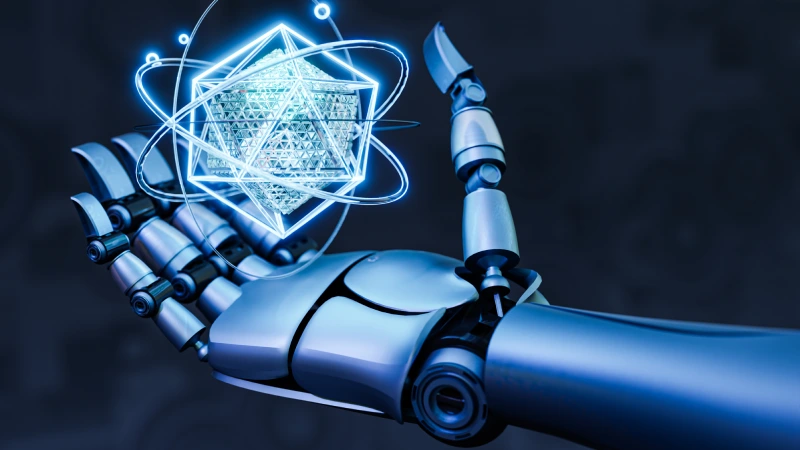
Warehouse operations and factory work now use autonomous mobile robots as their standard equipment. The AI robotics system uses artificial intelligence to navigate environments by detecting obstacles and creating the most efficient path to its destination. Amazon created the first large-scale automated warehouse system, which uses robotics technology. Manufacturing plants now implement these same robotic systems to manage their internal material distribution. The system transfers materials between workstations without requiring staff to do any physical work.
The systems automate transport work, reducing employee effort while boosting operational efficiency. The systems empower organizations to operate with increased adaptability. AI robots demonstrate production system flexibility because they can adjust to new setups without needing costly software updates. The development of autonomous robots raises issues affecting employment. The technologies automate task execution, but they require employees to learn new skills. Workers need to operate and repair intelligent machines, which require programming skills.
AI in Supply Chain Optimization
Manufacturing is part of interdependent production systems. The manufacturing sector requires access to international supply chains that experience unpredictable changes. That is why AI in supply chain optimization has become a major part of the manufacturing conversation. The AI models evaluate demand forecasts alongside supplier efficiency and international political conditions to develop optimal procurement strategies. Companies that used AI-based forecasting tools during worldwide disruptions, including the COVID-19 pandemic, showed a better ability to handle them. They created production plans using real-time data analysis, helping them meet production targets while eliminating material shortages.
IBM created supply chain platforms that use AI technology to connect predictive analytics with enterprise resource planning systems. The software enables manufacturers to test various operational scenarios and select the best approaches. The total expense reductions yield significant financial benefits. Excess inventory exhausts business financial resources. Production operations stop when there is not enough inventory. AI technology mitigates both threats through better demand forecasting.
The Future of AI in Manufacturing
The future of AI technology in manufacturing operations will progress toward the creation of fully autonomous production systems. Edge computing technology will enable machines to make operational decisions without delay. Digital twins will create virtual factory models that show how operations will function after physical changes happen.
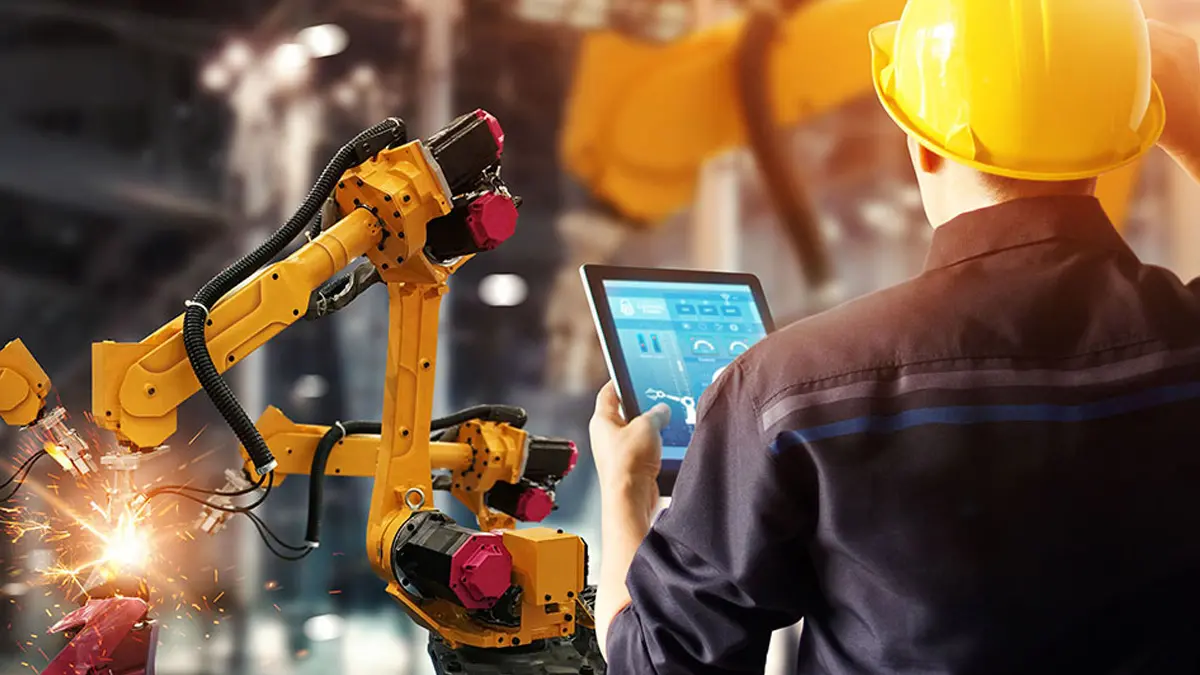
Advanced robotics will take charge of executing complex operations, including both precise welding and specialized product assembly. Employees will move from basic tasks to strategic positions that require them to guide teams toward new projects.
The worldwide competition will accelerate the implementation of technology. Industrial benefits will accrue to countries that build advanced smart manufacturing systems. The growth of artificial intelligence technologies will lead to their adoption by mid-sized businesses once their costs become affordable.
Conclusion: A Strategic Imperative, Not a Trend
The use of artificial intelligence within manufacturing operations extends beyond current technological development. The manufacturing industry undergoes a complete operational overhaul due to this development. Autonomous systems divide their time between active operations and maintenance periods while using resources efficiently, and their intelligent inspection system helps them maintain product quality.
The transition period requires organizations to make detailed operational plans. Organizations must define their technological needs, including funding requirements and security needs, employee training programs, and ethical standards.
According to manufacturers, the use of AI will help them become more adaptable to challenges while improving their market position. Businesses that wait to adopt new technologies will lose their competitive advantage in a world that increasingly relies on machine automation.
The use of autonomous technologies in industrial operations introduces industrial organizations to a completely different operational system. Modern factories function as intelligent systems that possess learning capabilities, adaptable behavior, and the ability to continuously enhance operations. The manufacturing industry reached its future state through the implementation of AI technology.

Comments are closed.