
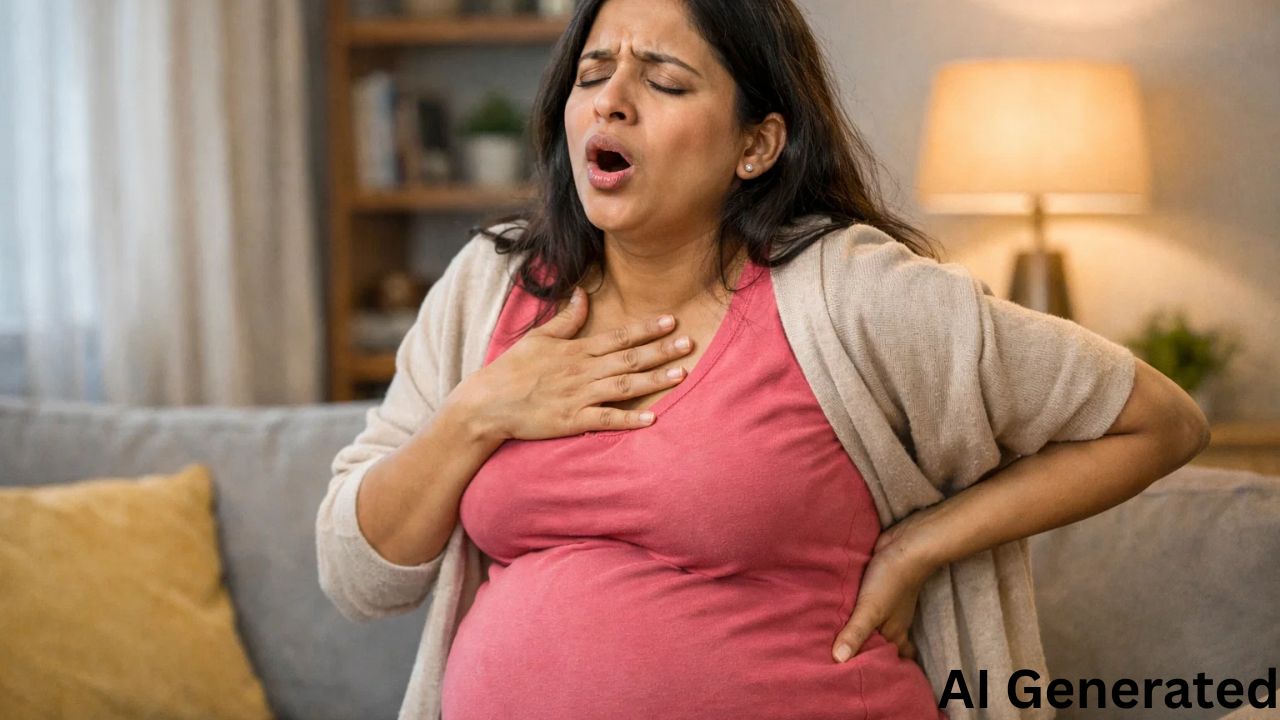
Is shortness of breath normal or an alarm bell during pregnancy? Know why the breathing pattern changes in different trimesters

The effect of changes in the body during pregnancy is also clearly visible on the way of breathing. Many women have problems like mild shortness of breath, feeling tired quickly or difficulty in taking deep breaths. This condition is normal in most cases and is caused by hormonal changes and the growing uterus.
However, the pattern of breathing varies in different trimesters. Sometimes breathing becomes faster due to hormones, and sometimes due to the growth of the child there is pressure on the lungs. In such a situation, it is important to understand when it is normal and when it can be a sign of some serious problem.
What are the reasons for breathlessness during pregnancy?
During pregnancy, hormones like progesterone and estrogen increase rapidly in the body. Progesterone increases the rate of breathing, making the woman feel that she is breathing more than normal. This is the reason why a change in breathing pattern is felt right from the beginning.
growing uterus
As the baby grows in the womb, the uterus also becomes larger. It slowly moves upward and puts pressure on the lungs and diaphragm. The diaphragm, which is between the lungs and the stomach, starts rising. Due to this, there is difficulty in the lungs expanding completely and the woman feels difficulty in taking deep breaths.
Increasing need of oxygen in the body
During pregnancy, the body needs more oxygen than before, because along with the mother, the child also needs oxygen. Due to this, the rate of breathing increases and the woman starts feeling a little breathless.
increasing pressure on the heart
The amount of blood in the body increases significantly during pregnancy. The heart has to work harder to deliver it to the entire body and placenta. This increased pressure on the heart can also become a major reason for breathlessness.
Changes in breathing in different trimesters
First Trimester (First 3 Months)
At this time the child is small, but hormonal changes occur rapidly. The diaphragm starts rising slightly and the rate of breathing increases. Some women experience inability to take deep breaths during this period.
Second trimester (4 to 6 months)
By this time the uterus becomes very large and the pressure on the lungs starts increasing. Many women feel the problem of excessive breathlessness during this period. Besides, changes in the functioning of the heart can also increase this problem.
Third Trimester (7 to 9 months)
At this time, difficulty in breathing can be more or less. If the baby’s head is upward, it may put pressure on the diaphragm, making breathing difficult. But when the baby moves downwards (closer to delivery), the pressure on the lungs may reduce and breathing becomes a little easier.
Due to what other reasons can the problem increase?
Although shortness of breath is common, some medical conditions can make it severe, such as:
- Asthma: Symptoms may increase if you already have asthma
- Heart related problems: like heart failure
- Blood clot in the lungs (pulmonary embolism)
- In these situations it is important to immediately contact a doctor.
Easy ways to get relief from shortness of breath
1. Adopt correct posture
Sitting and standing straight gives space to the lungs to expand, making breathing easier.
2. Sleep with the support of pillows
Keep the upper body slightly elevated while sleeping. Due to this, the uterus remains downwards and the pressure on the lungs is reduced.
3. Work slowly
If you start feeling short of breath, stop immediately and rest. Work only according to the capacity of the body.
4. Do breathing exercises
Practicing breathing techniques (such as deep breathing) can provide relief and is also helpful during delivery.
When to contact a doctor?
If the following symptoms appear, you should immediately consult a doctor:
- excessive or persistent shortness of breath
- chest pain
- heart palpitations
- bluish lips or fingers
- coughing up blood
- These symptoms may indicate a serious problem.
What happens after delivery?
In most cases, the problem of breathlessness resolves on its own after the birth of the child. As the size of the uterus reduces, the pressure on the lungs also reduces. But if difficulty in breathing persists even after delivery, then it should not be ignored and a doctor should be consulted immediately. Slight shortness of breath is common during pregnancy and it is part of the natural changes happening in the body. With the right information and a little care, this problem can be easily handled. Nevertheless, if the symptoms seem more serious or increase suddenly, it is very important to contact the doctor in time, so that the health of both mother and child remains safe.

Comments are closed.