

202
The Indian Navy’s training of 516 Mauritius National Coast Guard officers over nine years reflects its long-term approach to building trust and cooperation in the region.
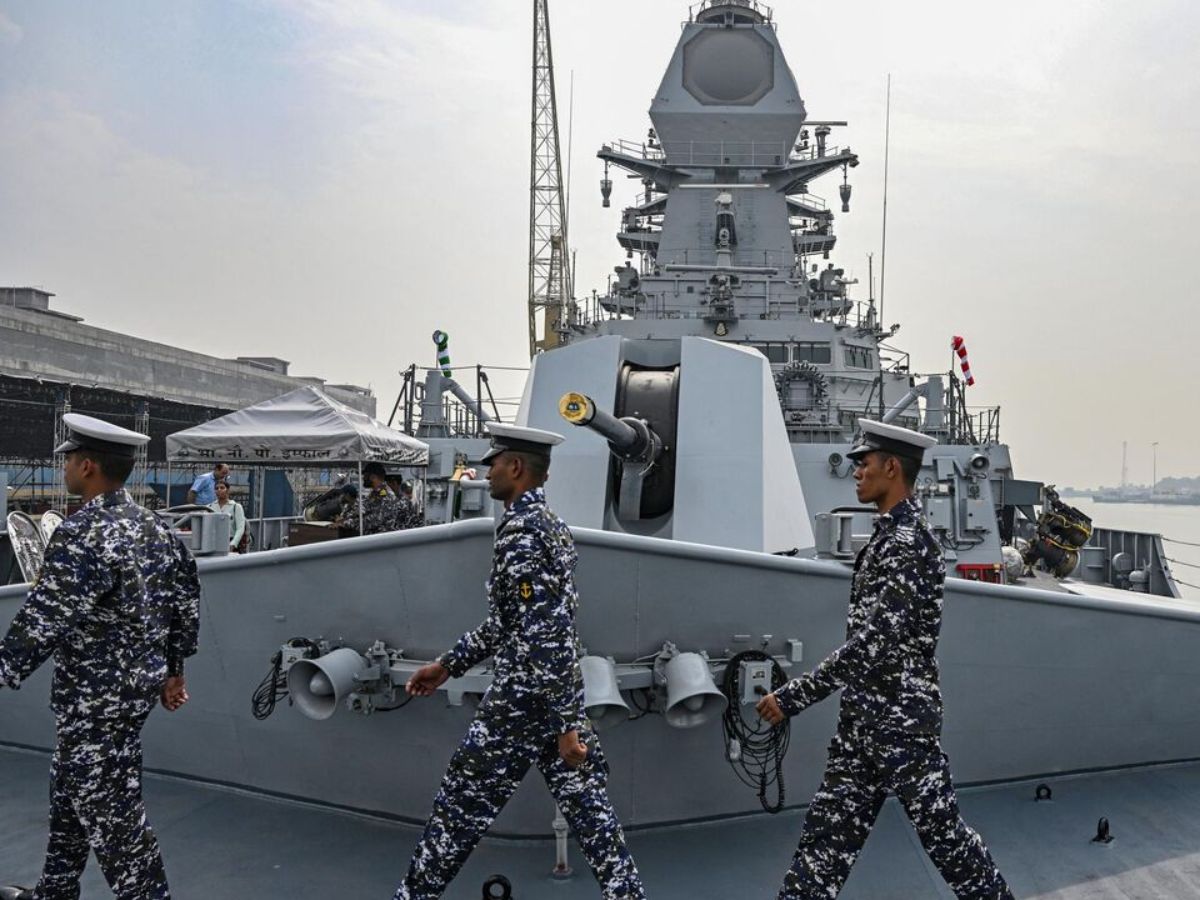
This strategy was also evident during INS Trikand’s visit to Mauritius in the second week of March. The port call underlines how India is pairing training initiatives with active naval engagement to strengthen maritime partnerships.
On March 12, as Mauritius marked 58 years of independence, an Indian naval contingent marched through Port Louis. Sailors in crisp whites, a naval band, a helicopter overhead — the kind of image that travels well on official social media accounts. By that evening, the cameras had moved on. What remained was the less photogenic work: Mauritian coast guard officers climbing aboard INS Trikand for drills they would spend the rest of the week running.
This pairing of ceremony and substance is characteristic of how India has approached its naval diplomacy in the Indian Ocean region. The arrival of a warship during a national celebration is a statement of solidarity; what happens on the quarterdeck while the ship is in port is a statement of intent. At Port Louis, the agenda included harbour and sea watchkeeping, firefighting responses, and damage control exercises — skills whose value is measured not in press releases but in outcomes during emergencies.
The broader architecture of India-Mauritius maritime cooperation makes the training exercise on INS Trikand comprehensible. India has, over several years, provided Mauritius with an interceptor boat, Dornier aircraft, and coastal surveillance radar systems. It has assisted in hydrographic surveys of Mauritian waters. The Agaléga Island facilities inaugurated in early 2024 have extended operational reach to Mauritius’ remote northern islands. What is missing from this inventory is the human element — and that is what training deployments provide.
Mauritius needs this. Its Exclusive Economic Zone covers 2.3 million square kilometres, an area it is responsible for monitoring against illegal fishing, piracy, and drug trafficking. Its coastguard, however capable, cannot manage this alone. The joint surveillance operation that INS Trikand conducted with the Mauritian patrol vessel CGS Valiant after leaving Port Louis on March 13 is one answer to this gap. The Mauritian officers who trained aboard INS Trikand are another long-term investment in the competence of the institution that will conduct those patrols for decades.
India’s record elsewhere in the region provides context for what this investment looks like over time. Five hundred and sixteen Mauritius naval officers have been trained by India over the past nine years. That is a substantial cohort of professionals who have spent extended periods learning alongside Indian counterparts, absorbing not just technique but operational culture. These officers now occupy positions across the Mauritius navy, and their familiarity with how India operates at sea is a form of strategic capital that no hardware transfer can replicate.
The India-Mauritius relationship has been nurtured at the political level as well. Prime Minister Modi visited Mauritius in 2015; President Murmu visited in 2024. India has backed Mauritius on the Chagos Archipelago dispute, which reached a landmark moment in late 2024 when the United Kingdom agreed to transfer sovereignty to Mauritius while maintaining its Diego Garcia facility. When Cyclone Chido struck the region in December of the same year, India was among the first countries to provide relief and technical support.
The MAHASAGAR framework that India uses to describe its Indian Ocean engagement emphasises shared security and shared growth. The blue economy lens is relevant here: Mauritius derives over ten percent of its GDP from maritime activities, and the sector supports roughly 10,000 jobs. Keeping those waters safe is not a geopolitical abstraction for the people who depend on them — it is a practical daily requirement.

Comments are closed.