
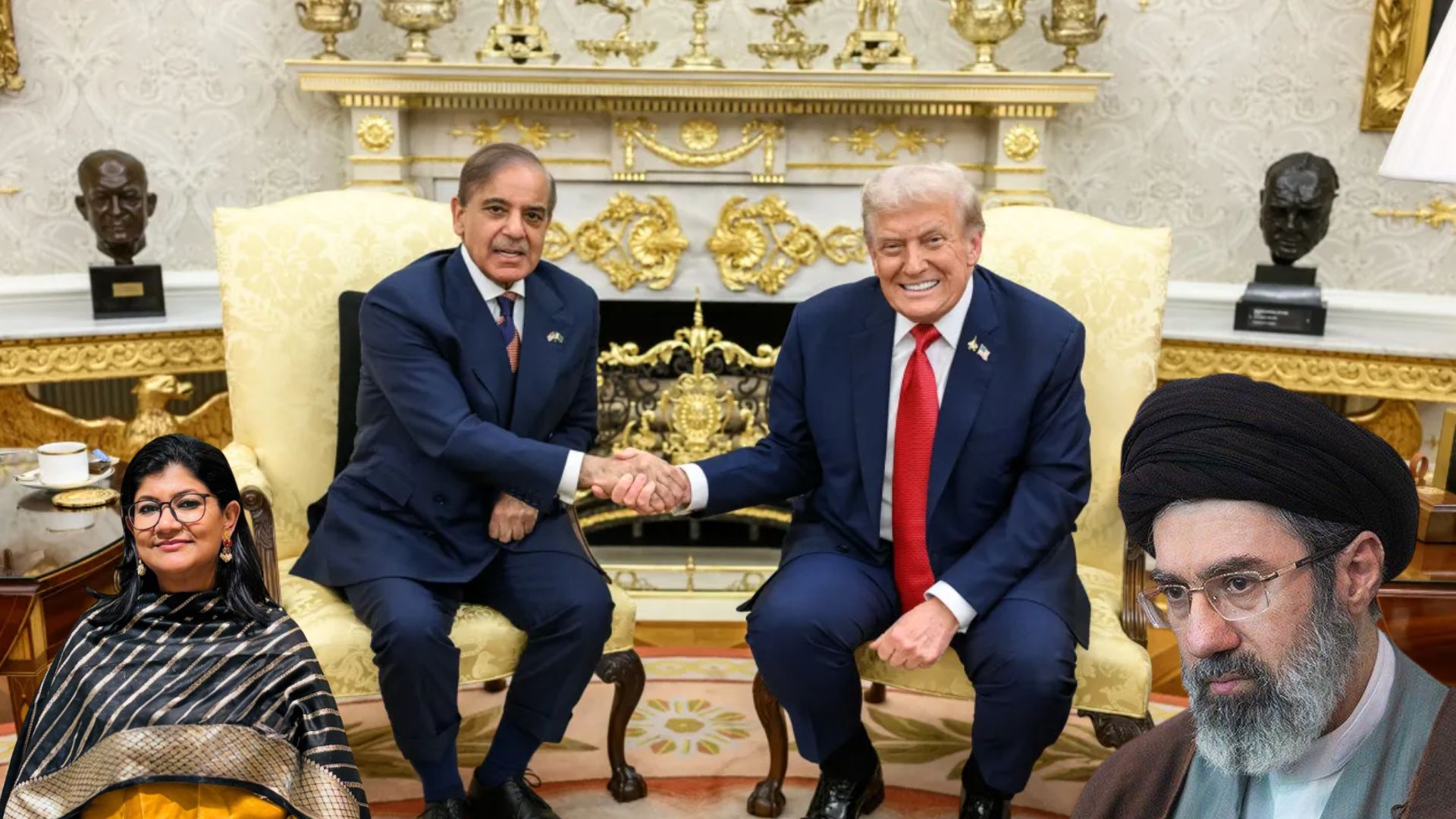

As the US-Iran conflict reshapes geopolitics, with a fragile ceasefire in place and the Strait of Hormuz remaining a flashpoint, questions are mounting over whether Pakistan’s mediation bid signals a deeper strategic shift. The Federal spoke to international affairs expert Nayanima Basu to decode Pakistan’s evolving role, India’s stance, and the wider global implications.
Why is Pakistan stepping in as a mediator between the US and Iran, and what does it stand to gain?
I think Pakistan has taken on this role to show the world that it can be a mediator in this war that has impacted the entire world, especially South Asia. As you’re very well aware, for India at least, it has given rise to a massive energy crisis and also concerns about its 10 million diaspora in West Asia.
Also read: Could Pakistan’s ‘peace broker’ role pose new risks for India? | Ai With Sanket
Coming back to your question, I think Pakistan, and especially their Army chief, Field Marshal Asim Munir, has been seen by the United States and especially by US President Donald Trump as a person who can get things done. We’ve heard Trump say he is happy with the way Pakistan, its Prime Minister Shehbaz Sharif, and Munir have taken on this role.
By and large, this is going to give Pakistan a lot of mileage in its bilateral relationship with the US. Whether or not this actually stops the war is a big question. But taking on this role is a very big quantum leap for Pakistan in terms of strategic gains.
Why have the US and Iran seemingly chosen Pakistan over other potential mediators like Saudi Arabia or Turkey?
Iran had wanted any country to come forward and take on the role of mediation. As far as my sources indicate, Tehran had also approached New Delhi, because India is very well positioned, much better than Pakistan, given its strong relationships with the United States, Israel, and Iran.
However, India did not take up this role. That is a stance the government took. Iran wanted neighbouring countries to step in, and Pakistan came forward. We should also not rule out Pakistan’s invisible support from China, and the fact that the United States wanted Pakistan to play this role.
Also read: US-Iran talks in Islamabad stall as Tehran sets Lebanon ceasefire condition
Countries like Turkey, Egypt, and Saudi Arabia do not have a problem with Pakistan taking leadership here. Saudi Arabia itself is in a state of conflict due to Iran’s actions in the region, so it cannot take the lead. Turkey is playing its own parallel role through forums like the Antalya Diplomacy Forum.
But this is a complex situation. We also need to consider Israel, because Pakistan does not recognise Israel and has no relationship with it. That may be why Israel is engaging through the United States. We need to wait and watch how this unfolds.
Is India’s decision not to mediate a strategic choice or a missed opportunity?
That is the Congress party’s viewpoint; I will not go into the politics. As a journalist, I can say that India has very good working relationships with all key players — the United States, Iran, Israel, and the Gulf countries.
India was in a much better position to mediate, especially since it has been advocating dialogue and diplomacy. We’ve heard Prime Minister Narendra Modi say that this is not an era of war. If India truly believes that, then when other wars are happening, it needs to practise what it is preaching.
Also read: ‘Severe setback to India’: Congress on reports of Pakistan mediation in West Asia
It is a responsible statement, but when countries are in a state of war, they may not listen to such advice. So it is important to also act on what you tell the world. India could have promoted dialogue or acted as an interlocutor, if not a mediator.
Also, India is the chair of BRICS this year. That is a major opportunity. With the BRICS foreign ministers meeting soon and a summit to follow, India could bring countries together and turn this crisis into an opportunity.
What role is China playing in the ceasefire, given its strategic interests and ties with Pakistan?
I will not rule out China’s role completely. Every country wants a ceasefire, especially given the energy crisis triggered by this war. The Strait of Hormuz has become the central point of conflict.
The United States has been deploying its assets and even turning back ships, including merchant vessels. This shows the level of threat perception. Iran has leveraged the Strait of Hormuz, and while we can debate whether that is right or wrong, we must understand Iran is in a vulnerable position.
Also read: India’s Iran stance sparks debate: Pragmatism or missed mediation role?
China will definitely want to play a role, even if indirectly through Pakistan, because this conflict is disrupting global supply chains and economic growth. Countries are demanding that the Strait of Hormuz be opened.
So yes, China, India, and others all want a ceasefire. But ceasefires are fragile. This conflict has been going on for decades, so expecting a quick solution is not realistic.
Can Pakistan sustain this ceasefire and turn it into a lasting peace agreement?
I would be very sceptical about how long a ceasefire can hold, and whether it can turn into a peace agreement. Pakistan and Israel do not have a working relationship, which is why the United States is acting as an intermediary.
Given the historical context, I do not see a peace agreement as a real possibility. But a ceasefire that holds is almost as good as a peace agreement.
Also, the Israel-Lebanon conflict has been ongoing for years. Israel’s concern has been Hezbollah. Even if leaders meet, it does not work unless Hezbollah is at the table. And today, Hezbollah is a kind of state actor.
Also read: Strait of Hormuz reopens: Iran’s quiet move, America’s loud claims
So this is a very complex geopolitical situation. A full peace agreement is unlikely, but a sustained ceasefire would still be beneficial.
Does Pakistan’s role signal a shift towards a multipolar world order?
That is a very far-fetched question and depends on Pakistan’s own foreign policy. Whether they believe in a unipolar or multipolar world is for them to decide.
But at this moment, when such a massive war is ongoing and affecting even our daily lives, the world should support Pakistan’s efforts. We have seen the European Union and ASEAN countries acknowledging Pakistan’s role.
Whether this is temporary or part of a larger shift remains to be seen. But for now, the world is watching Pakistan.
I would also say this is India’s moment to step into the limelight. With the BRICS summit coming up, India has an opportunity to bring countries together and possibly shape a lasting solution. This summit could turn out to be historic.
(The content above has been transcribed from video using a fine-tuned AI model. To ensure accuracy, quality, and editorial integrity, we employ a Human-In-The-Loop (HITL) process. While AI assists in creating the initial draft, our experienced editorial team carefully reviews, edits, and refines the content before publication. At The Federal, we combine the efficiency of AI with the expertise of human editors to deliver reliable and insightful journalism.)

Comments are closed.