
MG Majestor Swaps Railway Tracks For Chennai Beach Sand: Here’s The Tech Making It Happen [Video]

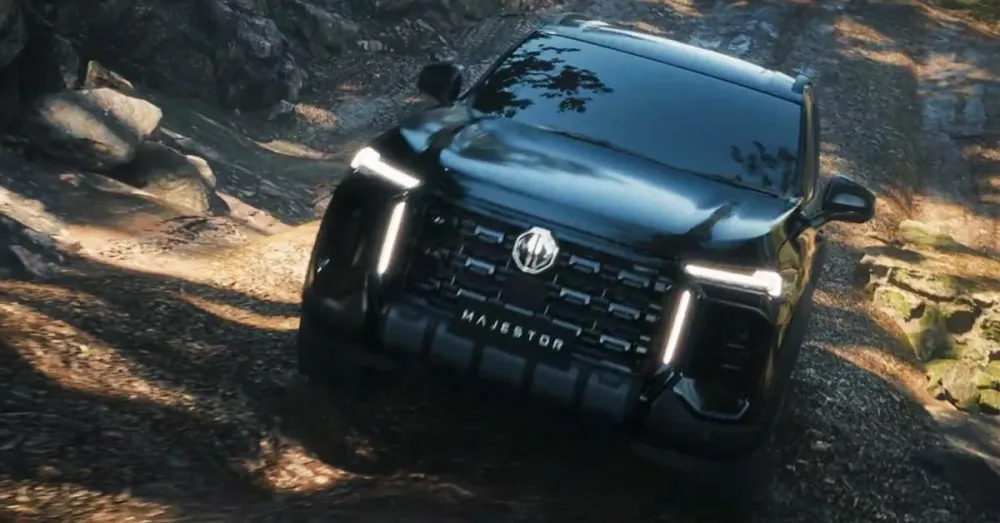
JSW MG Motor has moved its upcoming Majestor SUV from towing trains in Kashmir to driving on the loose sand of the Pattipulam coastline along the East Coast Road in Chennai. The automaker is using these contrasting environments to demonstrate the vehicle’s four-wheel-drive system before its official market launch.
Driving a heavy SUV on a beach requires a very different mechanical setup compared to pulling a rolling weight on steel rails. On a beach, a vehicle fights constantly against sinking into the surface. MG used this run to showcase the specific sand driving mode programmed into the SUV, highlighting how the electronics and mechanical parts work together to keep the vehicle moving.
Sand driving is notoriously difficult for heavy passenger vehicles. It requires continuous momentum and careful torque management to prevent the tyres from digging in and burying the axles. The Majestor relies on a 2.0-litre twin-turbo diesel engine that produces 215.5 PS and 478.5 Nm of torque. That torque figure is the critical metric here. High torque at low engine speeds allows the vehicle to keep moving forward through soft, shifting surfaces without requiring the driver to rev the engine excessively.
The engine is paired with an eight-speed automatic transmission, which manages the power delivery to the wheels. MG is offering the SUV in both two-wheel-drive and four-wheel-drive configurations. In the dedicated sand mode on the 4WD versions, the vehicle’s electronic control unit alters the throttle mapping and traction control. It allows just enough wheel slip to keep the momentum going, rather than abruptly cutting power the moment a tyre loses its grip on the loose surface.
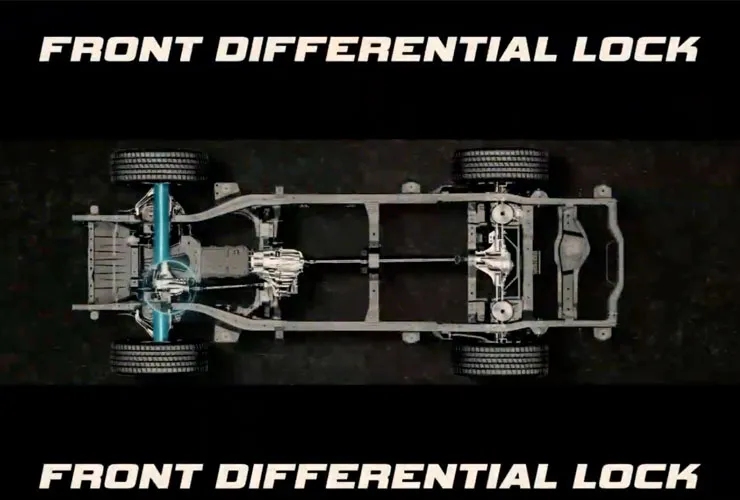
The most significant piece of off-road hardware on the Majestor is its differential setup. The SUV is equipped with front, centre, and rear differential locks. In the mass-market passenger vehicle space, having all three locks is rare and usually found only on highly specialised off-road machines. A standard differential allows wheels on the same axle to spin at different speeds, which is necessary for turning safely on paved roads. However, off the road, an open differential will send all the engine power to the wheel with the least traction, leaving the vehicle stuck.
By locking the differentials, the Majestor forces the wheels to turn at the exact same speed, ensuring that if even one wheel has grip on a rocky or sandy surface, the vehicle can pull itself forward. The 4WD system also includes 10 distinct terrain modes and a crawl control function. This crawl control acts as a low-speed off-road cruise control. It manages the brakes and throttle automatically so the driver can focus entirely on steering through deep ruts or over obstacles.

Beyond the driveline, the physical dimensions define where an SUV can go. The Majestor sits 219 mm off the ground and has a rated water wading depth of 810 mm. That wading figure translates to roughly two and a half feet of water, making it capable of handling deep river crossings or severely waterlogged city streets without flooding the engine intake. Alongside this mechanical hardware, the vehicle is fitted with Level 2 ADAS for highway driving assistance.

MG has opened pre-reservations for the Majestor at Rs 41,000. To build an early order bank before the official price announcement, the company is offering a specific package to the first 3,000 buyers. This package includes a five-year warranty with unlimited kilometres, five years of roadside assistance also with unlimited kilometres, and five routine services where labour charges are waived. The actual price announcement today will determine how the SUV stacks up against the established heavyweight – Toyota Fortuner.
Comments are closed.