

For many office workers, “hoesik,” company dinners that often stretch into multiple rounds of drinking until early morning, are becoming less common, the Korea Herald reported.
“Hoesik used to last until 2 or 3 a.m.,” said Hwang Sang-pyo, a 34-year-old office worker.
“But now, if the clock hits midnight or even 11 p.m., people feel they should head home. Drinking until the morning is no longer usual,” he added.
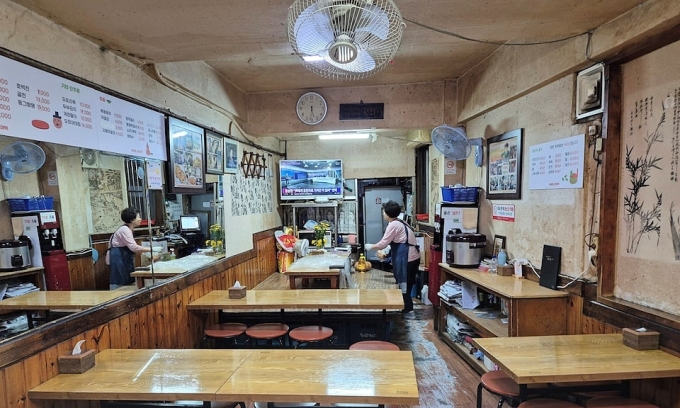
A restaurant owner waits for customers at her empty restaurant in Seoul, South Korea, October 31, 2024. Photo by Reuters |
A 31-year-old marketer surnamed Kim attributed the change to habits formed during the Covid-19 pandemic.
“After Covid-19, the whole culture changed. When there were curfews, people got used to going home early,” she said.
For some South Korean young adults, heavy drinking has never been part of their social lives.
Choi Seung-yeon, 25, said she does not drink at all.
“I spent my freshman year during Covid-19 so I never experienced staying out late drinking with friends. When we meet, we usually go to cafes. Most of my friends also do not drink,” she said.
According to the Korea Disease Control and Prevention Agency (KDCA), the median monthly binge drinking rate across South Korea’s 17 provinces and major cities was 33.8 percent in 2025. The figure increased from 31.7 percent in 2021 to 35.8 percent in 2023 before declining for two consecutive years.
Binge drinking is defined as consuming seven or more drinks for men, or five or more for women, on a single occasion at least once a month.
The monthly drinking rate, defined as the share of people who consumed alcohol at least once a month, also declined across all regions over the past year.
According to the Seoul Economic Dailythe change in drinking habits is most evident among people in their 20s.
KCDA’s National Health and Nutrition Examination Survey found that 56 percent of people in their 20s either abstain from alcohol or drink less than once a month.
“Many people in their 20s entered university during Covid-19 and missed traditional group drinking events such as freshman orientations and retreats,” said Kim Sang-hag, a sociology professor at Hanyang University.
As a result, they did not develop the same drinking habits as previous generations, he added.
Professor Lee Eun-hee, a consumer studies expert, points to the rise of new lifestyle trends, such as “healthy pleasure”, as a contributing factor to the change.
“Healthy pleasure refers to seeking enjoyment without compromising one’s health, while there is a growing interest in reducing or eliminating alcohol consumption. Many young people now regulate their drinking based on their physical condition and daily routines,” she said.
“In the past, the key question was ‘How much did you drink?’ Now it has shifted to ‘Why are you drinking?’
“People are prioritizing their well-being and personal schedules over habitual or socially driven drinking,” she added.
Comments are closed.