

They plan to purchase a property within the next 12 to 18 months, with condominium units being the most favorable option, according to a survey by property platform PropertyGuru released Monday, as reported by
Among “dual income, no kids” couples aged 30 and above earning at least SGD10,000 (US$7,862) in combined monthly income, four in 10 of those intending to buy a private home preferred newly launched condominiums.
The survey polled about 2,000 Singaporeans and permanent residents in November and December 2025.
Lu Yao, managing director of PropertyGuru, said the findings suggest such households prioritize lifestyle options and long-term asset growth, supported by higher disposable incomes.
Eugene Lim, key executive officer of real estate agency ERA Singapore, said the appeal is particularly strong for couples whose combined earnings exceed the SGD14,000 income ceiling for new Housing and Development Board flats, referring to Singapore’s public housing program.
“On the one hand, they would have a comfortable home of their own. On the other, they can accumulate wealth over time, so long as Singapore’s property market and wider economy maintain their steady growth,” he said.
The average price for new condominium launches have risen 52% between 2020 and 2025 to SGD2,572 per foot ($21,762 per square meter).
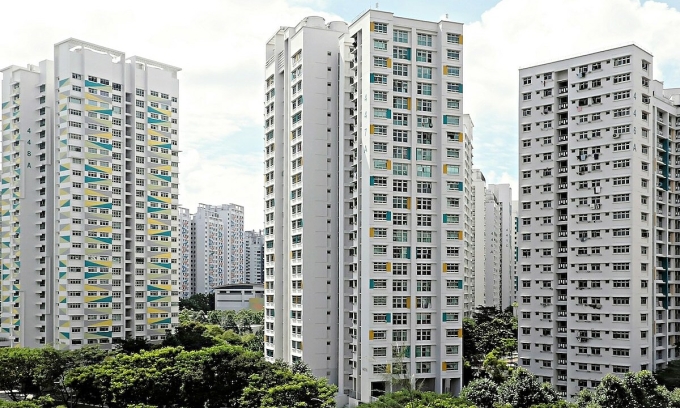
Apartment buildings in Singapore. Photo by Unsplash/Danist Soh |
Singles’ demand
The PropertyGuru survey also found that private housing is gaining traction among younger, higher-income singles.
Four in 10 singles aged 30 to 34 with monthly incomes of at least SGD10,000 express interest in such properties, particularly two- and three-bedroom condominium units.
The survey also showed that 54% of singles aged 35 to 39 earning at least SGD10,000 a month prefer to purchase four-room Housing and Development Board flats.
PropertyGuru said its latest findings indicate that singles are returning to the property market amid lower borrowing costs.
Its survey in the second half of 2023 had pointed to heightened caution, particularly among those aged 35 and above.
“Many delayed purchases were due to high interest rates and inflation pressures. This was especially pronounced among singles, as (they are) more sensitive to financing costs and economic uncertainty,” the company said.
Comments are closed.