
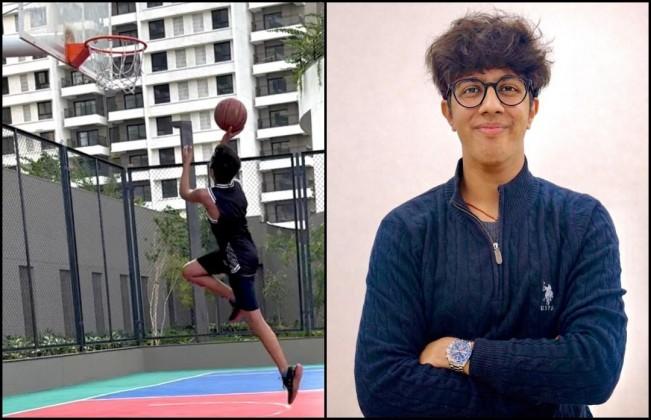

I started playing basketball as a sport, but over time I’ve realised it teaches something beyond the game. It’s shown me how decisions are made under pressure.
One thing that stands out is how fast everything moves. In a game, baskets happen every 20–30 seconds, and you are constantly adjusting. You are thinking about your own team’s strengths and weaknesses, but also reading the opposition at the same time. That awareness is always running in your mind.
I usually play as a small forward, and sometimes as a shooting guard. In those roles, you are expected to do a bit of everything. You have to attack, defend, pass, and also read the flow of the game. There is no fixed script.
On the court, decisions happen in seconds. Whether to pass, shoot, or drive depends on where defenders are, how teammates are moving, how much time is left, and what the score is.
There is no perfect information. There is no pause to think through every option.
In many ways, this feels closer to real-world decision-making than what we experience in classrooms.
In school, we are usually given structured problems and enough time to solve them step by step. But in real situations, decisions often have to be made with limited time and incomplete information. What matters then is not just knowledge, but the ability to read a situation and act.
One thing I’ve experienced personally is how performance keeps changing. When I was new, I didn’t play well at all. Over time, my game improved. There are days when I feel I am playing better than others and even carrying the team. But there are also days when I play badly.
It keeps happening.
What matters is how you respond in the moment. You don’t get to reset the game. You have to fight back, stay involved, and still contribute to the team.
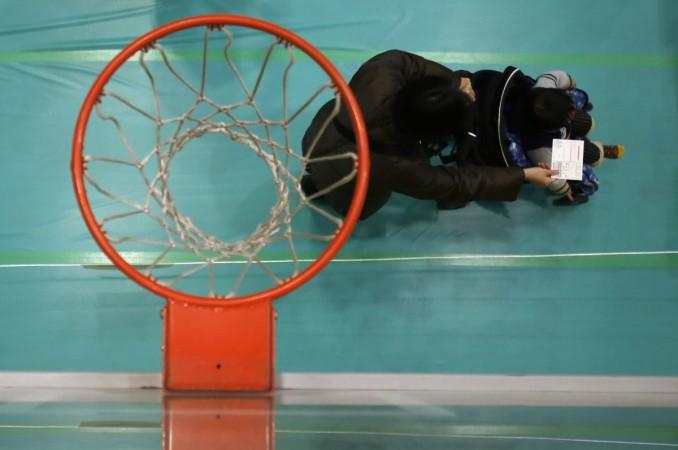
Another part of the game is dealing with outcomes. Even when you make the right decision, things don’t always go your way. You can take a good shot and still miss. You can make the right pass and still lose possession. But the game keeps moving, and you have to focus on the next play.
That ability to move on quickly is something I’ve started to value more.
One match that stayed with me was when we played against a team from Army Public School. They were not just in higher classes but also taller and more experienced. They outplayed us, but we still gave them a tough fight. I remember scoring well in that game but also realizing the gap.
We came out of that match with bruises, not just physically but mentally as well. But at the same time, it taught us something important. You can be outmatched, but you still compete, learn, and come back stronger.
Over time, I’ve also noticed that experience changes how decisions feel. What seemed fast and confusing earlier starts to feel more natural. You begin to recognize patterns and react more instinctively.
It made me think about how judgment develops, not just from theory, but from being in real situations again and again.
Basketball also teaches you about composure. In close games, when the pressure increases, it’s easy to rush decisions. But that usually makes things worse. The challenge is to stay calm and make the same quality of decisions.
That’s not easy, but it’s something the game constantly tests.
Looking at it this way, basketball becomes more than just a sport. It becomes a way to understand how decisions work when there is pressure, uncertainty, and limited time.
These are conditions that exist in many real-life situations.
And that’s something I don’t think can be fully understood without experiencing it.
(Aakash Rajneesh is a Class 12 student based in Delhi.)

Comments are closed.