
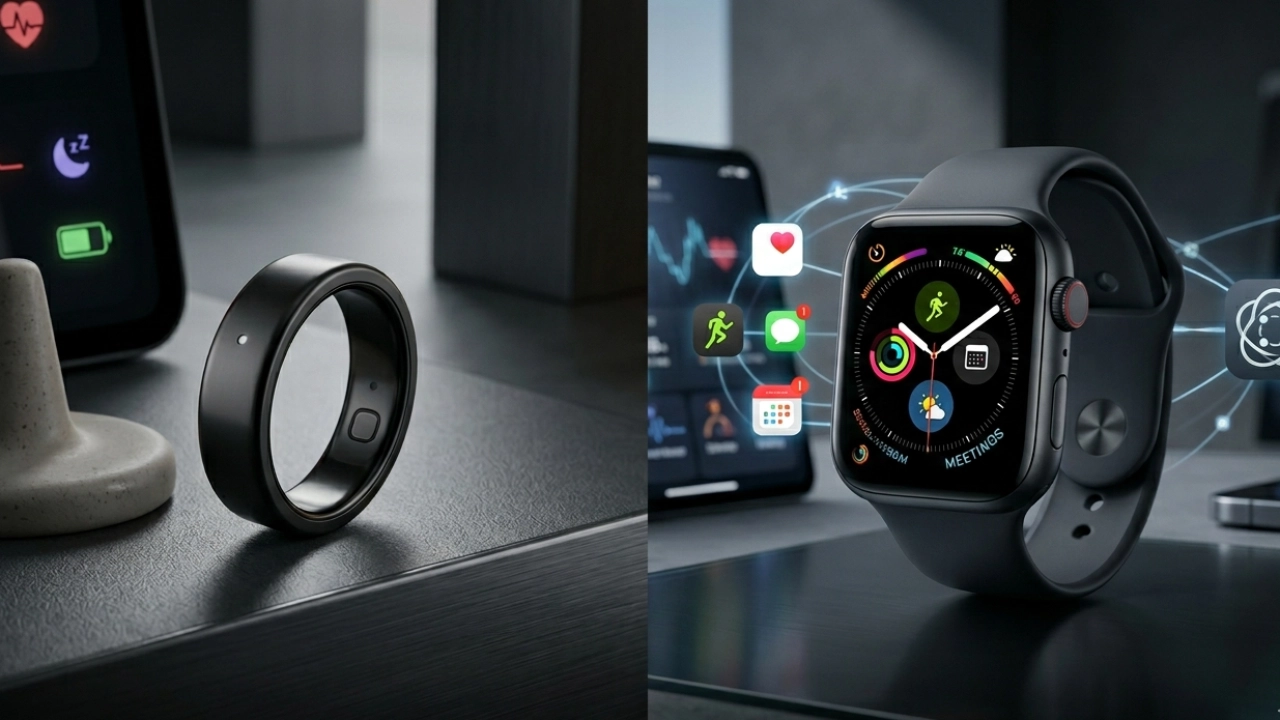

A Deep Comparison of Emerging Smart Rings vs Smartwatches Ecosystem occurring now, as, for almost ten years smartwatches have established themselves as the standard for wearable technology. The Apple Watch and other devices from Samsung and Garmin defined a new standard which enables users to receive notifications and access fitness data and third-party applications through wrist-mounted displays.
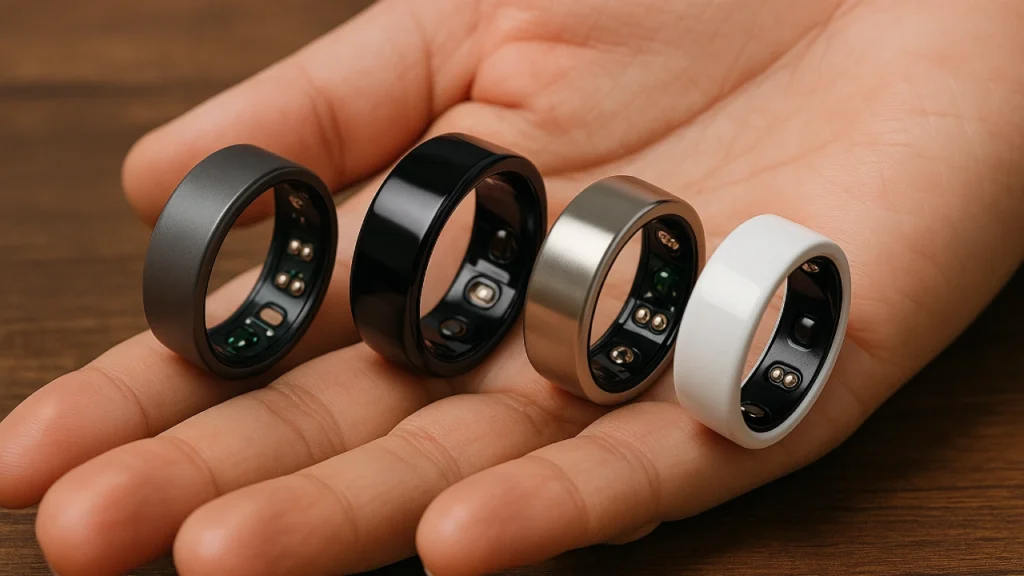
The year 2026 brings a new competitor who enters the smart ring market for serious competition. Oura Health and Samsung have developed ring-shaped devices which enable users to monitor their health continuously without needing to wear bulky watches.
Smart rings have become a valid technology which now operates as a direct competitor against existing smartwatches. The question now focuses on whether smartwatches will remain the main wearable device or whether smart rings will take over that position.
Form Factor: Discretion vs Interaction
Smart rings and smartwatches differ most obviously through their visibility which displays their most fundamental distinction. Smartwatches function as artistic devices. Their design includes bright screen displays which users can change through different bands and they show app interfaces. The system requires users to engage with the system multiple times throughout the day.
Smart rings, by contrast, are discreet. The devices operate without screens because their users must use companion apps to see their monitored information. The system works best when users stay inactive because it operates through automatic monitoring.
The feature attracts many users because it offers subtlety. Rings blend into daily life without announcing themselves as technology. The devices provide users with better discretion during professional work and formal events.
The device lacks a screen which creates restrictions on its operational capabilities. The device cannot show alerts or handle phone calls or display current route directions. Smartwatches show better performance for tasks that require user interaction.
Health Tracking: Accuracy and Focus
Wearable devices use health tracking as their main feature to attract customers. Both rings and watches monitor heart rate, sleep, and activity. The two systems show different methods to measure their results.
Smart rings often prioritise sleep analysis and recovery metrics. The device uses its finger ring design to measure pulse signals through direct contact with the skin. The device gathers overnight data through its continuous skin contact design.
The wrist-mounted smartwatches now include advanced sensor technologies which enable users to perform ECG tests and monitor their blood oxygen levels. Some models support temperature tracking and fall detection.
The accuracy gaps in measurements show progress toward resolution during 2026. The development of smaller sensors enables rings to capture more advanced data. The watch systems deliver wider health measurement capabilities which include workout tracking and fitness application connection features.
The competition now requires assessment of how devices transform data into usable knowledge instead of focusing on their ability to display basic information.
Battery Life and Charging Habits
The primary difference between battery life and other features. Smart rings provide multiple days of operation from one charge because their displays and processing requirements remain minimal. The design promotes ongoing usage which includes night-time use.
The need for daily charging affects all smartwatches that use OLED screens because their app ecosystems consume power. The need for regular charging breaks users who track health data over extended periods although battery technology keeps improving.
For users who want to track their health continuously throughout the day rings provide better health tracking solutions. Smartwatch users value advanced features even when those features result in reduced battery performance.
Ecosystem and Software Integration
The ability to connect with another system through ecosystem integration represents the main factor which determines which wearables will succeed. Smartwatches operate within mature platforms. The Apple Watch provides users with deep integration to iPhones which enables them to send messages, make payments, listen to music and use third-party applications. Wear OS devices connect to Android ecosystems with similar versatility.
Smart rings need to develop further because they currently operate as dedicated devices. They collect information very effectively but their users need apps to review the results. The app ecosystems for rings provide users with fewer options when compared to other systems.
The key factor that will determine dominance in 2026 will depend on how well devices work with digital systems used in routine activities.
Fitness and Athletic Performance
Smartwatches currently dominate the market because they provide athletes and fitness enthusiasts with essential tracking capabilities. The watch functions as a vital workout tool because it includes built-in GPS and real-time pace monitoring and dedicated sports modes.
Rings fail to perform this task because they lack display technology and provide only restricted real-time information. The technology collects data without active user input yet fails to deliver instant training feedback.
Rings function as additional devices that users can wear alongside their existing watch. Some users wear two devices because they want to track their health continuously while using one device for their active workouts. The wearable industry will develop through partnerships between companies instead of one brand taking over the market.
Comfort and Long-Term Wearability
Users decide to adopt wearable technology based on their comfort level with the device. Rings have a lightweight design which makes them suitable for users who want to sleep without interruptions. The devices provide wrist comfort because users can wear them continuously throughout the day.
Watches become heavy to wear because their larger designs create additional weight. Users tend to take off their watches when they sleep or when they engage in specific physical activities. As sensors become smaller and designs more ergonomic, comfort differences may narrow. But rings currently offer a distinct advantage in unobtrusive monitoring.
Pricing and Accessibility
Smartwatches range in price from low-cost options to high-end products. The specialized hardware of rings together with their limited production capacity results in higher price points for these devices. Subscription models further complicate comparisons. Users who want complete data access on certain rings need to pay monthly subscription fees which increase their overall expenses.
Mainstream acceptance will depend on how affordable products become. Rings will reach a wider audience if their prices decrease after achieving mass production.
Privacy and Data Ownership
Wearables gather private medical information. The rules that govern the ecosystem together with the data management systems create essential importance.
Smartwatches function as part of larger cloud systems that connect various digital platforms. Rings use health metric monitoring as their main feature to create devices that protect user privacy. Consumer confidence will become more important for purchasing choices according to the increasing availability of detailed biometric information.
Market Momentum in 2026
Global wearable shipments continue to grow but the smartwatch market has reached its growth limit. Smart rings show higher growth rates despite their lower total user base than other devices. Different regions exhibit their own unique patterns of technology adoption.
In advanced technology markets, early users test ring technology. In markets that prioritize fitness, people prefer to use watches. Manufacturers are developing hybrid models that combine ring technology with watch technology and enable data sharing between devices.
The Likely Future: Smart Rings vs Smartwatches
Smart rings and smartwatches will compete against each other without producing a single winner. Each technology solves distinct problems. Smartwatches offer users interactive experiences that involve communication. Smart rings provide users with a discreet method to track their health throughout the day.
Rings have the potential to become more popular in daily health tracking through ecosystem expansion and price reduction. People will continue to use watches for their multiple features. Consumer choice will determine the results. People who want to keep things simple will choose rings. People who want multiple options will choose watches.
Conclusion: Dominance May Be Redefined
The 2026 wearable debate centers on how wearables operate together with digital technologies instead of which device performs better. Smart rings represent a shift toward invisible technology devices that gather data quietly without demanding attention.
Smartwatches serve as vital hubs that provide users with both connectivity options and functional features. The future will require multiple wearables because both devices provide different functions throughout their development. The term dominance describes a state of power that does not require complete control over others.
The future of wearable technology will succeed through products that provide users with comfortable and precise performance which works with existing systems at a cost that people can afford. The next evolution of wearables will establish requirements for devices that users will wear on their wrists and fingers because of their ability to blend into everyday routines.

Comments are closed.