
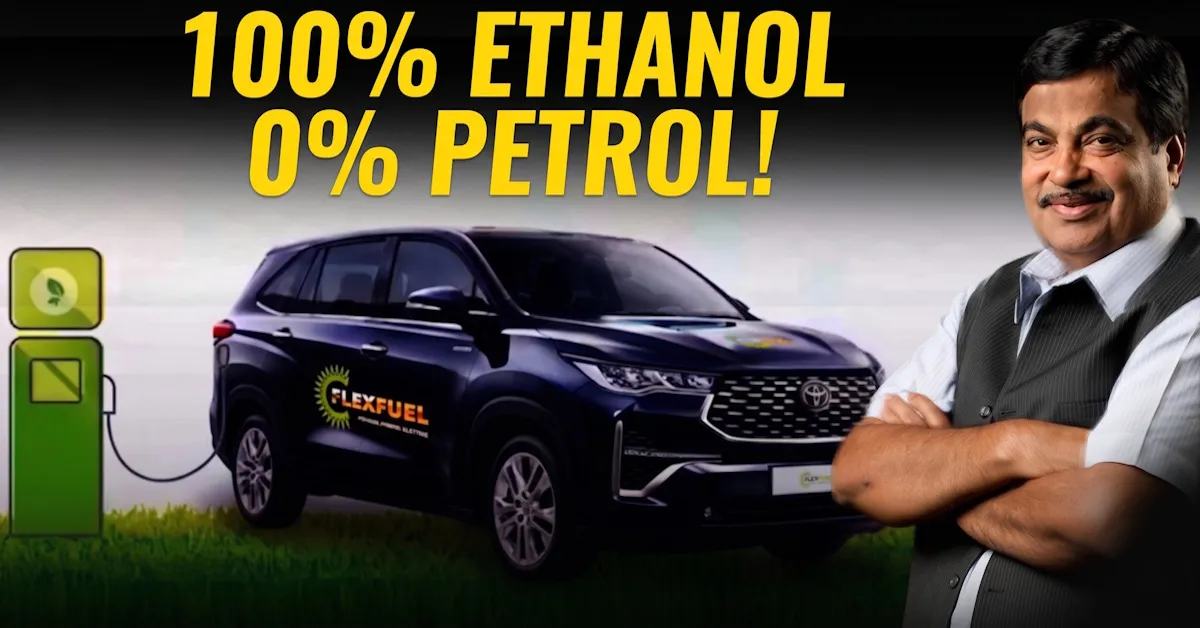
India Should Move To 100% Ethanol Fuel: Transport Minister Nitin Gadkari Pushes For 0% Petrol

India could be heading towards 100 percent Ethanol-blended petrol (E100) sooner than expected. Speaking at the Indian Federation of Green Energy’s Green Transport Conclave, Union Minister Nitin Gadkari said that the country should aim for 100 percent ethanol blending in the near future. This will help in reducing oil imports and strengthen energy independence.
“In the near future, India should aspire to achieve 100 per cent ethanol blending… Today, we are facing an energy crisis due to the war in West Asia, so it is necessary for us to become self-reliant in the energy sector,“- PTI quoted him saying.
India, as a matter of fact, is a major oil importer, and the West Asia war has created notable disruptions in global fuel supply systems. Earlier today, we had reported the government’s draft notification allowing E85 fuel.
India completed the nationwide rollout of E20 petrol (20% Ethanol blended petrol) on April 1, 2026. This transition was achieved before the scheduled 2030 timeline. Gadkari believes this is just the beginning.
India currently imports nearly 87 percent of its crude oil requirements, leading to massive expenditure and exposure to global price shocks. According to the minister, the country spends around Rs 22 lakh crore on fossil fuel imports. Moving to higher ethanol blend- and eventually 100 percent ethanol- could significantly reduce this dependency.
Ethanol blending offers two key advantages. First, it improves energy security by reducing reliance on imported crude oil. Ethanol can be produced locally using agricultural wastes, sugarcane and maize.
Second, it helps reduce emissions. Ethanol burns cleaner than petrol, contributing to lower carbon content in exhaust gasses. Countries like Brazil have already demonstrated the viability of E100 vehicles. India could possibly take a similar route- of shifting to flex-fuel vehicles. It was in 2023 that PM Modi introduced 20% Ethanol-blended petrol (E20) in India. Now, most new vehicles here are E20 compatible.
The vision is ambitious. But, the transition to E100 petrol will not be easy. E20 compatibility was realised by implementing minor modifications to vehicles. But moving to E85 or higher (including E100) will require major re-engineering- in other words, it will need flex-fuel engines specifically engineered to handle such blends. The governmental push for higher blending is expected to encourage automakers to accelerate the development and rollout of flex-fuel vehicles.
There are also infrastructure challenges. Fuel stations would need separate storage and dispensing units for higher ethanol blends. In addition, scaling up ethanol production sustainably without affecting food supply also remains a concern.
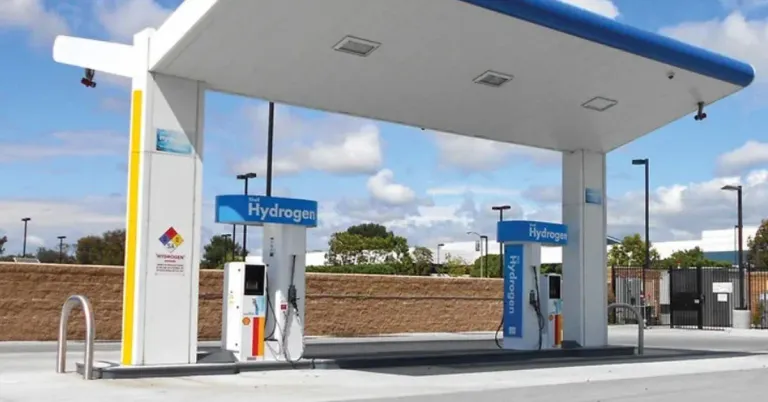
Apart from ethanol, the government is also exploring other clean energy options like hydrogen.
However, Gadkari acknowledged that there are several cost and transportation hurdles in this.. For India to become a global energy exporter, hydrogen production costs need to fall to around $1 per kg, which is still a distant goal. The minister also said that we should actively explore the potential of producing hydrogen from wastes. He also highlighted the need for creating a circular economy.
The shift towards ethanol has not been without controversy. Gadkari pointed out that sections of the petroleum industry have been lobbying against higher ethanol blending. At the same time, he has dismissed criticism of E20 fuel, calling some of it politically motivated.
Bodies like SIAM and ARAI have supported the push for blended-fuel, stating that it has minimal impact on vehicle performance while delivering economic and environmental benefits. He added that the blending program has helped farmers and benefitted the agricultural sector at large.
Source: TOI
Comments are closed.