
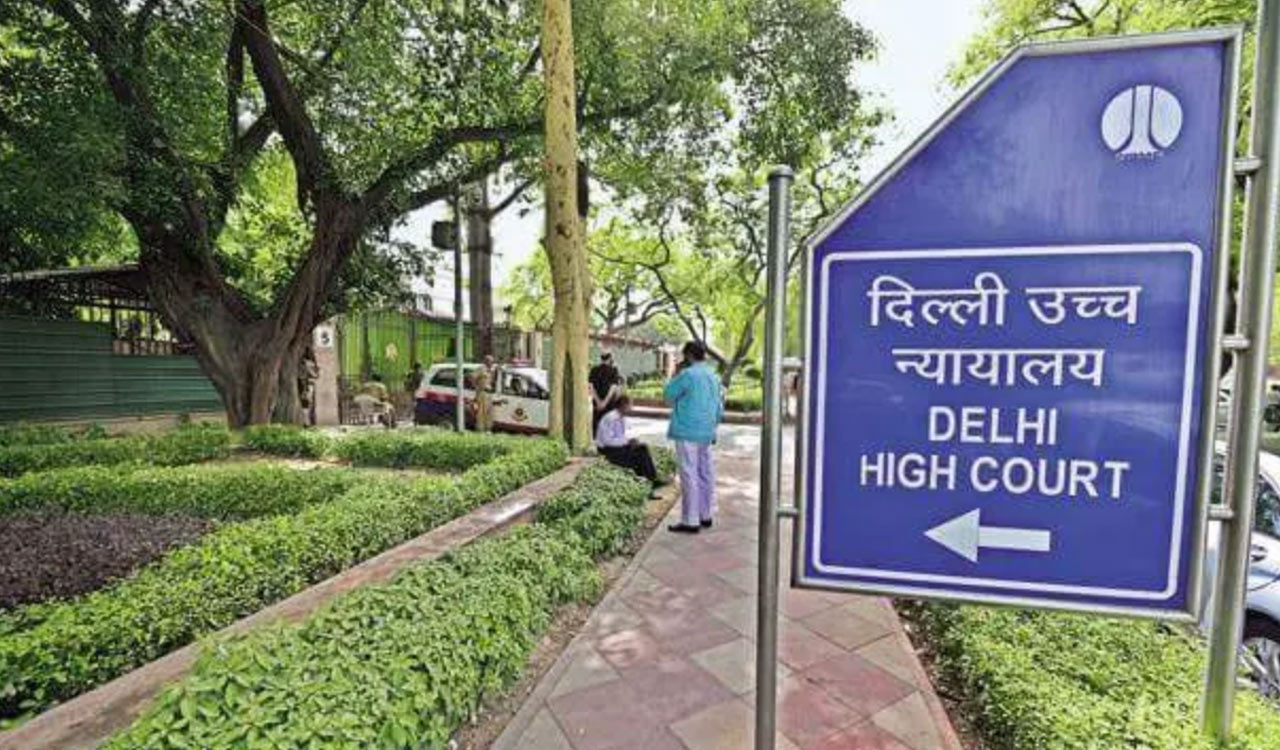

The Delhi High Court has found YouTuber Gulshan Pahuja guilty of criminal contempt for publishing videos and banners containing derogatory remarks against judicial officers. While the court accepted apologies from two advocates featured in the videos, it held that Pahuja’s actions went beyond fair criticism and were intended to scandalise the judiciary.
Published Date – 23 April 2026, 12:20 AM
New Delhi: The Delhi High Court has held a YouTuber guilty of criminal contempt for publishing videos and banners containing derogatory and scandalous remarks against judicial officers and the judiciary, observing that the conduct was aimed at lowering the authority of courts and eroding public confidence in the justice system.
A division bench of Justices Navin Chawla and Ravinder Dudeja found that respondent Gulshan Pahuja, who runs the YouTube channel “Fight 4 Judicial Reforms”, had crossed the line between fair criticism and contempt by making sweeping and unverified allegations against members of the judiciary.
However, the Delhi High Court discharged advocates Shiv Narayan Sharma and Deepak Singh after accepting their unconditional and unqualified apologies for remarks made during interviews featured in the videos.
The Justice Chawla-led Bench was dealing with suo motu criminal contempt proceedings initiated on references made by judicial officers over videos uploaded in 2024 and 2025, which contained contentious interviews, banners and statements targeting specific judges and the judicial system.
The order clarified that advocating for reforms, including audio-video recording of court proceedings, does not attract contempt jurisdiction.
“Every person is entitled to hold an opinion, and to express it, on the manner in which the justice dispensation system can be improved,” the Delhi High Court said, adding that such campaigns, by themselves, cannot be faulted.
However, the order held that the respondent’s actions went beyond legitimate criticism and were intended to scandalise the judiciary. “The intent of respondent no. 2 is… to scandalise and lower the image of these Judicial Officers in the general public, thereby lowering the authority of the Court. It is not to generate a healthy debate but to scandalise the Court,” the bench observed.
It recorded that the YouTuber had made sweeping allegations against three judicial officers without any verification of facts or reliance on judicial records.
“What is the foundation of such over-sweeping remarks against the Judicial Officers?” the Delhi High Court asked, adding that the respondent had admitted he did not verify the claims made in the interviews.
The order said that imputing that litigants should not expect justice from certain judges amounted to a direct attack on the institution. “If one has to attack a Judicial Officer on his integrity or competence, it must be done with cogent evidence; it cannot be made lightly,” the Delhi High Court said.
It further held that the videos and banners were designed to create distrust and sensationalism rather than contribute to constructive discourse.
“It is not bona fide but is mala fide to bring to disrepute the judicial system and to lower the authority of the courts,” the bench said.
On another video targeting the judiciary, including the Supreme Court, the Delhi High Court said the remarks were not mere criticism of judgments but an attempt to mock and undermine the institution as a whole.
“It is intended to mock the system, bringing it to disrepute and to lower its dignity and authority… It is a criminal contempt of the Court, which is unpardonable,” the order stated.
Rejecting the defence of free speech, the bench held that such acts are not protected under Article 19(1)(a) of the Constitution. Holding Pahuja guilty under Section 2(c) of the Contempt of Courts Act, the Delhi High Court issued notice to the respondent on the question of sentence and directed him to file submissions within two weeks.
The matter has been listed for May 12, when the respondent is required to remain personally present before the Delhi HC.

Comments are closed.