
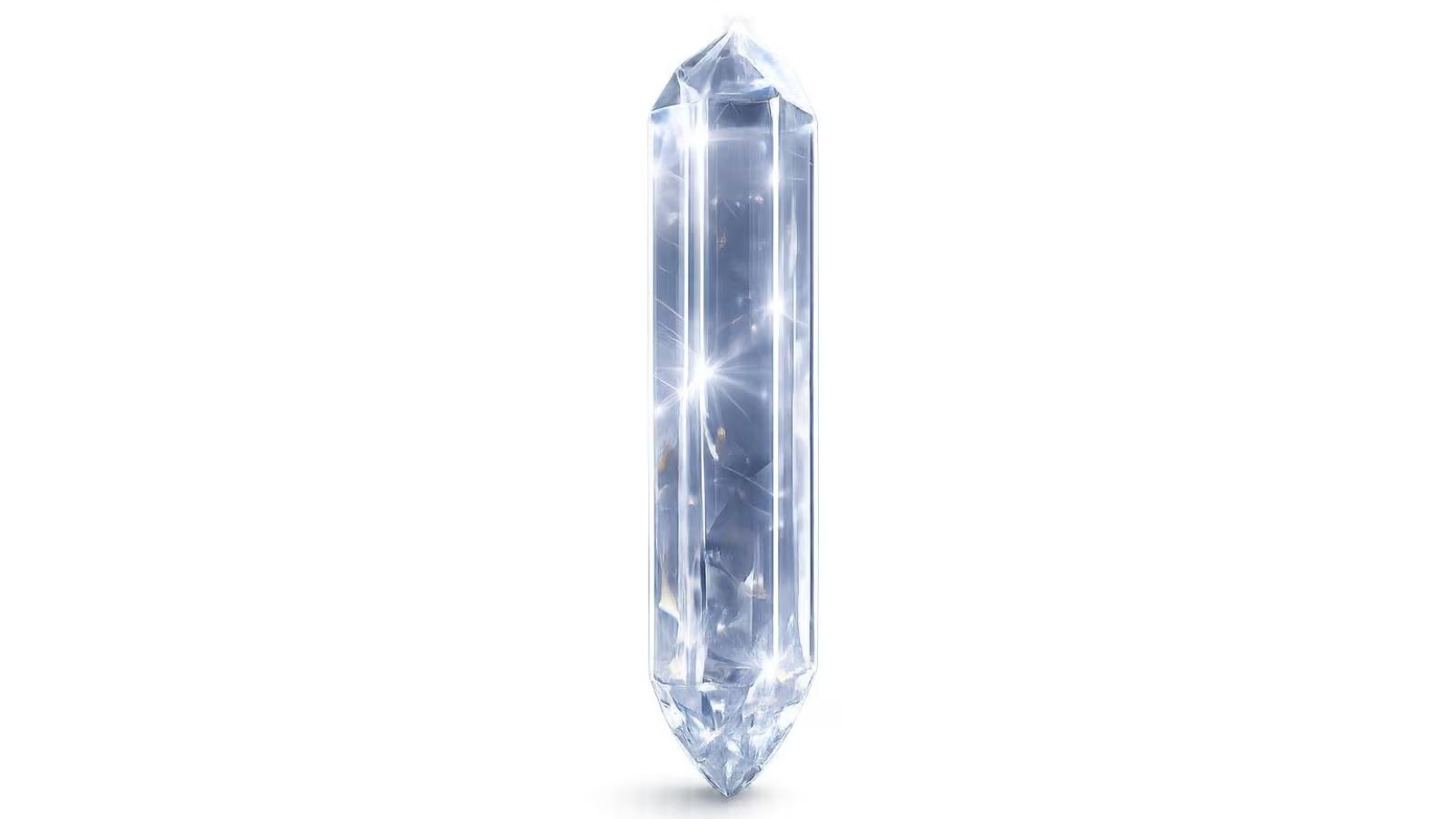

Chinese scientists have found a new mineral inside the first lunar meteorite ever recovered in China, making this discovery significant for planetary studies. The mineral called Magnesiochangesite-(Ce) has been certified and named by the International Mineralogical Association, which is responsible for certifying new minerals.
This finding brings the total number of known lunar minerals worldwide to 11. With four such discoveries now attributed to China, the country stands on par with the United States in terms of identified minerals originating from the Moon.
Distinct properties and scientific value
Magnesiochangesite-(Ce) is a rare earth-bearing phosphate mineral with distinctive physical and chemical characteristics. Researchers describe it as colourless and transparent, with a glass-like lustre. It is fragile, tends to fracture like a shell, and emits a glow when exposed to UV light.
These features allow scientists not only to distinguish it from other lunar substances but also to learn more about the Moon’s geology. According to scientists, the mineral can reveal more about the volcanic processes occurring on the Moon and the extraction of rare earth elements.
Discovered in a Xinjiang meteorite
The mineral was found in a lunar meteorite that was named Pakepake 005 and weighs about 44 grams. This meteorite was discovered in the Taklamakan Desert in 2024. It is recognised as a lunar meteorite because of its roundness and the black fusion crust created during its flight through Earth’s atmosphere.
This was the first lunar meteorite discovery in China. Scientists say such meteorites provide rare opportunities to study the Moon’s composition without the need for sample-return missions.
Advanced analysis techniques
The discovery was made possible through the use of a high-resolution secondary ion mass spectrometer domestically produced by the Chinese Academy of Geological Sciences. Through this innovative technique, scientists can examine the chemical makeup of materials microscopically without damaging the sample.
The instrument identifies elements and isotopes using a focused ion beam. It not only provides valuable insight into the rare material being studied but has also been used to study lunar samples obtained by China’s space exploration efforts.

Comments are closed.