
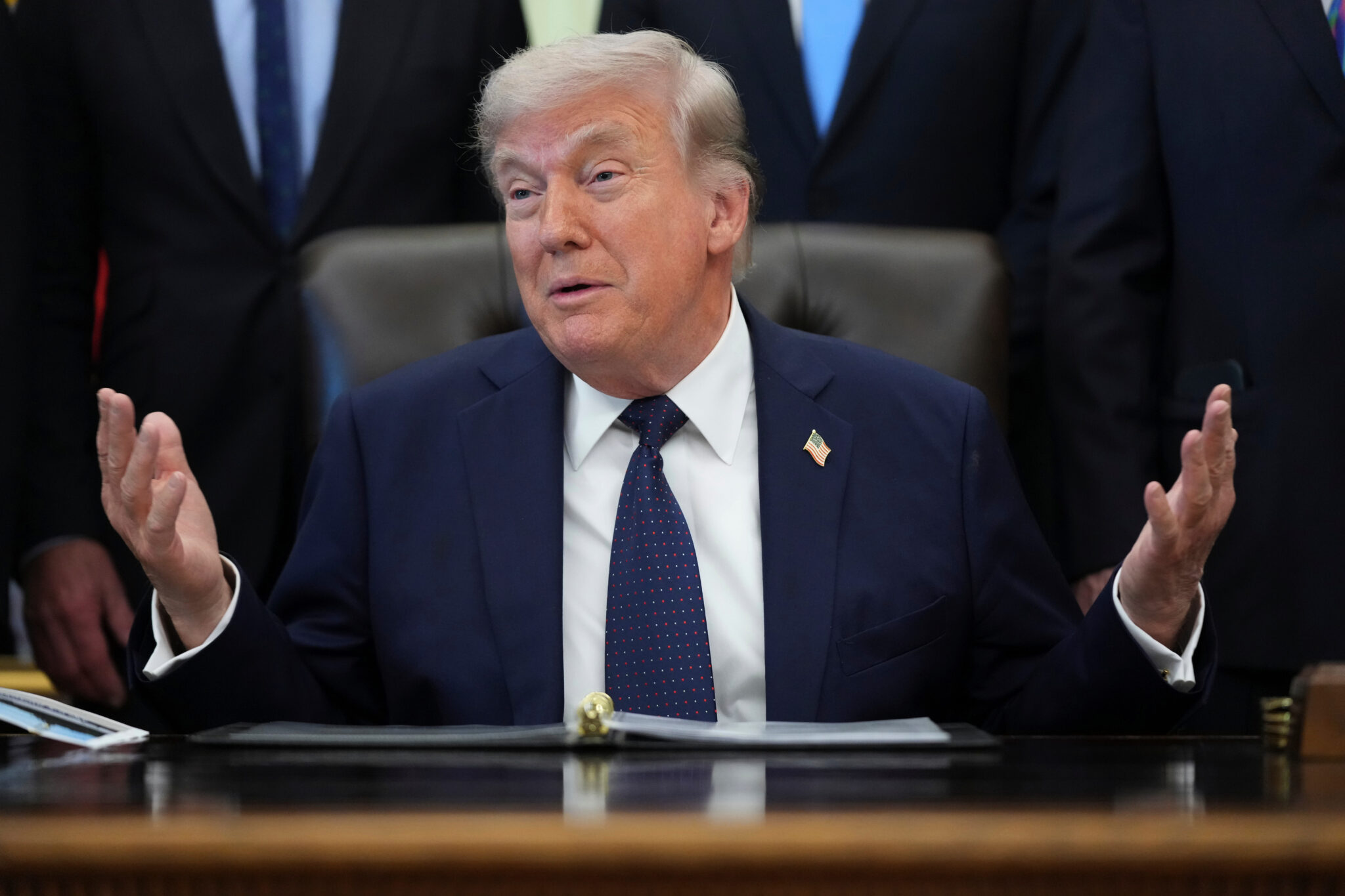

Trump’s White House Correspondents Dinner Appearance Sparks New Debate/ TezzBuzz/ WASHINGTON/ J. Mansour/ Morning Edition/ President Donald Trump’s expected appearance at this weekend’s White House Correspondents’ Association dinner is creating new debate over whether journalists should celebrate alongside a president who frequently attacks the press. Critics argue the event sends the wrong message as Trump continues lawsuits, press restrictions, and public attacks against major news organizations. Supporters say the annual dinner still offers important opportunities for reporters to build access and relationships with key officials.
- Trump is expected to attend the White House Correspondents’ dinner this weekend
- It would be his first time attending as president during his second term
- More than 350 former journalists signed a petition urging press freedom protests
- Some reporters are considering visible First Amendment protests like lapel pins
- HuffPost journalists will boycott the dinner in protest
- The AP, CNN, and Wall Street Journal will be honored during the event
- Trump has ongoing legal fights with several major media organizations

Trump’s Expected Appearance Renews Debate Over Press Dinner
NEW YORK — President Donald Trump’s planned attendance at this weekend’s White House Correspondents’ Association dinner is bringing fresh controversy to one of Washington’s most famous political and media traditions.
The annual event, often nicknamed the “nerd prom,” is known for journalists in tuxedos, celebrity appearances, and presidents sitting through jokes from comedians and reporters.
But this year feels very different.
Trump’s ongoing attacks on the press, lawsuits against major news organizations, and tighter restrictions on media access have created a deeper debate about whether journalists should be celebrating in the same room with him at all.
For many in the industry, the question is no longer just about tradition — it is about principle.
Critics Say Dinner Sends the Wrong Message
During Trump’s second term, tensions between the White House and the press have remained intense.
The administration has publicly criticized individual reporters, fought organizations like The New York Times, The Wall Street Journal, and The Associated Press in court, and restricted access to the Pentagon.
That backdrop has made Trump’s expected attendance feel deeply uncomfortable for many journalists.
“This is sort of a critical moment for these dinners and it will be interesting to see what happens going forward,” said Lisa Stark, a former ABC News reporter.
Critics argue that journalists laughing, socializing, and taking photos with administration officials weakens the press’ role as an independent watchdog.
Kelly McBride, NPR ombudsman and head of the Poynter Institute’s ethics and leadership center, put it bluntly.
“The only thing more insulting for the press than Trump not coming is Trump coming,” she wrote.
Petition Calls for Visible Protest
Lisa Stark and longtime colleague Ian Cameron have circulated a petition urging journalists attending Saturday’s dinner to make a visible stand for press freedom.
They are asking reporters to “speak forcefully” in defense of journalism and First Amendment protections during the event.
More than 350 former journalists have signed the petition so far.
Among them are veteran broadcasters Dan Rather and former ABC White House reporter Sam Donaldson.
Some reporters have also discussed wearing lapel pins promoting the First Amendment as a quiet but public form of protest inside the ballroom.
The goal is to remind attendees — and the country — that the event is happening during a period of extraordinary pressure on the press.
Trump’s Long History With the Event
The White House Correspondents’ dinner has a long presidential history.
President Calvin Coolidge became the first president to attend in 1924.
Since then, most presidents have participated, often showing a willingness to laugh at themselves while comedians take shots from the stage.
Trump famously attended in 2011, sitting in the audience as President Barack Obama mocked him during one of the most memorable dinner speeches in modern history.
He was visibly uncomfortable during the event.
This weekend, however, would mark the first time Trump attends as sitting president during his second term.
That alone makes the event historically significant.
Some Journalists Are Boycotting
Not everyone plans to attend.
HuffPost’s top editor announced that its journalists would skip the dinner entirely as a protest.
Former AP White House reporter Ron Fournier also sharply criticized the idea of journalists dining with Trump.
“This man mocks you, sues you, and targets you for prosecution,” Fournier wrote on Substack.
He ended with a blunt question:
“and you’re having dinner with him?”
The New York Times stopped attending the dinner back in 2011 for similar reasons.
The Atlantic even described the event years ago as the “slow, awkward death” of the correspondents dinner.
For critics, the event feels increasingly outdated and difficult to defend.
Others Say Access Still Matters
Some veteran journalists argue the dinner still serves an important professional purpose.
Todd Gillman, former Washington bureau chief for The Dallas Morning News and now a journalism professor at Arizona State University, said it is not the press’s job to create a political statement by refusing to attend.
He argued that Trump will make news simply by showing up and speaking.
Gillman also pushed back on the idea that attendance means honoring the president.
“There’s a misperception,” he said, that correspondents are celebrating Trump by sharing the event with him.
For many reporters, the real value is access.
Journalists often use the dinner to build relationships with diplomats, lawmakers, corporate leaders, and government officials they may later need as sources.
Networking Can Help Reporting
Gillman said those informal conversations can matter.
He once invited ambassadors from Mexico to the dinner — valuable contacts for reporting at a Texas newspaper.
NPR journalist Eric Deggans also wrote that he secured an interview with media mogul Byron Allen after meeting him through WHCA dinner connections.
“Even if you’re not sitting with an administration official, you have the opportunity to walk up to someone, say hi, break the ice and give them a business card,” Gillman said.
“It puts a face to the name, so maybe they’ll return your call the next time.”
Supporters argue journalism often depends on those relationships, even if the optics are imperfect.
Potentially Awkward Award Moments
Trump may also face some uncomfortable moments during the event itself.
The WHCA plans to honor several journalists and organizations he has publicly attacked.
CNN’s Kaitlan Collins is among the award recipients.
The Wall Street Journal is being recognized for its reporting on Trump’s birthday message to convicted sex offender Jeffrey Epstein — a story that led Trump to sue the newspaper.
The Associated Press, which is also in a legal fight with the administration over press access, will be honored and will attend.
That creates the unusual image of Trump sitting through applause for some of the very reporters and outlets he regularly criticizes.
Paramount Dinner Adds Another Layer
Another complication comes from CBS parent company Paramount.
Reports say Paramount is hosting a separate dinner honoring Trump at the Institute of Peace, which was renamed for Trump last year.
The company is currently awaiting government approval for its proposed acquisition of Warner Bros. Discovery.
That has added more ethical questions about media executives appearing too close to political power while major business decisions are pending.
It adds another layer to a weekend already full of uncomfortable optics.
A Tradition at a Turning Point
The White House Correspondents’ dinner has always balanced journalism, politics, and celebrity culture.
But Trump’s expected attendance has forced many journalists to reconsider whether that balance still works.
For some, attending means protecting access and tradition.
For others, it feels like compromising the very independence journalism is supposed to defend.
As reporters gather this weekend, the event may say as much about the state of the American press as it does about the president sitting in the room.
And this year, every handshake, applause line, and protest pin will be closely watched.
More on US News
Comments are closed.