
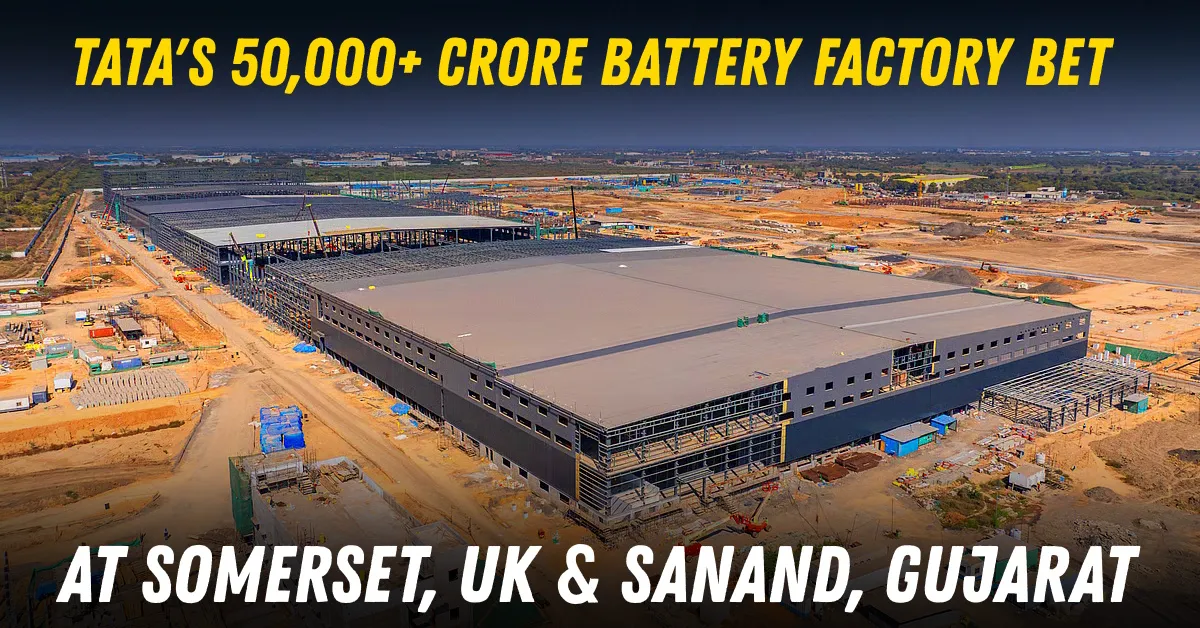

Tata Group’s battery manufacturing arm Agratas is shifting gears, towards actual building of batteries that will end up in electric cars you and me can buy soon. At Somerset in the UK and Sanand in Gujarat, the company is now deep into the period where civil work is nearly done, and battery manufacturing can soon commence.
The combined number will matter to a host of Tata companies including Tata Motors, Jaguar and Land Rover. Not just in an Indian context, but globally.
Somerset is planned at 40 GWh and Sanand at 20 GWh in its first phase, taking the total to 60 GWh. If you assume a modern EV uses a 60 kWh battery pack, that level of annual output is enough for about one million vehicles.
Even the UK site alone could theoretically support roughly 6.7 lakh such EVs a year, while Sanand’s first phase could cover another 3.3 lakh. That is why the next 18 months matter so much.
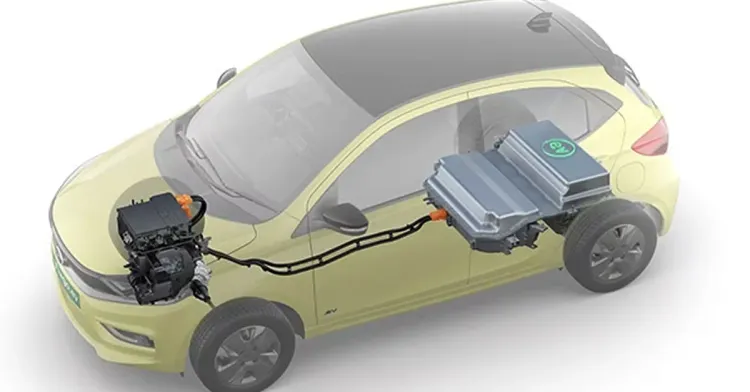
This is where the story gets more technical than the investment headline suggests. Battery factories become real only when the inside works to extremely tight standards.
That means dry rooms, controlled contamination, formation lines, cell ageing systems, process calibration and quality-control loops that can run at scale without wrecking yield. In practical terms, the fit-out phase is the most crucial step before actual battery making can commence.
At Somerset, the project has crossed a major structural milestone. The steel frame of Building One is complete. It spans 525 metres in length, 167 metres in width and reaches 34 metres at its highest point. Agratas and its construction partners say 23,000 tonnes of steel went into the frame and ancillary buildings, with over 500 people involved in that stage alone.
The next steps there are external cladding, roofing and internal fit-out. That sounds routine, but for a gigafactory this is the most important stage where equipment installation, commissioning and clean-environment validation start stacking on top of one another.
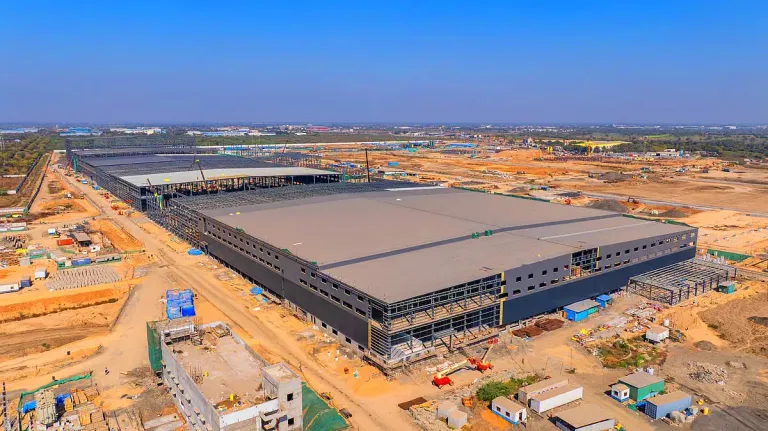
The Sanand site is smaller in capacity terms, but it matters a lot to Tata Motors’ electric car leadership in India. Agratas has already said the Gujarat plant will manufacture advanced battery cells for both electric vehicles and energy storage systems.
Its first-phase 20 GWh capacity makes it one of the largest battery facilities currently being built in the country. That gives Tata Motors a domestic cell source at a time when EV competition is widening and local value addition is becoming more important for cost control. Only Ola Electric build batteries in India, right from the cell level.
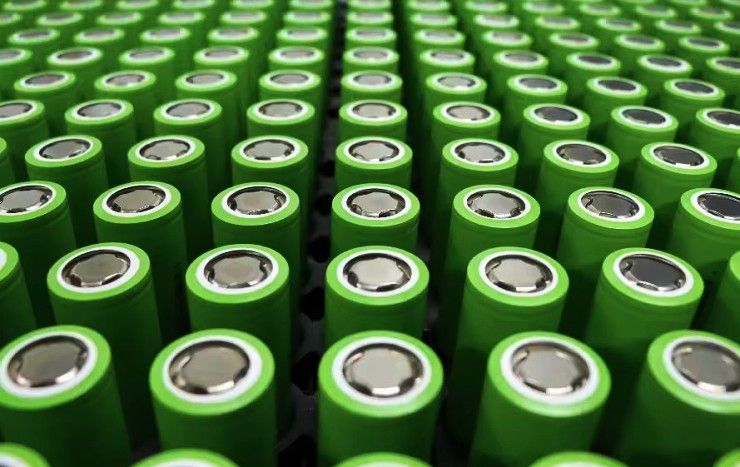
In the UK, the government has formally confirmed a £380 million grant for the Somerset gigafactory. That sits inside a broader support package of more than £470 million. Against a total project bill of around £4 billion, the state support is meaningful, financing nearly 12 % of project cost. It helps de-risk the plant, but the real financial burden still sits with Tata Group and Agratas.
The public money is there to pull strategic manufacturing into the country and secure battery supply chains, not to carry the project on its own. For Agratas, that means scrutiny will rise from here. A factory with this kind of public backing and this scale of private capital cannot afford to drift quietly into delay.
Somerset also has a wider local impact built into it. The site is expected to create thousands of jobs, and earlier project material has pointed to more than 2,200 people working on site during peak construction activity.
Once operational, it is meant to anchor UK battery supply for Jaguar Land Rover and support a wider clean-tech manufacturing ecosystem. Sanand carries a similar industrial logic here, though the public funding structure has not been disclosed in the same way.
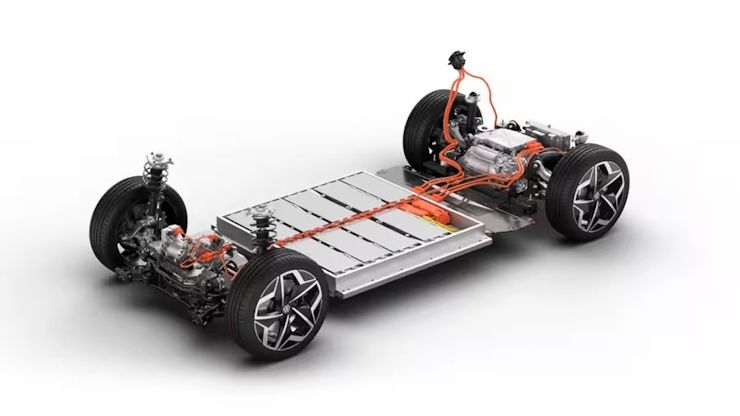
Next year (2027), if there’s no delay with respect to fit-outs. both at UK and India.
Both the Somerset and Sanand factories are not being built in isolation. They are being built into vehicle plans. Jaguar Land Rover needs Somerset capacity for its EV roadmap. Tata Motors needs Sanand to strengthen its own EV pipeline and reduce dependence on imported cells over time.
If the fit-out and commissioning stage slips, the ramifications will be big. It rolls into sourcing plans, launch timing and cost assumptions for the vehicles that depend on those cells. So, Agratas just cannot afford any slip-up now.
Comments are closed.