
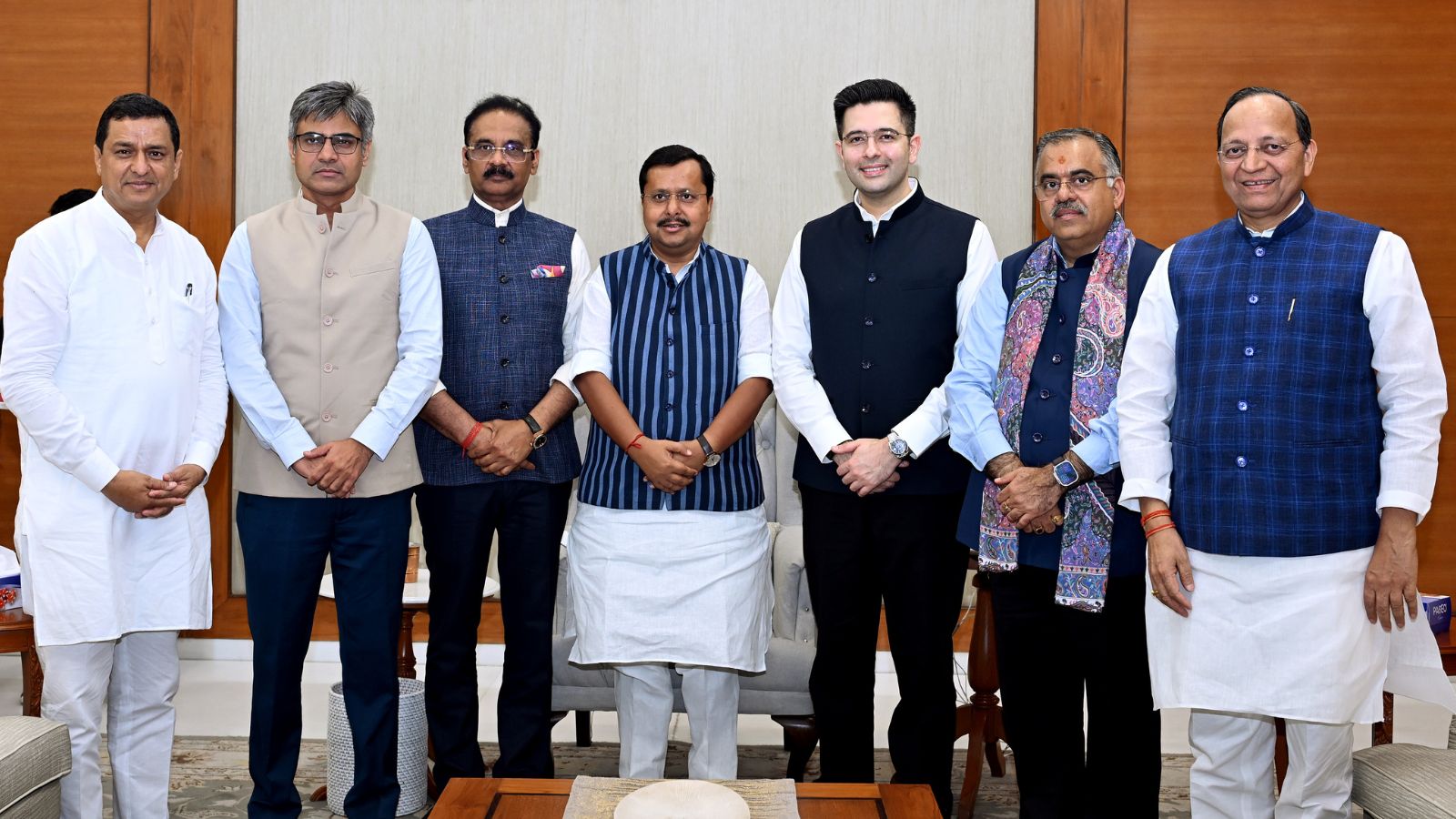

In a significant political development, the strength of the National Democratic Alliance (NDA) in the Rajya Sabha is set to increase after seven Members of Parliament from the Aam Aadmi Party (AAP) announced their decision to merge with the Bharatiya Janata Party (BJP).
The move, led by Raghav Chadhamarks a major shift in the Upper House dynamics and could have long-term implications for parliamentary arithmetic.
Merger Announcement and Legal Position
Addressing the media, Chadha stated that two-thirds of AAP’s Rajya Sabha members have exercised their constitutional right to merge with the BJP. Along with him, MPs including Sandeep Pathak and Ashok Mittal are part of the group that has formally communicated the merger to Rajya Sabha Chairman CP Radhakrishnan.
Under the anti-defection provisions of the Constitution, a merger involving at least two-thirds of a party’s legislators can protect members from disqualification.
NDA Numbers Set to Rise
Following this development, the BJP’s strength in the Rajya Sabha is expected to increase from 106 to 113, while the NDA’s tally could rise from 141 to 148, including nominated members. Political observers note that this brings the ruling alliance closer to the two-thirds majority mark in the Upper House.
AAP Challenges the Move
The development has been strongly contested by AAP leadership. Senior leader Sanjay Singh announced plans to approach the Chairman seeking disqualification of the defecting MPs under the Tenth Schedule of the Constitution.
AAP argues that the merger is not valid unless the original political party itself merges, not just its parliamentary wing.
Legal Debate Over Anti-Defection Law
Experts point out that the final decision rests with the Chairman of the Rajya Sabha, who must determine whether the merger complies with constitutional provisions.
Former Lok Sabha Secretary-General P.D.T. Achary noted that lawmakers may still face disqualification if the merger does not involve the original party structure. In such a scenario, the matter could also reach the Election Commission of Indiaparticularly if rival factions claim ownership of the party.
Political Implications
The split represents a major setback for AAP and its national ambitions, especially as the party currently holds legislative strength in states like Delhi and Punjab.
The development also mirrors earlier instances, such as the 2019 merger of the Telugu Desam Party’s Rajya Sabha members with the BJP, which was upheld under similar provisions.
Comments are closed.