
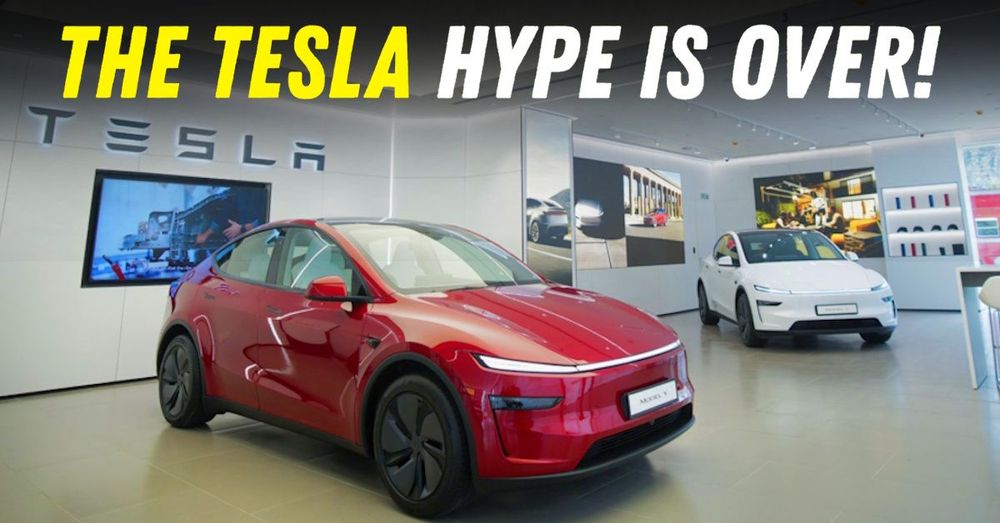

Tesla sold 342 cars in the full financial year FY2026. Across all the new markets Tesla has entered in recent years, that is a very weak start. The company began deliveries here in July 2025, so it had roughly nine months to build momentum. It did not.
Those 342 units were enough for only a 6.33 percent share of the luxury EV market in FY2026, and even that came in a segment that sold just 5,308 EVs in total. In other words, Tesla was not breaking into a huge premium EV space and underperforming. It was underperforming in a niche that was already small.
To understand why, let’s start with the price. The Model Y Rear-Wheel Drive is listed at Rs 59.89 lakh ex-showroom. The longer-range version sits at Rs 67.89 lakh. While the Model Y L has made amends by launching at 61.99 lakh, it’s unlikely to make a big dent, especially when there are more established rivals such as BMW and Mercedes Benz, with more accessible cars. In its home market and in China, the Model Y works as a relatively accessible EV.
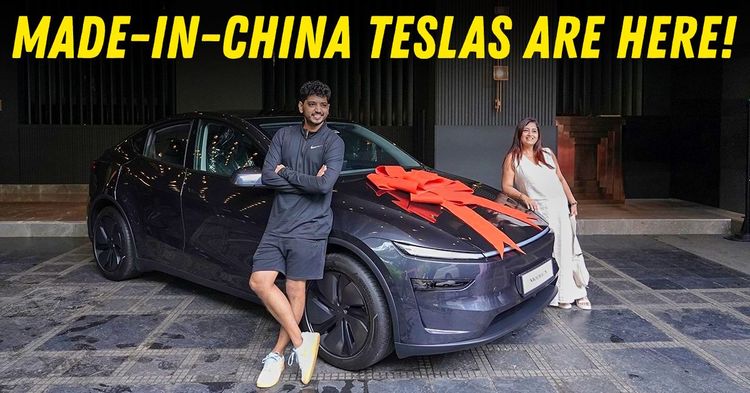
Here, it does not. Imported from Shanghai as a completely built unit, it lands with the full tariff burden and gets pushed into the same budget zone as established German luxury brands. That changes the customer and it changes the expectations.
At around Rs 60 lakh to Rs 68 lakh, buyers are no longer simply comparing battery range and software. They are comparing brand heritage, cabin richness, dealer reassurance and what the car says socially. Tesla doesn’t have the badge value!
That is where the India story diverges sharply from the US story. Tesla did not become a giant in America only because it had a desirable badge or a technology edge. It also had timing. It was early, it had far fewer serious EV rivals at scale, and it built its own charging network before most competitors had workable national fast-charging coverage.
Tesla says its North American charging system now includes more than 36,500 stalls for Teslas, 25,000-plus stalls for NACS users and over 2,400 stalls open to other EVs. It also claims 99.95 percent uptime for the network. That kind of ecosystem removes a huge amount of ownership doubt.
That advantage mattered because Tesla’s cars were never sold as standalone products. They came with a route planner, a charging backbone, regular software updates and a brand promise that long-distance EV travel could actually work.
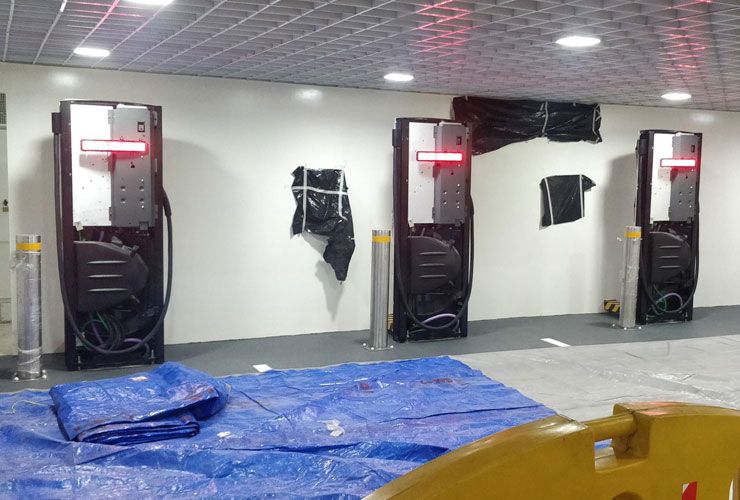
In India, Tesla has only a tiny slice of that structure in place. As of now, the company’s own India listings show just five Supercharger sites and three experience centres, with only a handful of service points. That is not enough to recreate the confidence Tesla enjoyed in America during its growth years.
The US market also gave Tesla volume support that India cannot. In 2023, Tesla held about 55 percent of the entire US EV market and its share of the overall US auto market hit about 4.2 percent.
Tesla’s US quarterly sales peaked at more than 173,000 vehicles in spring 2023. That kind of scale gave Tesla visibility, street presence and a sense of inevitability. In India, 342 cars in nine months does the opposite. It makes the brand look rare, but not necessarily established.
The badge problem is real, but it is not the whole story. At this price level, the car’s design philosophy also runs into a market mismatch. Tesla’s interior is minimal to the point of austerity. One large screen, almost no physical controls, and very little decorative richness.
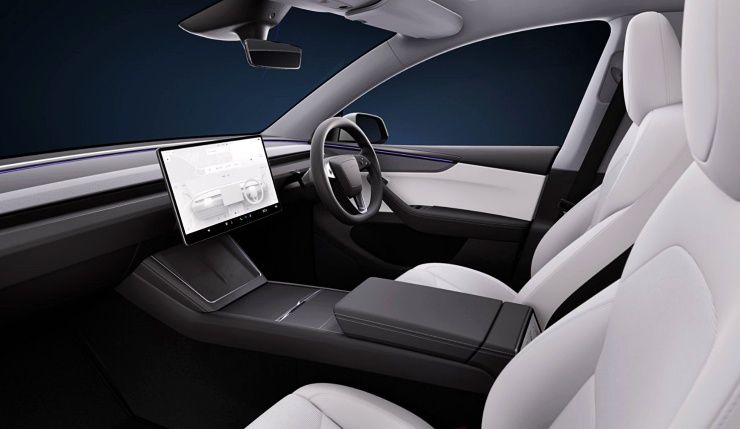
That works well in markets where minimalism is read as modern luxury. Here, many buyers at this price still expect visible opulence. They want layered materials, switchgear, ambient lighting, tactile controls and the sense that money has been spent where they can see it.
Then there is the product gap between what Tesla offers and what the market is used to. The India-market Model Y on Tesla’s own site is a five-seater with 500 km WLTP range in standard form or 661 km in the Long-Range version, plus a 16-inch centre touchscreen and an 8-inch rear touchscreen.
On paper those are decent numbers. But premium buyers in this bracket are also looking at ride comfort, back-seat experience, physical after-sales support and the assurance that small issues will not turn into a month-long headache. Tesla’s software-first strength does not fully compensate for those gaps here.
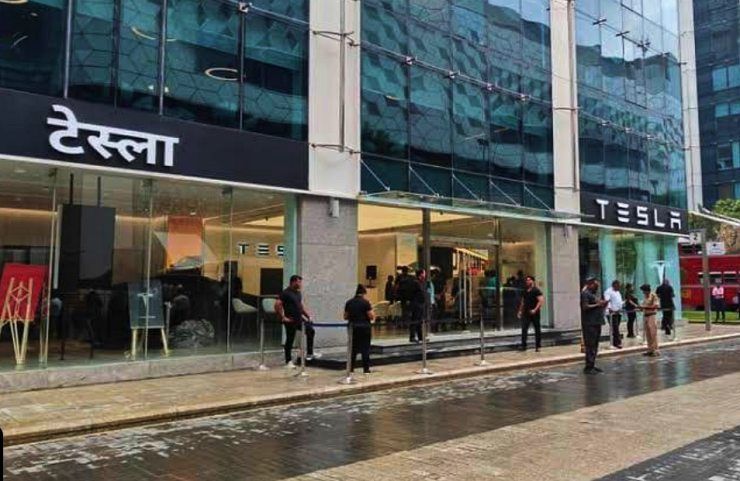
This may be the most practical problem of all. Tesla’s footprint is still too thin for the price it is charging. A buyer spending Rs 60 lakh to Rs 70 lakh is not only buying a car.
They are buying recovery support, spare-parts confidence, quick body repair, technician access and a sense that the company is settled here for the long term.
Tesla’s current India network is growing, but it is still tiny. The company is only now talking about adding more charging corridors, body shops and service presence in more cities.
That would be less of an issue if the product were priced like a disruptor. It is not. It is priced like an established luxury import. That makes every weakness look larger. A thin service network is easier to forgive on a Rs 20 lakh niche EV than on a Rs 65 lakh Tesla.
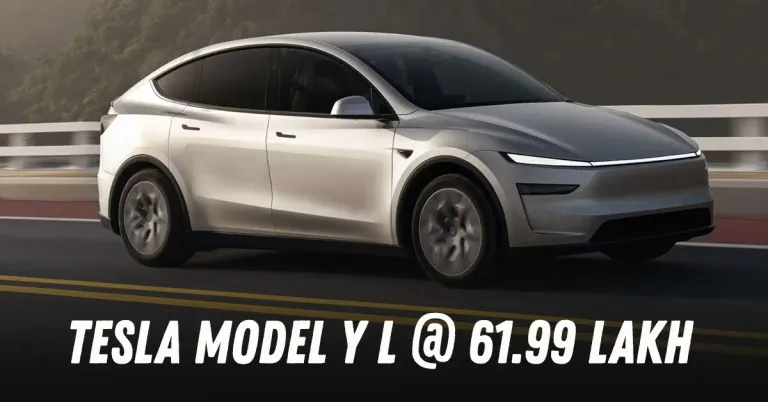
The six-seat Model Y L, and a possible future Model 3 can widen the conversation, but they do not solve the core problem. Tesla’s biggest strengths in the US were never just the car itself.
They were the full stack around it: early entry, charging scale, strong brand familiarity, high road presence, software-led ownership, and the confidence created by sheer installed base. India is giving Tesla almost none of those advantages right now.
Until the company either localises production or builds a much denser ownership ecosystem, the math will remain difficult. High price limits volume. Low volume limits network investment. Thin network slows trust. And without trust, Tesla remains an expensive outsider in a market where buyers at this price want much more than just a famous EV badge.
Comments are closed.