
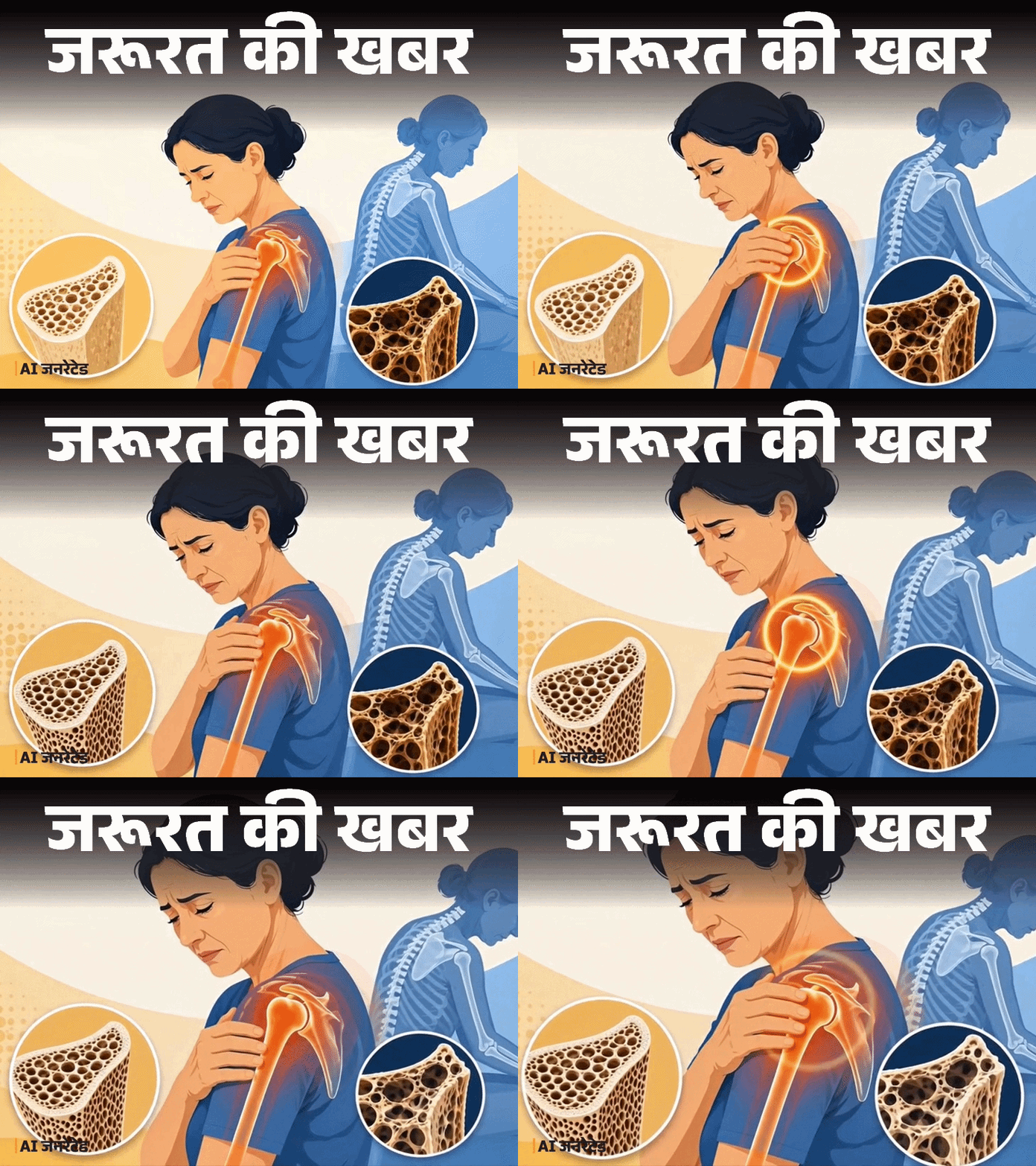
Bones are giving signs after 40, do not ignore these symptoms, these tips to strengthen bones…

New Delhi:- After the age of 40, bone health gradually starts deteriorating and this makes it a ‘silent’ problem. No specific symptoms are seen in the beginning, but the bones keep weakening internally. Often people come to know about it when the pain suddenly increases or even a minor injury causes a fracture.
Actually, with increasing age, proper absorption of calcium in the body starts decreasing, due to which bone density starts decreasing. This problem increases rapidly in women, especially after menopause. Today’s lifestyle also plays a big role in this. Decrease in Vitamin D due to lack of sunlight, lack of physical activity, unhealthy eating habits and the habit of sitting for long hours makes the bones more weak.
The biggest concern is that its signs are not clear in the beginning, so people ignore it. But if attention is paid in time, this process can be slowed down to a great extent and the bones can be kept strong for a long time. Today in ‘Necessary News’ we will talk about the important aspects related to bone health and will also know its initial signs and easy ways of prevention.
Question- What are the signs of bone weakness?
TIPS: The initial symptoms of weak bones often appear gradually, so people ignore them considering them as normal pain. The main signs to pay attention to are:
frequent pain
Constant mild pain, especially in the back, waist, knees or joints.
fracture easily
Fracture of bone even due to minor injury or fall.
Height loss
Slight loss of height over time, which may be a sign of weakening of the spine.
Stooped posture
Gradual bending of the back or appearance of a hunchback.
weakness and fatigue
Feeling weakness in the body, getting tired quickly.
weakening of teeth and nails
Weak teeth or early breakage of nails can also be a sign of calcium deficiency.
muscle pain or cramps
Especially leg cramps or muscle pain. Question- How is bone health detected?
TIPS: Bone health cannot be accurately assessed by symptoms alone. For this, some important tests and medical assessments are done-
- BMD (Bone Mineral Density) Test
In this the strength (density) of bones is measured.
For this DEXA scan is done.
This shows whether the bones are normal, weak or in a state of osteoporosis.
- X-ray
The structure and fractures of the bones are revealed.
But initial bone loss is not visible in this.
- blood test
The levels of calcium and vitamin D in the body are checked.
Besides, problems like thyroid are also examined.
This helps in understanding the real reason for weakness.
- FRAX Score (Fracture Risk Assessment Tool)
It is a calculation tool.
Based on age, weight, lifestyle and medical history
It tells what the risk of fracture is.
- Doctor’s Clinical Assessment
Doctors also understand the situation on the basis of some signs, such as-
frequent fractures
persistent bone pain
Diet and physical activity
History of chronic diseases
TIPS: How to keep bones strong
- exercise daily
- Get sunlight for 15-20 minutes every morning
- maintain proper body weight
- do not sit for long periods of time
- Get BMD test done after 40
- don’t eat junk food
Post Views: 25
Comments are closed.