
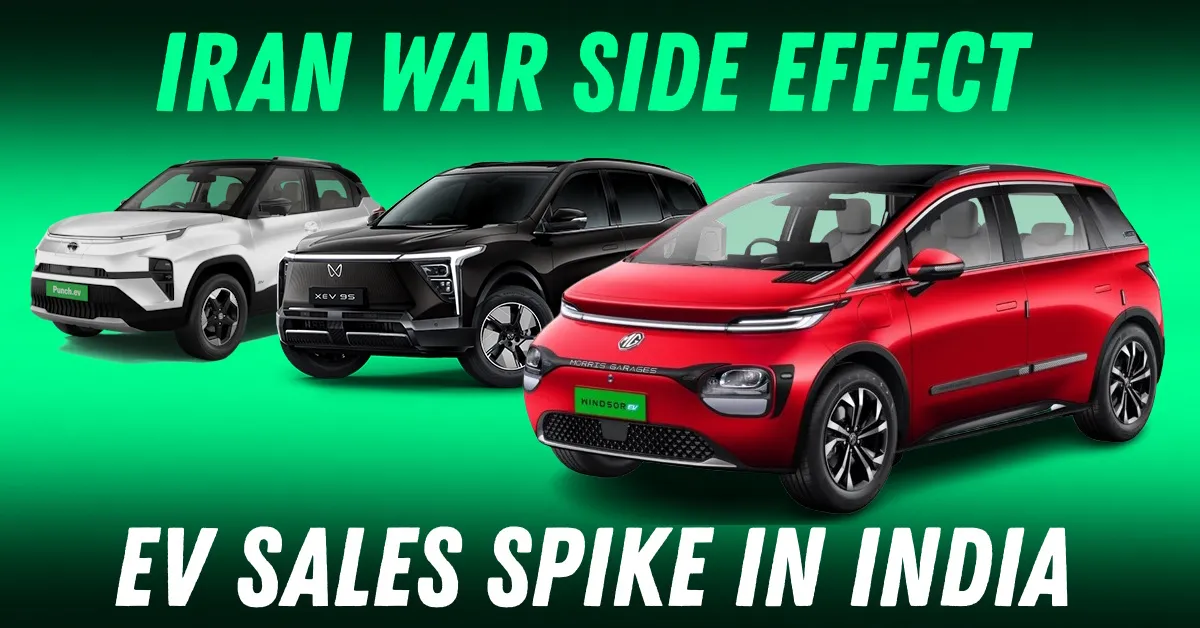

The share of electric vehicles in new car sales rose to 5.1 percent in March 2026, up from 3.5 percent in February. That is a sharp monthly rise for a segment that usually moves in smaller steps.
Electric car registrations stood at 22,490 units in March 2026, up 68 percent year-on-year. A separate wholesale estimate for the month placed the electric passenger vehicle market at 24,716 units, making March one of the strongest months recorded for the segment.
The increase came at a time when buyers were watching global oil prices closely. The US-Israel-Iran conflict has disrupted energy markets, with the Strait of Hormuz again becoming a major concern.
The waterway carries roughly one-fifth of the world’s oil and LNG trade. Any disruption there affects crude prices, and India is heavily exposed because it imports most of its crude oil.
Carmakers say the change is visible in showroom enquiries. Tata Motors said 20 to 30 percent of its incremental EV demand in March came from buyer concern over the West Asia conflict. JSW MG Motor reported a 26 percent rise in customer interest in March compared with the January-February average.

Fuel prices in India had not been raised at the time, but buyers appeared to be factoring in the possibility of future revisions. Petrol and diesel prices are often kept stable around election periods. Once elections are over, buyers usually expect the possibility of a fuel price correction if crude costs remain high.
That concern has helped EVs. For buyers comparing petrol, diesel and electric options, the EV’s main advantage is predictable running cost. Electricity prices can also change, but they do not move as frequently or visibly as petrol and diesel pump prices.
The larger electric car market had a strong March. The MG Windsor led the chart with 4,530 units. Mahindra’s XEV 9s followed with 3,254 units. The Tata Punch EV sold 2,871 units, while the Tata Nexon EV recorded 2,405 units.
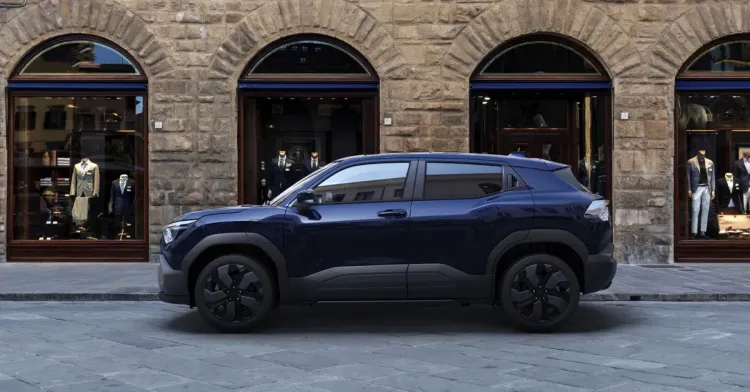
The Maruti Suzuki eVitara also made a strong early appearance with 2,254 units. Other models such as the Mahindra BE6, XEV 9e, Tata Harrier EV and Curvv EV also contributed to the total.
The numbers show that EV demand is no longer limited to one or two models. Buyers now have choices across hatchbacks, compact SUVs, mid-size SUVs and premium electric crossovers.
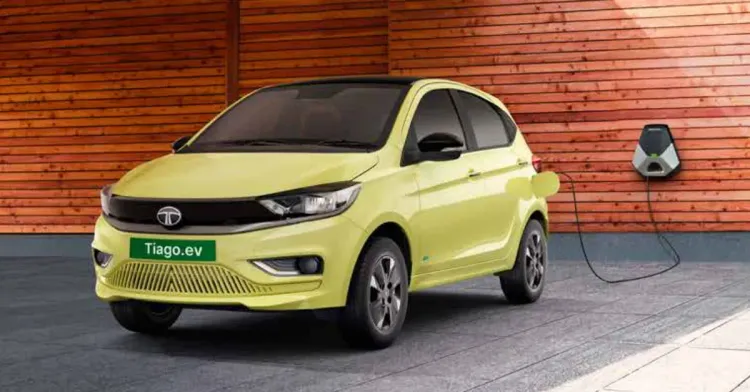
The price spread has also widened, starting with cars such as the Tata Tiago EV at under Rs. 8 lakh and going beyond Rs. 30 lakh for higher-end electric SUVs.
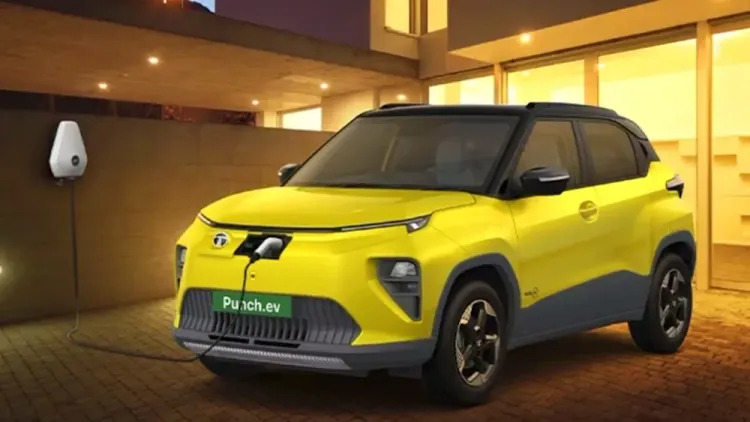
The strongest EV models in March were mostly SUVs or crossover-style vehicles. The MG Windsor, Tata Punch EV, Tata Nexon EV, Mahindra XEV 9e, XEV 9s, Mahindra BE6, Tata Harrier EV and Maruti Suzuki eVitara all sit in that broad space.
This reflects the wider passenger vehicle market, where SUVs have already become the dominant body style. EV buyers are following the same pattern. They are not only looking for the cheapest electric car. They are also looking for space, ground clearance, road presence and a body style that can be used as the main family car.
That is one reason why the EV market has grown faster after the arrival of more SUV-shaped models. Earlier, several electric cars were either small city runabouts or expensive premium imports. The newer crop gives buyers more practical choices between Rs. 10 lakh and Rs. 25 lakh.
The fuel-cost difference remains the main reason many buyers consider EVs. A petrol car that returns 12 to 15 km per litre can cost around Rs. 7 to Rs. 9 per km in fuel alone, depending on local prices and real-world efficiency. An EV charged at home can often run at a much lower per-kilometre cost.
For buyers driving 1,000 to 1,500 km a month, this difference becomes visible in the monthly budget. That is especially true for city users, fleet operators and households replacing a petrol automatic with an EV.
The higher upfront price of an EV is still a concern, but falling battery costs, BaaS plans, finance schemes and stronger resale confidence are helping reduce that barrier. MG’s Battery-as-a-Service model for the Windsor is one example of how carmakers are trying to lower the initial purchase price.

India imports more than 85 percent of its crude oil requirement. That makes domestic fuel prices vulnerable to global supply disruptions, currency movement and geopolitical events.
The West Asia conflict has reminded buyers of that risk. Even if fuel prices remain unchanged for a few weeks, the uncertainty itself can influence purchase decisions. A family planning to keep a car for five to seven years may see an EV as protection against future petrol and diesel increases.
That does not mean every buyer will switch. EV adoption still depends on charging access, daily running, parking space, city, budget and model choice. Apartment dwellers without dedicated charging still face a practical barrier. Highway users also need better fast-charging coverage.
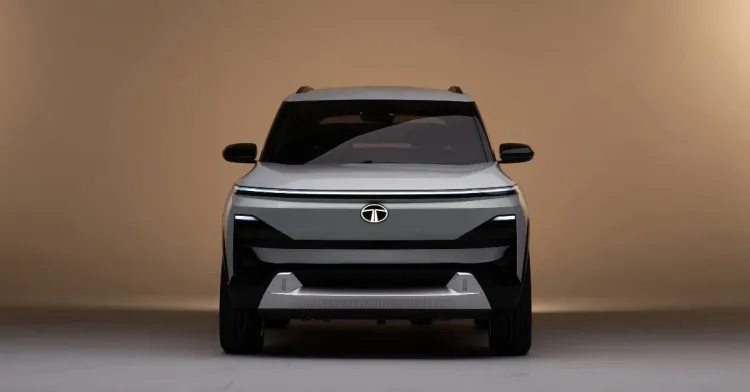
Manufacturers are responding to the shift. Tata Motors already has one of the widest EV portfolios, with models across hatchback, compact SUV and larger SUV segments. The Sierra.EV is launching next month. MG is leaning heavily on the Windsor, Comet and ZS EV, while also expanding its charging and localisation plans.
Mahindra is now building volume with the XUV 9e, 9S and BE6. Maruti Suzuki’s eVitara has only just entered the market, but its sales and service reach could make it a major player if supply improves.
The March figure of 5.1 percent EV share is still small compared with petrol and diesel cars. But it is large enough to show that EVs are no longer a fringe category. Fuel-price uncertainty has not created EV demand on its own. It has pushed some undecided buyers to act sooner.
If crude prices remain volatile and more electric SUVs enter the market, EV penetration could move higher in the coming months. The March spike may partly reflect year-end buying, but the direction of the market is now clear. Electric cars are becoming a serious part of the new-car decision, not just an alternative for early adopters.
Comments are closed.