
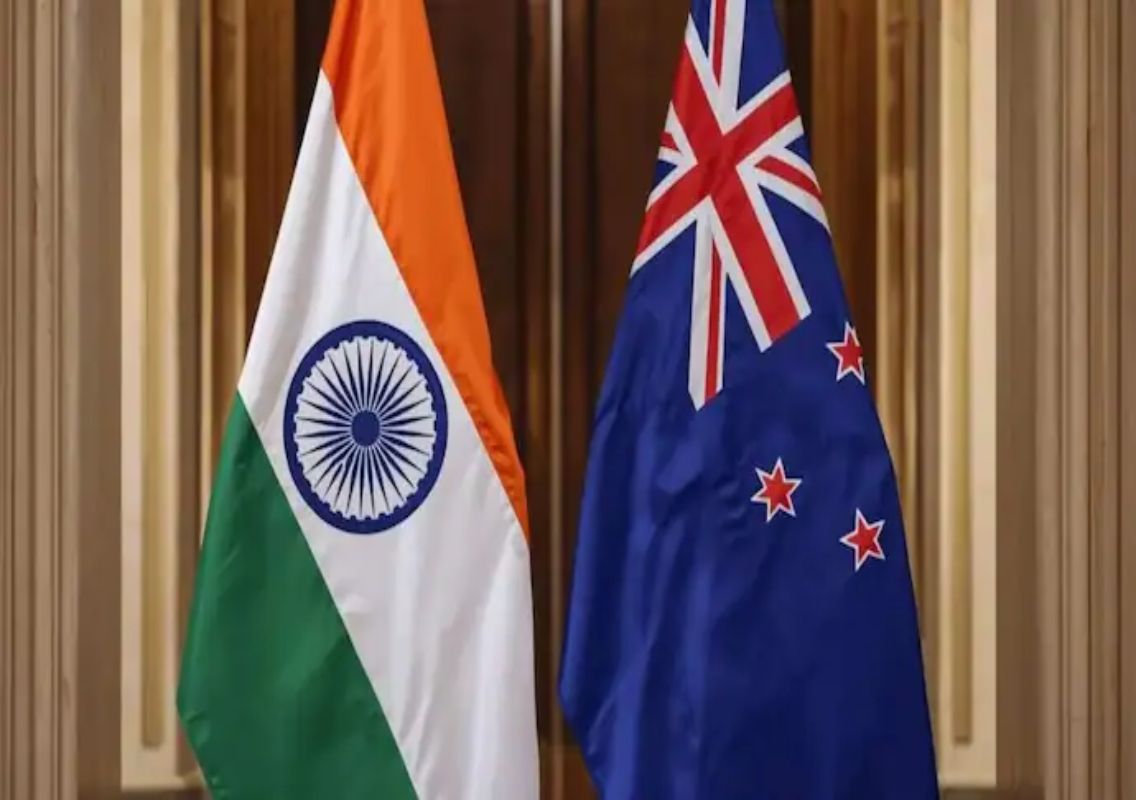

New Delhi: India and New Zealand are set to sign a fast-tracked Free Trade Agreement (FTA) that promises to reshape bilateral trade, unlock new export opportunities and deepen economic ties. The agreement, to be signed by Union Commerce Minister Piyush Goyal and New Zealand Trade Minister Todd McClay, goes beyond traditional tariff cuts to include services, mobility and long-term investment cooperation.
Negotiated in under nine months since March 2025, the pact is among the quickest trade deals concluded by India in recent years. It reflects a broader shift in India’s trade strategy—one that balances market access with domestic protection.
What becomes cheaper under the FTA
A major highlight of the agreement is that India will receive 100% duty-free access to New Zealand for all its 8,284 export products from day one.
Previously, Indian goods faced an average tariff of 2.2%, with labour-intensive sectors such as textiles and leather attracting duties of up to 10%. With tariffs now eliminated, Indian exporters are expected to become more competitive in the New Zealand market.
Key sectors set to benefit include:
- Textiles and garments
- Leather products
- Engineering goods and machinery
- Chemicals and electronics
- Processed and packaged food
The pharmaceutical sector also stands to gain. New Zealand will now accept inspection reports from internationally recognised regulators, reducing duplication in compliance checks and lowering operational costs for Indian drug exporters.
For Indian businesses, this translates into reduced export costs, faster approvals and improved pricing competitiveness in a developed market.
What New Zealand gains
India, on its part, has agreed to open 70.03% of its tariff lines, covering around 95% of current imports from New Zealand.
This will make several New Zealand products more accessible and affordable in India. Key imports likely to benefit include:
- Wool and wood products
- Wine
- Coal
- Fresh fruits such as avocados and blueberries
In addition, the agreement includes collaboration in agriculture, particularly through an agri-technology partnership. This aims to support Indian farmers in areas such as kiwi cultivation, apple production and honey processing, bringing in global expertise and improving productivity.
What India has protected
Despite broad market access, India has strategically kept nearly 30% of its tariff lines outside the agreement to safeguard sensitive sectors.
These include:
- Dairy products
- Edible oils
- Sugar
- Pulses and key vegetables such as onions
- Gems and jewellery
- Certain metal industries
This protection ensures that domestic producers, especially small farmers and MSMEs, are not exposed to sudden import competition. The exclusion of dairy, in particular, is seen as a crucial safeguard given its importance to rural livelihoods.
Experts view this balance as a calibrated approach—opening markets where India is competitive while shielding vulnerable sectors.
Mobility, services and job opportunities
The FTA goes beyond goods to create new pathways for Indian professionals. New Zealand will offer 1,667 temporary work visas annually for an initial three-year period, with a cap of 5,000 individuals at any given time.
This is expected to benefit skilled workers in sectors such as:
- Information technology
- Healthcare
- Engineering
- Education
Additionally, the agreement opens up 139 services sectors, including finance, tourism and digital services, enabling Indian companies to expand their global footprint.
The pact also includes provisions to support micro, small and medium enterprises (MSMEs), helping them access trade-related information and integrate into global value chains.
Investment push and trade targets
A significant component of the agreement is New Zealand’s commitment to invest $20 billion (around ₹1.6 lakh crore) in India over the next 15 years.
The investment will focus on:
- Infrastructure development
- Renewable energy
- Agriculture and food processing
- Technology and innovation
Currently, bilateral trade between the two nations stands at approximately $1.3 billion (around ₹10,800 crore). The FTA aims to scale this up to $5 billion (₹41,000 crore) within five years.
Conclusion
The India–New Zealand FTA represents a comprehensive and forward-looking trade pact that balances opportunity with caution. While Indian exporters gain full access to a developed market, critical domestic sectors remain protected.
Beyond tariffs, the agreement signals a deeper integration—covering services, mobility and long-term investment. For businesses, the real impact will depend on how effectively they leverage these new openings.
As India continues to expand its global trade footprint, this deal sets a template for future agreements—strategic, inclusive and aligned with long-term economic goals.

Comments are closed.