


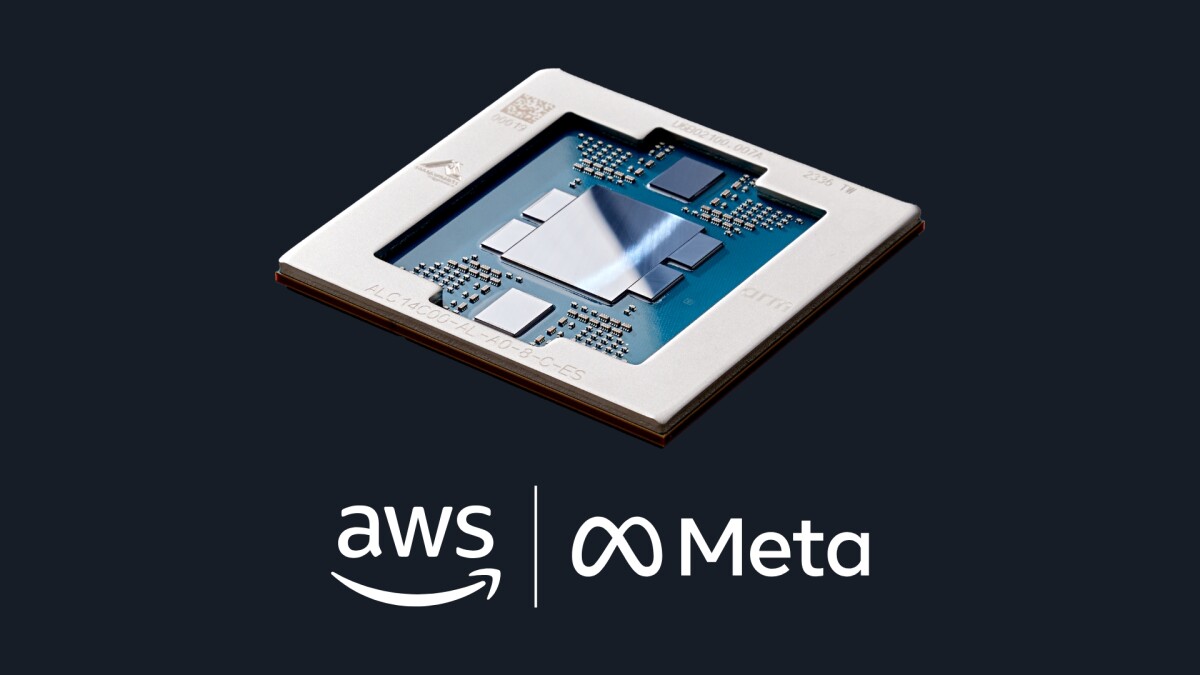
In a significant move that underscores the evolving dynamics of artificial intelligence infrastructure, Meta Platforms and Amazon have announced a multi-year, multi-billion dollar partnership. At the heart of this deal lies Amazon Web Services’ (AWS) latest custom-designed processor, the Graviton5 CPU, which Meta plans to deploy at massive scale to power its AI ambitions.
This collaboration is more than just another chip deal—it signals a broader shift in how tech giants are building and optimizing AI systems.
Credits: Reuters
The Rise of Graviton5: AWS’s In-House Silicon Strategy
AWS has been quietly building its own silicon ecosystem since 2018, and the Graviton series is now in its fifth generation. The latest iteration, Graviton5, is a high-performance CPU designed to handle large-scale cloud workloads efficiently. Manufactured by Taiwan Semiconductor Manufacturing Companythese chips boast 192 cores each, allowing them to process multiple tasks simultaneously.
By designing chips in-house, AWS reduces reliance on third-party suppliers and optimizes performance for its cloud environment. This also enables cost efficiencies, which, according to AWS executives, are passed on to customers like Meta.
Why CPUs Still Matter in the Age of AI
While much of the AI conversation is dominated by GPUs—especially those from Nvidia—CPUs are experiencing a quiet resurgence. GPUs remain essential for training large AI models due to their parallel processing capabilities. However, once models are trained, they are typically deployed and run on CPUs for inference tasks.
This is where Meta’s strategy comes into play. By leveraging tens of millions of cores powered by Graviton chips, the company can efficiently handle real-time AI workloads across its platforms, from content recommendations to ad targeting.
Even Intel has acknowledged this trend, noting a surge in CPU demand and rising prices driven by AI-related workloads.
Meta’s AI Ambitions and the Need for Diversification
Meta has been aggressively investing in AI infrastructure to support its expanding ecosystem, which includes social media, virtual reality, and generative AI initiatives. The company has already partnered with major chipmakers like Advanced Micro Devices and Nvidia, and has collaborated with Arm Holdings on next-generation CPU designs.
This new deal with AWS adds another layer to Meta’s strategy: diversification. By sourcing compute power from multiple providers and architectures, Meta reduces dependency risks and improves flexibility in scaling its infrastructure.
As Santosh Janardhan, Meta’s Head of Infrastructure, emphasized, diversifying compute sources is now a “strategic imperative” as the company scales its AI capabilities.
A Multi-Year Bet on the Future of AI Infrastructure
The scale of this agreement is staggering. Meta plans to use “tens of millions of cores,” translating into a massive deployment of Graviton CPUs across its operations. AWS, in turn, secures a long-term, high-value customer for its custom silicon, reinforcing its position in the competitive cloud market.
This deal also highlights how cloud providers are increasingly becoming chip designers, blurring the lines between hardware and services. AWS’s ability to control both infrastructure and silicon gives it a unique edge in attracting large-scale clients like Meta.
Credits: Amazon News
The Bigger Picture: An AI-Driven Chip Renaissance
The Meta-AWS partnership is part of a larger trend reshaping the semiconductor industry. As AI adoption accelerates, demand for both GPUs and CPUs is skyrocketing. Companies are no longer relying on a single type of processor but are building hybrid architectures tailored to specific workloads.
This shift is fueling what many are calling a “chip renaissance,” where innovation is happening across the board—from high-powered GPUs to energy-efficient CPUs.
In this new era, partnerships like the one between Meta and Amazon are not just transactions—they are strategic alliances that will define the future of AI infrastructure.

Comments are closed.